
 Home
Home Recipes
 Beans
Beans Gear
Gear Roasting
 Brewing
 FAQ
FAQ

As I think about my morning, I often wonder: is coffee or cocoa better for me? Both are loved for centuries, but they differ in health impacts.
Coffee and cocoa are popular for their health perks. Coffee wakes us up, while cocoa is full of antioxidants.
But which is better for us daily? We’ll look at coffee and cocoa’s nutrition, health benefits, and downsides in this article.
Key Takeaways
- Coffee and cocoa have different nutritional profiles.
- Cocoa is rich in antioxidants, while coffee is known for its energizing effects.
- The health benefits of coffee and cocoa are influenced by their preparation methods.
- Understanding the differences between coffee and cocoa can help you make informed choices.
- Both coffee and cocoa can be part of a healthy diet when consumed in moderation.
The Origins and History of Coffee and Cocoa
Exploring the beginnings of coffee and cocoa is a captivating journey. Coffee’s story starts in Ethiopia, thanks to a goatherd named Kaldi. He noticed how it made his goats more energetic. From there, it traveled to the Arabian Peninsula and beyond.
Cocoa’s history is rooted in Mesoamerica, where the Mayans and Aztecs saw it as sacred. They thought it had healing and spiritual powers. The Spanish brought it to Europe, where it became the sweet treat we love today.
Over time, both coffee and cocoa have changed a lot. They were shaped by many cultures and trade paths. Knowing their histories helps us appreciate their importance in our lives.
The difference between coffee and cocoa goes beyond taste. It’s also about their unique histories and cultural roles. This shows how each has found its way into our daily routines.
What Is the Difference Between Coffee and Cocoa?
Exploring coffee and cocoa reveals their unique differences. These differences go beyond taste to include physical and chemical aspects.
Physical Differences in Beans
Coffee beans are smaller and rounder, with a smooth surface. Cocoa beans, however, are larger and more irregular, with a rougher texture. This difference comes from how they are processed and the trees they come from.
Chemical Composition Variations
Coffee has more caffeine and acids, making it bitter. Cocoa, on the other hand, is full of flavonoids and other compounds. These give it a unique taste and health benefits. Knowing these chemical differences helps us enjoy each beverage’s special qualities.
Looking at these differences helps us see what makes coffee and cocoa special. From their beans to their chemical makeup, each aspect makes their experiences unique.
Composition and Active Ingredients
Exploring coffee and cocoa shows us how they affect our health. Both have many bioactive compounds that are good for us.
Coffee has caffeine, which wakes us up and boosts energy. It also has antioxidants like chlorogenic acid, which fights oxidative stress. Cocoa, on the other hand, is packed with flavonoids, especially flavanols. These are antioxidants that might help our hearts.
Short-term Effects
The quick effects of coffee and cocoa come from their key ingredients. Caffeine in coffee makes our heart beat faster and our minds sharper. But too much can make us jittery and keep us awake at night.
Cocoa, especially dark chocolate, can lift our mood and improve blood flow. Theobromine in cocoa gives a gentle buzz, but it’s milder than caffeine.
Long-term Impacts
Research on coffee and cocoa’s long-term effects is still going on. Drinking coffee in moderation might lower the risk of Parkinson’s, diabetes, and some cancers. The antioxidants in coffee could be why.
Cocoa’s flavanols are good for our hearts over time. They can lower blood pressure and reduce inflammation. Eating cocoa products with lots of flavanols might help keep our hearts healthy and lower heart disease risk.
| Compound | Coffee | Cocoa |
|---|---|---|
| Caffeine | High | Low |
| Flavonoids | Low | High |
| Theobromine | Low | Moderate |
In summary, coffee and cocoa’s ingredients are key to their health benefits. Knowing what’s in them helps us choose wisely.
From Bean to Cup: Production Processes Compared
Coffee and cocoa production have their own steps, from start to finish. Coffee starts with picking coffee cherries. This can be done in different ways, like strip picking or selective picking.
Then, the cherries are processed to get the coffee beans. This can be done dry or wet.
Cocoa production is different. It begins with picking cacao pods. These pods are opened to get the cacao beans and pulp.
The beans are fermented and dried to enhance flavor and aroma. The methods used for coffee and cocoa are quite different.
Coffee beans are roasted to get the right flavor. The roast can be light or dark, changing the taste. Cocoa beans, on the other hand, are ground and conched to make chocolate.
The fermentation of cocoa beans is key. It shapes the flavor and aroma of the beans.
In short, coffee and cocoa production have unique steps. These steps affect their quality, taste, and health benefits. Knowing these processes helps us understand the final products better.
Taste Profiles and Flavor Notes
Coffee and cocoa have different tastes. Coffee can taste fruity, floral, nutty, or chocolatey. This depends on where the beans come from, how they’re processed, and their roast level.
Cocoa has a richer taste with a velvety texture. It often tastes sweeter and has notes of vanilla, caramel, and fruits. The type of cocoa bean and processing methods affect its flavor.
Bitterness Levels
Coffee can be quite bitter, from mild to strong. This bitterness comes from caffeine and certain compounds. Cocoa can also be bitter, but not as much as coffee, especially in chocolate products.
Sweetness and Acidity
Coffee can have acidity, from bright to dull. Cocoa is sweeter, especially when sugar is added. Coffee’s acidity depends on its origin and processing. Cocoa’s sweetness comes from added sugar during chocolate making.
| Characteristics | Coffee | Cocoa |
|---|---|---|
| Bitterness | Often high, varies with roast and bean | Can be bitter, but generally less than coffee |
| Sweetness | Generally low, unless sweetened | Can be sweet, especially when processed into chocolate |
| Acidity | Can be high, influenced by origin and processing | Generally low, unless specifically noted |
Exploring coffee and cocoa’s taste profiles shows their unique qualities. Whether you like coffee’s bright acidity or cocoa’s rich sweetness, knowing their flavors can deepen your enjoyment of these drinks.
Nutritional Comparison: Coffee vs. Cocoa
Looking closely at coffee and cocoa shows they offer different health benefits. Both have been enjoyed for centuries. Yet, their nutritional profiles show clear differences.
Coffee is low in calories and often enjoyed plain. Cocoa, on the other hand, is higher in calories. It’s often mixed with milk or sugar, which adds calories. But pure cocoa is packed with nutrients.

Polyphenols and Flavanols
Coffee and cocoa are both full of polyphenols, which fight off free radicals. Cocoa is especially rich in flavanols. These have been linked to better heart health and brain function. Coffee also has polyphenols, but the type and amount vary.
The flavanols in cocoa are key. They help with blood flow and lower blood pressure. They also support brain function and mood.
Free Radical Fighting Capacity
Both coffee and cocoa are good at fighting free radicals. Cocoa has a higher antioxidant capacity thanks to its flavanols. Coffee can also be high in antioxidants, especially in green coffee or when brewed to keep more antioxidants.
To see the nutritional differences, let’s look at a table:
| Nutrient | Coffee (per 8 oz cup) | Cocoa (per 8 oz cup) |
|---|---|---|
| Calories | 0-2 (black coffee) | 170 (hot chocolate made with milk) |
| Polyphenols | 200-500 mg | 600-800 mg |
| Flavanols | Variable, typically low | High, especially in dark cocoa |
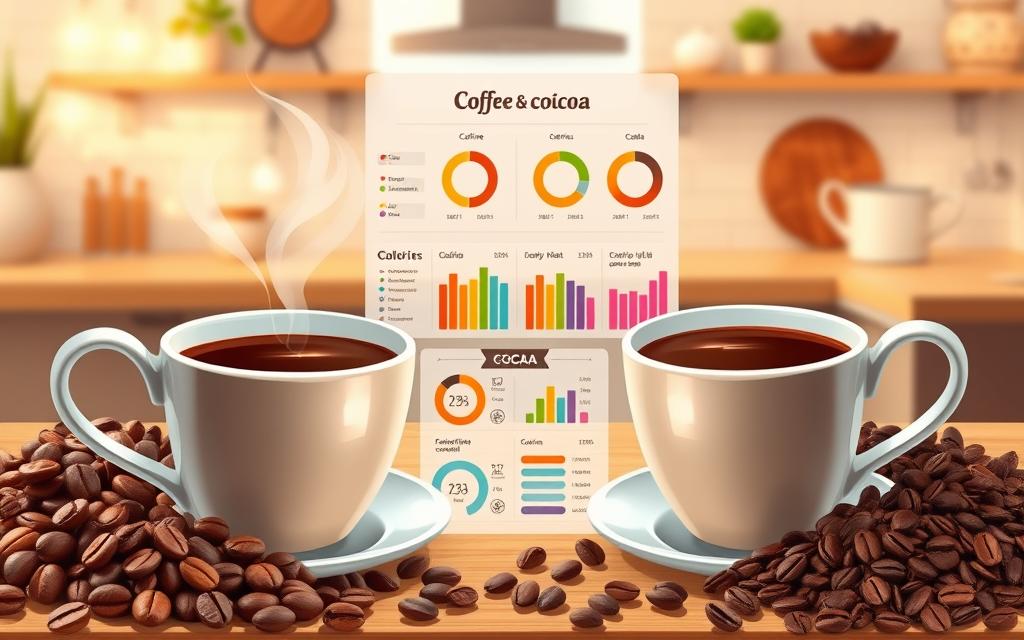
In summary, while both coffee and cocoa have their benefits, cocoa shines with its flavanols and antioxidants. Knowing these differences helps us choose better drinks.
Health Benefits: Is Cocoa Healthier Than Coffee?
Research has shown the health benefits of coffee and cocoa. Both have been enjoyed for centuries, not just for taste but for health perks too.
Cocoa is good for your heart thanks to flavonoids. These help blood flow better and lower blood pressure. Flavonoids in cocoa can reduce heart disease risk. Coffee’s heart health impact is more complex. Some studies say it may lower stroke and type 2 diabetes risk.
Metabolic Benefits
Cocoa aids in weight management and improves metabolic health. Cocoa’s flavonoids help with glucose and insulin sensitivity. Coffee also boosts fat burning and physical performance.
Blood Pressure Regulation
Cocoa’s flavonoids help control blood pressure by improving blood vessel function. Coffee’s blood pressure effect varies. But, moderate coffee drinking usually doesn’t raise blood pressure in most people.
Mood Enhancement Properties
Cocoa and coffee both lift your mood. Cocoa has phenylethylamine for mood boost. Coffee’s caffeine makes you alert but too much can cause jitteriness and anxiety.
In summary, coffee and cocoa both have health benefits. Whether cocoa is better depends on your health goals and how you react to them. Enjoying both in moderation can be part of a healthy lifestyle.
Potential Drawbacks and Side Effects
Coffee and cocoa are loved for their taste and health perks. But, they also have downsides that people should know about.
Coffee can make some folks jittery, anxious, or keep them awake at night because of caffeine. Cocoa is usually safe but can cause allergies or problems with some medicines if eaten too much.
Optimal Timing for Consumption
When you drink coffee or eat cocoa matters a lot. Drinking coffee before bed can mess up your sleep. Cocoa might be better in the morning or early afternoon because it can boost your mood and brain function.
Special Considerations for Different Age Groups
People of different ages react differently to coffee and cocoa. Kids and teens should watch their caffeine intake, making cocoa a safer pick for them. But, older folks should be careful about caffeine’s effect on blood pressure and heart rate.
| Age Group | Coffee Considerations | Cocoa Considerations |
|---|---|---|
| Children and Adolescents | Limit caffeine intake | Generally safer, but monitor sugar content |
| Adults | Moderate consumption is typically safe | Watch for potential allergens or interactions |
| Older Adults | Be cautious of caffeine’s impact on blood pressure | Can be a healthier alternative, rich in antioxidants |
Coffee and Cocoa Consumption Patterns
Global tastes in drinks are changing, affecting how we drink coffee and cocoa. This change comes from new habits and trends in the food and drink world.
Specialty Coffee Movement
The specialty coffee movement has changed how we enjoy coffee. It focuses on top-notch, unique, and handmade coffee experiences. People now value coffee’s varied tastes and the skill in making it. This has made them ready to spend more on specialty coffee, boosting its growth.
The craft chocolate movement is also changing how we see cocoa. Craft chocolate makers highlight the quality and where the cocoa beans come from. They create unique and complex tastes. This has made people appreciate handmade chocolate more and want to try different types.
These trends are merging, changing the coffee and cocoa industries. They are shaping what people like and want, leading to more growth. Knowing these patterns helps us understand what coffee and cocoa lovers are looking for.
Conclusion: Making the Healthier Choice
When we look at coffee and cocoa, we see they both have good and bad sides. Knowing the difference helps us choose wisely.
Cocoa often wins because it’s packed with antioxidants. It might help your heart and mood. Coffee, on the other hand, gives you a mental lift and could improve your thinking.
So, which is better? It really depends on what you need. Coffee is great for a mental boost. Cocoa is better for antioxidants and heart health.
Knowing the differences helps you pick the right drink for you. This way, you can meet your health goals and enjoy your drink.
Related Articles

The Impact of Coffee on My Well-Being
As a coffee lover, I dive into how this beloved beverage impacts my daily life and overall health.
Read moreDetails
Cascara: The Coffee Byproduct with Surprising Health Benefits
Cascara, the coffee byproduct, offers unexpected health advantages. Learn why it’s more expensive than coffee beans.
Read moreDetails
What Are Coffee Quakers? (Defects & How to Avoid Them)
What Are Coffee Quakers and how do they affect your brew I explain their causes impact on taste and how…
Read moreDetails