 Home
Home Recipes
 Beans
Beans Gear
Gear Roasting
 Brewing
 FAQ
FAQ
Mastering Espresso: Expert Tips and Techniques
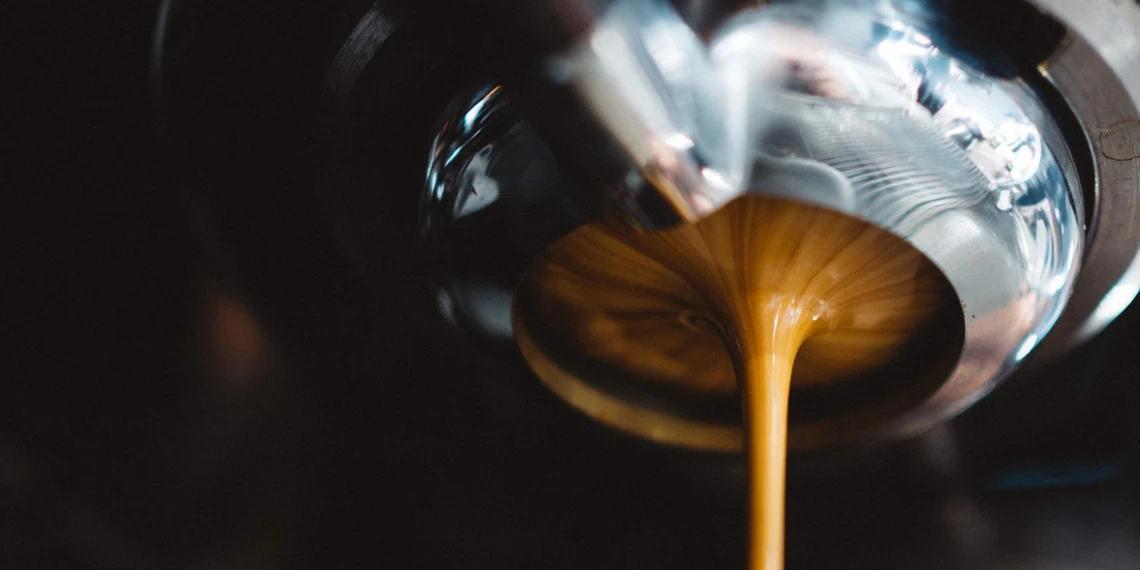
Espresso is truly one of the most complex and fascinating coffee beverages. It’s arguably one of the most temperamental drinks to prepare consistently. Flavor is the defining characteristic that sets espresso apart. The primary indicator of a well-pulled shot is its texture and body—it should have a rich, creamy consistency with a hazelnut-brown crema. Preparing this beverage requires attention to numerous variables, some of which are beyond the barista’s direct control.
Here are the most critical factors to monitor:
- Coffee quality and freshness. Ideally, beans should be no more than one month past their roast date. This factor affects both flavor characteristics and the appearance of the finished drink.
- Extraction time. This is another crucial variable, so pay close attention to your dose and grind size. This is a step many beginners overlook.
Espresso delivers a rich, concentrated flavor profile thanks to the high concentration of essential oils from the coffee beans combined with the small volume of liquid in the cup. Below, we’ll break down the key elements that directly impact the quality of your espresso.
Coffee Freshness

PRO TIP:
We recommend letting beans “rest” for five days after roasting—this allows the coffee to degas and reach its full flavor potential.
Espresso is a beverage whose flavor is extremely sensitive to bean quality and freshness (general freshness guidelines). During roasting, beans undergo significant chemical changes. A reaction occurs between sucrose and proteins, creating critically important aromatic compounds. The flavor development process continues even after roasting completes. After about one month from the roast date, coffee beans begin losing their flavor qualities. With each passing day, the coffee’s taste becomes less vibrant and more muted, while the aroma loses the distinctive characteristics of the bean’s origin region (espresso blends often combine arabica and robusta).
Water Selection
PRO TIP:
For high-quality espresso, we recommend water with these characteristics:
– Total dissolved solids (TDS): 75-150 mg/L
– pH level: 7.0
– Sodium: no more than 10 mg/L
– Calcium hardness: 50-70 mg/L
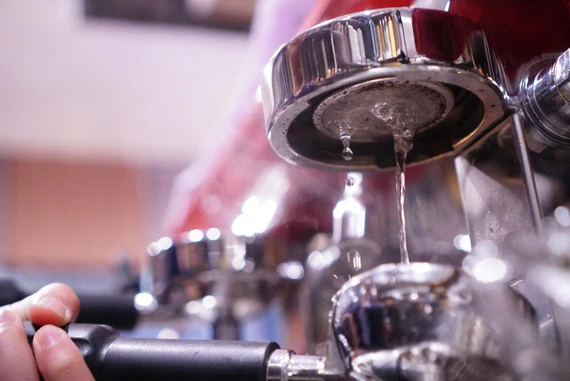
Espresso is 99.9% water, so water quality deserves special attention. Total mineralization should range from 75 to 150 mg/L. Espresso flavor is significantly affected by mineral content variations. Too-low mineralization produces harsh, over-extracted shots. Too-high mineralization makes the drink flat and lifeless. The best option is professional filtration with a reverse osmosis system. If installing such a system isn’t feasible, select appropriate bottled water. Also pay attention to water hardness, pH level, and alkalinity when choosing your water source.
Time After Opening the Bag
PRO TIP:
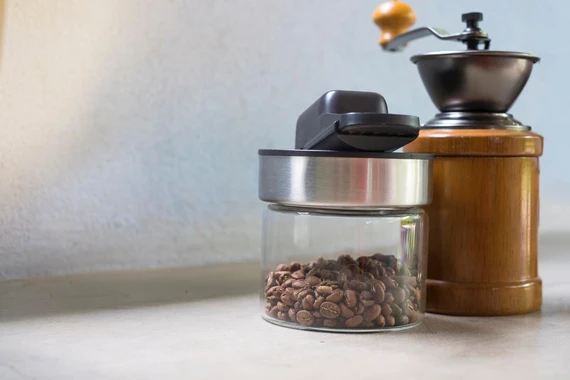
Buy coffee in quantities you can consume within 1-2 weeks. If you need to preserve coffee longer, store it in the freezer—this maintains flavor quality for up to six months. Remember, you can only defrost it once, at room temperature over approximately 12 hours.
Even when coffee is fresh, it degasses quickly after opening the bag. Ideally, coffee should be used within several days of opening, which happens naturally in busy cafés but proves challenging at home.
Time After Grinding
PRO TIP:
If you’re using a ceramic ibrik or any material that retains heat, remove it from the burner slightly early to prevent overflow as the foam continues to rise from residual heat.
Place your ibrik with the coffee and cold water on the stovetop over low-medium heat. Watch carefully as the foam begins to rise. Just before it reaches the top, remove the ibrik from the heat for 20-30 seconds until the foam settles back down. Once it’s settled, return the ibrik to the heat and wait for the foam to rise again. Repeat this process twice for the best results.
Choosing the Right Grind

PRO TIP:
Replace flat burrs every 600-1,000 lbs (300-500 kg) of coffee, conical burrs every 1,100-1,800 lbs (500-800 kg). Also regularly clean burrs with specialized cleaning products.
Grind size is an extensive topic, as there are grinders with conical burrs, flat burrs, ceramic burrs, and numerous other variations. A quality grinder is arguably more important than an expensive espresso machine. The key factor for espresso preparation is maintaining clean, sharp burrs.
Coffee Dosage

PRO TIP:
If you don’t have a professional grinder, a quality hand grinder with burrs can work well.
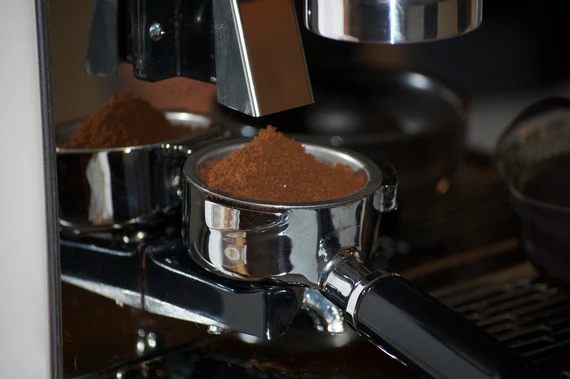
A good grinder is absolutely essential if you’re serious about espresso. Very fine grinds can clog the filter basket, while medium-fine is considered optimal for most espresso preparation.
Coffee Distribution

PRO TIP:
For the best results, weigh your coffee dose every time using a scale.
Another critical step in espresso preparation is proper distribution of ground coffee in the portafilter and tamping. The ground coffee must be distributed evenly in the basket without clumps. Hold the portafilter in one hand and use the index finger of your other hand to distribute the coffee evenly with circular motions. If the ground coffee contains clumps, break them up using a distribution tool or even a toothpick.
After distribution, tamp the coffee with moderate, consistent pressure without tapping (tapping during tamping will likely create channels during extraction, which can fundamentally disrupt the flavor balance of your espresso). The tamp should be level—there are several tamping techniques, so choose the one that works best for you and practice it consistently. If the coffee puck is uneven, water will flow unevenly through it, resulting in flavor imbalance.
After tamping, wipe away any stray grounds from the rim and lugs of the portafilter with your palm to prevent them from baking onto the group head gasket. To verify proper tamping, watch the extraction process—espresso should flow from the spout like honey dripping from a spoon, without sputtering, in a steady stream.
Extraction Time
PRO TIP:
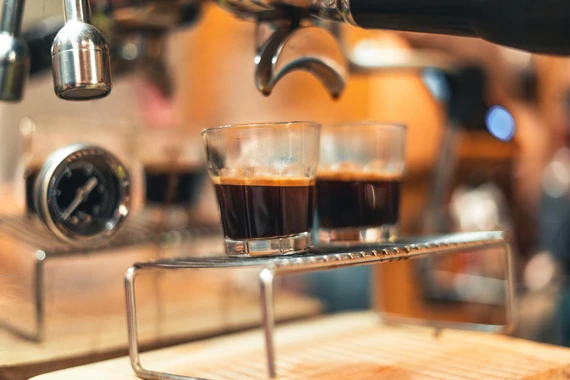
If your target volume or weight is reached in less than 25-30 seconds, grind finer. If it takes longer, grind coarser. Adjust grind in small increments, as espresso grind size is an extremely sensitive variable. After each grind adjustment, purge 4-5 grams to clear the old grind setting from the grinder.
After completing your tamping routine, insert the portafilter into the group head and begin extraction. If you have a heat exchanger machine, flush approximately 50ml of water before pulling your shot. This lowers the water temperature to the proper brewing range—typically you’ll see steaming water discharge, and once this stops, you can begin extraction. If you have a dual-boiler machine, flushing isn’t necessary.
Once you’ve locked in the portafilter, begin extraction immediately—any delay creates off-flavors as the coffee begins thermal contact with the hot group head. Weighing your shots is an integral part of espresso preparation: espresso demands precision and consistent workflow. If measuring by volume rather than weight, the shot should yield approximately 1 oz (30ml) including crema.
Dialing in grind size is probably the most challenging aspect of espresso preparation. Remember: the finer the grind, the slower the extraction.
Water Temperature

PRO TIP:
Temperature helps unlock the flavor profile inherent in the beans, but if the coffee itself has bright acidity, increasing temperature excessively will only amplify sourness.
Different coffee varieties require different brewing temperatures. Light roasts need temperatures above 201°F (94°C), medium roasts around 198°F (92°C), and dark roasts around 194°F (90°C). Adjust temperature based on results—if your espresso is excessively bitter, lower the temperature by 2-4°F and try again. If acidity is too high, try increasing by 2-4°F.
Water Pressure
PRO TIP:
Ideally, adjust pressure under resistance similar to actual espresso extraction, or better yet, during an actual shot.
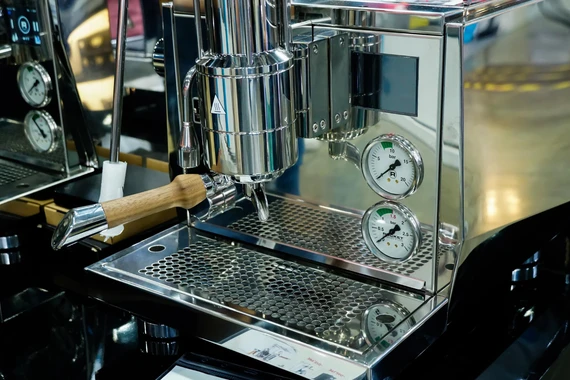
The optimal pressure for espresso extraction is 8-9 bar. Set this on your machine and monitor it to ensure it remains stable.
Equipment Condition
PRO TIP:
We recommend using specialized espresso cleaning products designed for coffee equipment.
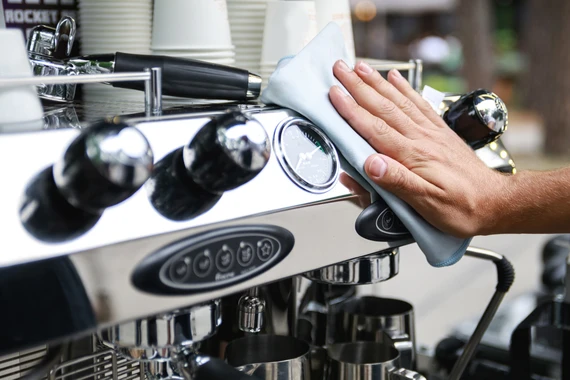
It’s crucial to keep the boiler, group head, filter baskets, and portafilters clean. Coffee oils from the beans and calcium buildup inside the boiler significantly impact the final espresso quality. That’s why it’s essential to use properly filtered water and regularly clean your espresso machine and grinder from coffee oil residue.
Dialing in Espresso: Adjusting Flavor
To make it easier to fine-tune your espresso’s flavor, we’ve included this reference guide to help you navigate the process.
When dialing in, we recommend changing only one variable at a time. For example, if you adjust grind size, keep your dose and extraction time constant. And vice versa. This approach helps you understand exactly which direction to move.
If your espresso is too bitter:
- Decrease the brew ratio (below 1:2)
- Lower the water temperature
- Reduce extraction time
If there’s excessive acidity:
- Increase the brew ratio (above 1:2)
- Raise the water temperature
- Extend extraction time
Keep in mind that bitterness comes in different forms: if the bitterness stems from roast development—think dark chocolate or ashy aftertaste—you can correct it using standard methods. However, bitterness from chlorogenic acidity, which tastes more like wormwood or medicinal bitterness, requires the opposite approach—treat it like excessive sourness.
These flavor correction methods help unlock the inherent qualities established by the coffee variety, terroir, processing method, and roaster. However, if your coffee is inherently acidic to begin with—for example, a washed Ethiopian—pushing extraction too far will only amplify that bright acidity rather than balancing it.
Related Articles
How to prepare Flat White coffee: recipe, differences from cappuccino and latte
Flat White is a rather strong coffee-milk drink based on double espresso with a minimum of milk foam. It is…
Read moreDetails
Ristretto – what is that type of coffee you may have seen on the menu of a coffee machine or Italian cafe? Differences from espresso
Ristretto is an Italian coffee drink that is a shortened version of espresso. It is prepared similarly to espresso, but…
Read moreDetails