 Home
Home Recipes
 Beans
Beans Gear
Gear Roasting
 Brewing
 FAQ
FAQ
I often wonder about the caffeine in my favorite drinks. The debate on whether tea or coffee has more caffeine is ongoing. Knowing the caffeine content helps us make better choices about what we drink.
Did you know the caffeine in tea and coffee can change a lot? It depends on brewing time, brand, and type. For example, a typical coffee can have 60 to 200 mg of caffeine. Tea, on the other hand, can have 25 to 40 mg per 8 oz serving. Let’s look into the details and find out more about caffeine in our diets.
As we explore caffeine, we’ll compare tea and coffee. We’ll also discover other surprising sources. This will help you understand how to control your caffeine intake better.
Key Takeaways
- Caffeine content varies a lot between different teas and coffees.
- Brewing time and brand can change the caffeine in your drink.
- Other surprising caffeine sources include chocolate and certain medicines.
- Knowing about caffeine content helps us make better choices.
- Both tea and coffee have their own caffeine levels.
The Caffeine Showdown: Tea vs. Coffee Basics
To compare tea and coffee’s caffeine, we must first understand caffeine. It’s a stimulant that boosts alertness and energy by affecting the brain.
Caffeine blocks adenosine receptors in the brain. This leads to more activity in the central nervous system. This means we feel more alert and energetic.
The Science Behind the Energy Boost
The energy boost from caffeine comes from blocking adenosine. This makes us feel less tired. It also increases dopamine and norepinephrine activity.
Caffeine’s half-life is about five hours. This means it takes five hours for the body to get rid of half of what we consume. This time can change based on how fast we metabolize it and our body weight.
Knowing these basics helps us understand the caffeine in tea and coffee. It lets us make better choices about how much caffeine we take in.
Where Is More Caffeine: Tea or Coffee?
Caffeine is a key factor in choosing between tea and coffee. But how do these beverages actually stack up? It’s important to consider both the concentration of caffeine and the typical serving size.
Serving Size Considerations
A standard serving size for coffee is 8 ounces. For tea, it’s about 6 ounces. But, actual serving sizes can vary a lot. For example, a large coffee from a coffee shop can be 16 ounces or more, greatly increasing the total caffeine intake.
Concentration vs. Total Amount
Caffeine concentration in coffee is generally higher than in tea. But, the total amount of caffeine consumed also depends on the serving size. Brewing methods and brand-specific formulations can also impact caffeine levels. For example, espresso has a very high concentration of caffeine, but it’s usually served in small quantities.
| Beverage | Typical Serving Size (oz) | Caffeine Concentration (mg/oz) | Total Caffeine (mg) |
|---|---|---|---|
| Coffee | 8 | 12-15 | 95-120 |
| Tea | 6 | 3-5 | 18-30 |
In conclusion, while coffee generally has a higher caffeine concentration than tea, the total caffeine intake depends on the serving size. By understanding these factors, consumers can make informed choices about their caffeine intake.
Caffeine Content in Different Coffee Types
As a coffee lover, knowing the caffeine in various coffee types is key. Coffee is a big part of many people’s day. Knowing how much caffeine you drink helps manage your energy and health.
Coffee comes in many forms, and caffeine levels vary a lot. Let’s look at some popular coffee types and their caffeine levels.
Lattes, Cappuccinos, and Americanos
Lattes, cappuccinos, and Americanos have different caffeine amounts. A latte has 60-80mg of caffeine per 8oz. Cappuccinos have 60-120mg per 8oz. Americanos, with espresso and hot water, have 60-180mg per 8oz.
Espresso-based drinks’ caffeine depends on the number of shots. A single shot has 60-75mg of caffeine. A double shot has 120-150mg. So, a double-shot latte or cappuccino has more caffeine than a single-shot one.
Here are some important points about caffeine in coffee:
- The type of coffee bean affects caffeine content.
- Roasting methods also impact caffeine levels.
- Brewing techniques, like drip or French press, vary caffeine content.
Understanding caffeine in different coffee types helps you choose wisely for your daily coffee habit.
Caffeine Content in Various Tea Types
Exploring the world of tea shows us many types with different caffeine levels. As a tea lover, I’ve found that caffeine amounts change based on the tea leaves, brewing time, and brand.
Black tea is known for its strong flavor and more caffeine. An 8-ounce cup of black tea has 40 to 70 milligrams of caffeine. Green tea, with its light taste, has less caffeine, about 25 to 30 milligrams per 8-ounce cup.
Oolong tea, being partially fermented, has caffeine levels between black and green tea. It usually has 30 to 50 milligrams per 8-ounce serving. White tea, the least processed, has the least caffeine, around 6 to 8 milligrams per 8-ounce cup.
Herbal teas are naturally caffeine-free, perfect for those who can’t handle caffeine. But, some tea blends can have different caffeine levels based on their mix.
| Tea Type | Caffeine Content (mg per 8 oz) |
|---|---|
| Black Tea | 40-70 |
| Green Tea | 25-30 |
| Oolong Tea | 30-50 |
| White Tea | 6-8 |
| Herbal Tea | 0 |
In conclusion, when comparing highest caffeine content tea or coffee, black tea is a strong contender, but coffee has more caffeine. Knowing the tea caffeine content helps us make better choices about our daily caffeine intake.
Comprehensive Caffeine Comparison Table
To help you choose between tea and coffee, let’s look at their caffeine levels. Knowing how much caffeine is in different teas and coffees can guide your daily drink choices.
The table below shows a detailed comparison of caffeine in various teas and coffees:
| Beverage Type | Caffeine Content (mg per 8 oz serving) |
|---|---|
| Drip Coffee | 60-180 |
| Espresso | 50-75 |
| Black Tea | 40-70 |
| Green Tea | 25-30 |
| White Tea | 6-8 |
The table shows caffeine levels vary a lot. Drip coffee usually has more caffeine than tea. Espresso packs a lot of caffeine in a small amount. Among teas, black tea has more caffeine than green tea or white tea.
Using this comparison, you can understand the caffeine in your favorite drinks. This helps you choose what’s right for you, based on how sensitive you are to caffeine.
Factors Affecting Caffeine Levels in Tea
Knowing the factors that affect caffeine levels in tea helps you choose better. The caffeine in your tea can change based on several things.
Tea type is a big factor. Black tea usually has more caffeine than green tea. Also, the brand matters because different makers process tea differently, affecting caffeine levels.
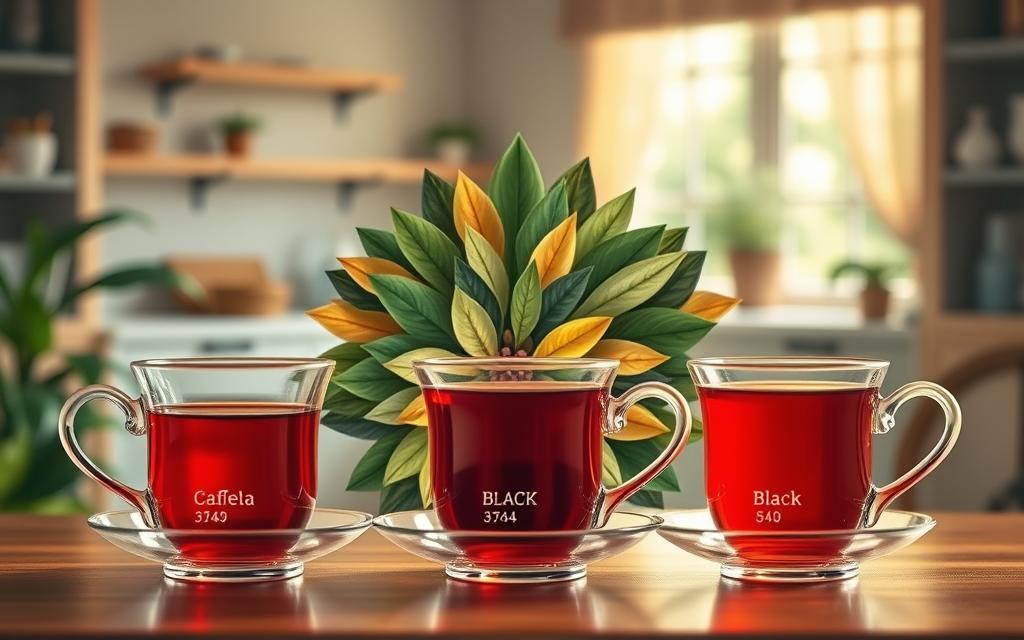
Brewing time is also important. Steeping your tea longer means more caffeine gets into the water. The amount of tea leaves you use also changes caffeine levels.
By thinking about these factors, you can adjust your tea making to get the caffeine you want. Whether you want more or less caffeine, knowing about tea caffeine levels helps you make good choices.
Factors Affecting Caffeine Levels in Coffee
Many things affect how much caffeine is in coffee. Knowing these can help you choose your coffee wisely.
Arabica vs. Robusta
The type of coffee bean is key in caffeine levels. Arabica beans have less caffeine than Robusta beans. Arabica has about 0.8-1.2% caffeine, while Robusta can have up to 2.7%.
Light vs. Dark Roast
The roast level also changes caffeine content. Surprisingly, lighter roasts have more caffeine than darker roasts. This is because caffeine is lost during roasting, and darker roasts are roasted longer.
| Coffee Type | Caffeine Content |
|---|---|
| Arabica | 0.8-1.2% |
| Robusta | 1.7-2.7% |
| Light Roast | Higher |
| Dark Roast | Lower |
Understanding these factors lets you control your caffeine intake. Whether you like Arabica or Robusta, light or dark roast, knowing the caffeine content helps you choose what’s best for you.
How Your Body Processes Caffeine
Knowing how caffeine is processed helps us choose wisely about our daily intake. When we drink caffeine, it goes into our bloodstream. There, it can change how our body works.
The liver breaks down caffeine, and its effects can last hours. How fast caffeine is processed varies. This depends on age, weight, and how our bodies react to it.
The L-Theanine Effect in Tea
Tea has an amino acid called L-theanine. It helps relax us and balances out caffeine’s effects. This leads to a steady energy boost.
Coffee’s Immediate vs. Tea’s Gradual Impact
Coffee acts fast because it has a lot of caffeine and no L-theanine. Tea, on the other hand, gives energy slowly. This is shown in the table below:
| Beverage | Caffeine Content | L-theanine Presence | Energy Release |
|---|---|---|---|
| Coffee | High | No | Immediate |
| Tea | Moderate | Yes | Gradual |
In summary, how our bodies handle caffeine depends on the drink we choose. By knowing these differences, we can pick the right amount of caffeine for us.
Other Surprising Sources of Caffeine
Many think caffeine is only in tea and coffee. But, it’s also in many foods, drinks, and even some medicines. This makes it a common stimulant in our daily lives.
Energy drinks are a big surprising source of caffeine. They give you energy but can have as much caffeine as coffee. Some energy drinks have up to 300mg of caffeine in just one serving.
Certain foods and desserts also have caffeine. Chocolate, for example, has caffeine, but less than coffee or tea. Eating a lot of chocolate can still add to your caffeine intake.

Some medicines, like pain relievers and cold medicines, also have caffeine. Caffeine helps these medicines work better. Always check the ingredients if you’re watching your caffeine.
Other sources of caffeine include flavored waters, some ice creams, and protein powders. Knowing these sources helps you control your caffeine better.
Learning about caffeine sources helps you make better choices. Whether you’re cutting down on caffeine or just want to know what you’re eating, knowing where caffeine is found is key.
Decaffeinated Options: What You Should Know
For those who love tea and coffee but want to limit their caffeine intake, decaf options are a great alternative. Decaf coffee and tea have become staples for many looking to reduce their caffeine consumption without giving up their favorite beverages.
Decaffeination is the process of removing caffeine from coffee beans or tea leaves. There are several methods used, including solvent-based and Swiss Water methods. The Swiss Water method is particularly popular for its chemical-free process.
Caffeine Content in Decaf Beverages
While decaf coffee and tea have much less caffeine than their regular counterparts, they are not entirely caffeine-free. On average, an 8-ounce cup of decaf coffee may contain up to 7 milligrams of caffeine. Decaf tea can have varying levels depending on the type and brewing method.
| Beverage | Average Caffeine Content (mg per 8 oz cup) |
|---|---|
| Decaf Coffee | 0-7 |
| Decaf Black Tea | 2-4 |
| Decaf Green Tea | 1-3 |
When choosing decaf options, it’s essential to check the labeling and understand the decaffeination process used. This ensures you’re getting a product that meets your caffeine preferences.
Common Caffeine Myths and Misconceptions
Caffeine myths are everywhere, but knowing the truth can help us choose wisely. Many think caffeine is always bad, but it’s not that simple. Caffeine can be good or bad, depending on how much we drink and how our bodies react.
One myth is that caffeine makes us dehydrated. But, the amount of water lost is usually not enough to cause dehydration. Another myth is that caffeine causes heart problems. However, most people can safely drink moderate amounts of caffeine without harming their heart.
Some believe decaf coffee has no caffeine. But, decaf coffee still has a bit of caffeine. Knowing this can help us make better choices.
Myths also say caffeine ruins sleep. It’s true that too much caffeine or drinking it before bed can mess with sleep. But, drinking it in moderation is key. Paying attention to when and how much we drink can help avoid sleep problems.
By clearing up these caffeine myths and understanding the facts, we can enjoy caffeine without harming our health.
Conclusion
Looking at the caffeine in tea and coffee, we see they’re both special in their own way. Coffee usually has more caffeine than tea. But, the amount can change based on the type and how it’s made.
We’ve looked at what affects caffeine levels in tea and coffee. Things like brewing time, temperature, and the quality of the beans or leaves matter a lot. It’s also important to know how your body reacts to caffeine.
In the end, knowing how much caffeine is in your drinks can help you make smarter choices. Whether you like tea or coffee, understanding the facts can make you enjoy them even more.
Related Articles

Why Does Coffee Make You Need to Poop?
Discover why your morning coffee triggers the urge to poop. I explore the science behind coffee’s laxative effects.
Read moreDetails
Cascara: The Coffee Byproduct with Surprising Health Benefits
Cascara, the coffee byproduct, offers unexpected health advantages. Learn why it’s more expensive than coffee beans.
Read moreDetails
What Are Coffee Quakers? (Defects & How to Avoid Them)
What Are Coffee Quakers and how do they affect your brew I explain their causes impact on taste and how…
Read moreDetails