 Home
Home Recipes
 Beans
Beans Gear
Gear Roasting
 Brewing
 FAQ
FAQ
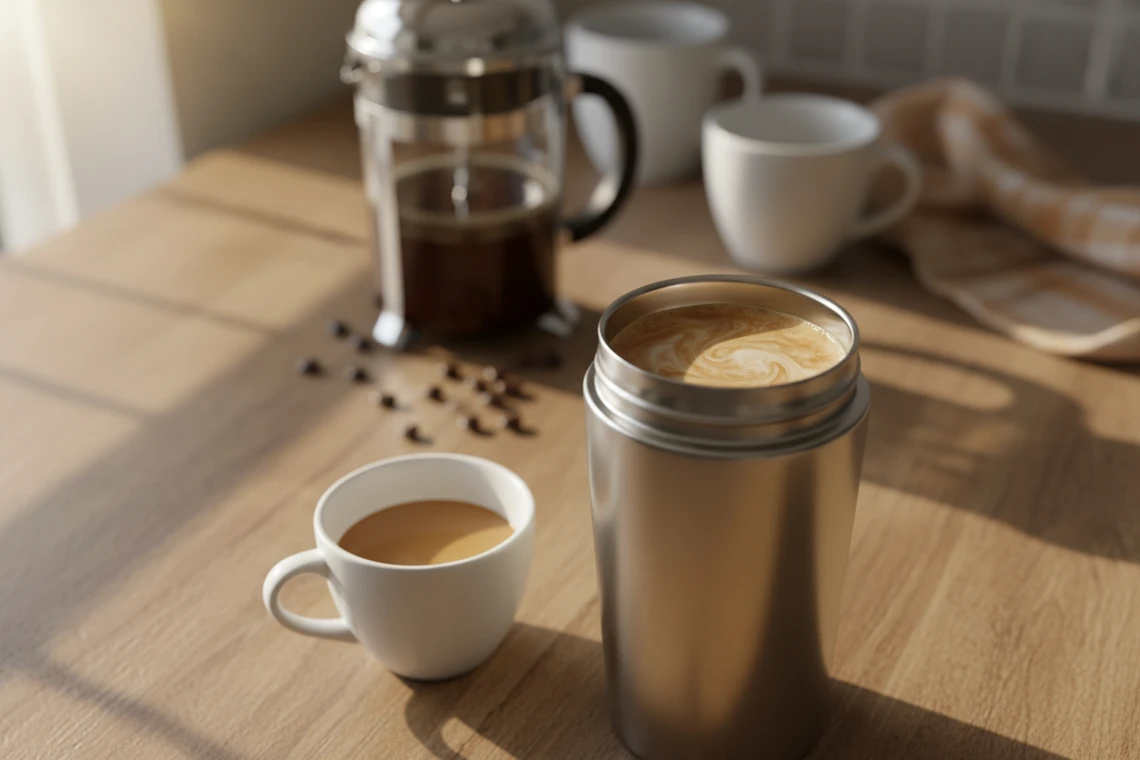
I get asked a lot if can you put coffee with milk in a thermos for the daily commute. Many of us love that creamy, warm start to the morning. But safety is always my first concern.
Insulated containers are great for keeping drinks hot, but they can also be a breeding ground for bacteria. Dairy products can spoil fast when they’re not kept cold enough.
I want to dive into these issues to make sure your drink stays tasty. I’ll share the risks and offer tips to keep your food safe on the go.
Key Takeaways
- Dairy products spoil rapidly when kept at room temperature.
- Insulated vessels must maintain high heat to prevent bacterial growth.
- Preheating your container helps keep liquids at safe levels longer.
- Avoid leaving creamy drinks inside for more than two hours.
- Cleaning your gear thoroughly prevents lingering bacteria buildup.
The Science of Milk and Temperature
Mixing milk into your coffee opens up a world of food safety science. A hot cup of coffee feels comforting, but adding dairy changes the thermos’s internal environment. I aim to explain how these factors interact, so you can enjoy your drink safely.
Understanding the Danger Zone
Experts call the “danger zone” the temperature range where bacteria grow fast. This range is between 40°F and 140°F. If your coffee is in this range, it’s a perfect place for harmful bacteria to grow.
Here are some key points to remember:
- Rapid Growth: Bacteria can double in number in just twenty minutes in this range.
- Temperature Drop: Even a good thermos will lose heat, letting the liquid enter the danger zone.
- Invisible Risks: You can’t always smell or taste the bacteria that grow in these conditions.
Why Dairy Requires Special Care
Dairy is more sensitive to temperature changes than black coffee. Black coffee is acidic and stable, but milk has proteins, fats, and sugars. These are perfect fuel for bacteria to grow.
Adding milk to your coffee makes a nutrient-rich medium. If the temperature isn’t kept above 140°F, the risk of spoilage goes up a lot. Always be careful with your dairy-infused coffee, just like you would with perishable food in the fridge.
Can You Put Coffee with Milk in a Thermos?
When I make my morning coffee, I often think about adding milk to my thermos. Many ask, can you put coffee with milk in a thermos without health risks? The answer is not simple. It depends on the temperature and how long you store it.
The Reality of Insulated Containers
Even the best thermos is not a sterile place. It can have bacteria if not cleaned well. Storing thermos coffee with milk creates a warm spot for bacteria to grow.
Keeping your drink hot is key. The quality of your thermos affects how well it prevents spoilage.
Assessing Potential Risks
Timing is crucial when carrying dairy drinks. If you drink it soon, the risk is low. But, waiting too long can cause bacteria to grow, making your drink taste bad or even sickening.
The table below shows how storage conditions affect your drink’s safety:
| Storage Condition | Risk Level | Recommended Time |
|---|---|---|
| Hot (Above 140°F) | Low | Up to 4 Hours |
| Warm (100°F – 130°F) | High | Less than 1 Hour |
| Room Temperature | Very High | Do Not Store |
By watching these factors, you can safely enjoy your thermos coffee with milk. Always keep it clean and hot for the best experience.
How Long Can Coffee with Milk Stay in a Thermos?
If you love drinking thermos coffee with milk, you might wonder how long it stays safe. These containers are great at keeping drinks hot, but they can’t ignore food safety rules. Knowing when your drink is no longer safe is crucial for your health.
The Two-Hour Rule Explained
The key rule is the two-hour rule. Bacteria grow best in temperatures between 40°F and 140°F. This is called the “danger zone.” When your coffee cools down, the risk of bacteria growing goes up a lot.
I suggest drinking your coffee with milk within two hours. If it’s been out longer, it’s best to throw it away to avoid getting sick.
Factors That Influence Spoilage Time
Several things affect how fast your thermos coffee with milk becomes unsafe. The first is the coffee’s initial temperature. Lukewarm coffee gets into the danger zone faster than hot coffee.
The quality of your vacuum seal is also key. A good, well-insulated container keeps your coffee hot longer. Keeping your lid and seal in good shape helps your coffee stay hot and safe for longer.
Does Milk Go Bad in a Thermos?
Many think heat alone keeps dairy fresh in thermoses. But, high temperatures don’t make a container completely sterile. If the thermos cools down, milk can quickly spoil.
Signs of Spoiled Dairy
Always check your coffee before drinking it if it’s been sitting. A sour smell or a thick texture are clear signs of spoiled milk. Small white flecks on the surface mean it’s curdled.
Don’t drink dairy that smells bad or looks clumpy. It can make you sick. If unsure, throw it away.
| Indicator | Fresh Milk | Spoiled Milk |
|---|---|---|
| Aroma | Neutral/Creamy | Sour/Acidic |
| Texture | Smooth/Liquid | Clumpy/Curdled |
| Appearance | Uniform Color | Separated/Flecks |
The Impact of Residual Bacteria
Even hot coffee can be contaminated by residual bacteria in the thermos. Bacteria can hide in small spaces and contaminate new milk. This happens fast, especially if the thermos isn’t airtight.
Keep your thermos clean to avoid bacterial growth. Use a bottle brush to clean it well after each use. This way, your coffee will stay fresh and safe.
When to Add Milk: Before or After?
I often wonder if I should add milk to my thermos before or after brewing. It’s a common question for those seeking the perfect coffee on the go. Finding the right mix of convenience and quality is key for a great morning.
The Case for Adding Milk at the Last Minute
Adding milk just before drinking is often the best strategy for flavor. Keeping milk separate until you drink helps avoid warm milk for too long. This keeps your coffee fresh during your commute.
I personally prefer this method. It lets me control the milk-to-coffee ratio. You can adjust the creaminess right before drinking. It also stops milk from getting an off-taste from heating too long.
Why Pre-Mixing Can Affect Temperature Retention
Many think mixing milk and coffee before leaving is easier. But, this can lower the drink’s temperature a lot. Cold milk takes heat away from your coffee as soon as they mix.
Pre-mixing makes your thermos cooler. This can make your coffee not stay hot enough for long. Keeping them separate keeps your coffee hot longer, making your day more enjoyable.
Best Practices for Coffee with Milk in Thermos
Simple steps can make a big difference in your morning coffee. To enjoy a thermos coffee with milk, start by preparing your container. This ensures your coffee stays warm.
Pre-heating Your Thermos Properly
Start by pre-heating your thermos. Pour boiling water into it and wait for five minutes before throwing it out.
This step warms the thermos. It stops the cold metal from cooling your coffee too fast. Without pre-heating, your coffee will cool down quickly.
Maintaining Optimal Internal Temperatures
Keeping your coffee warm in a thermos is simple. Fill it to 90% to keep heat in better. This reduces the air gap at the top.
Choosing the right thermos for hot coffee with milk is key. Make sure the lid is tight to keep heat in.
| Preparation Step | Benefit | Impact on Temperature |
|---|---|---|
| Pre-heating with boiling water | Warms the inner walls | High retention |
| Filling to 90% capacity | Reduces air exposure | Moderate retention |
| Using a vacuum-sealed lid | Prevents heat convection | Maximum retention |
By following these steps, you’ll keep your coffee warm all morning. A good thermos for hot coffee with milk keeps it safe and tasty until you drink it.
Choosing the Right Insulated Thermos for Coffee with Milk
When I search for the best thermos for coffee and milk, I look for materials that don’t hold onto old tastes. The right container is key for keeping your drink safe and tasting good. It keeps your coffee at the right temperature, which stops bacteria from growing.
Stainless Steel vs. Plastic Liners
I always suggest going for a stainless steel interior over plastic. Plastic liners can pick up smells and bacteria, ruining your coffee’s taste. Stainless steel is non-reactive, making it easy to clean and sanitize.
Stainless steel is also very durable. It doesn’t break or wear out, keeping your coffee safe. Choosing steel is a simple way to keep your morning drink fresh.
Vacuum Insulation Technology Explained
Knowing how an insulated thermos for coffee with milk works can make your mornings better. These containers have a double-wall design with a vacuum in between. This stops heat from passing through, keeping your coffee hot for hours.
This tech is incredibly effective at keeping your drink at a safe temperature. It keeps your coffee hot, stopping bacteria from growing. A vacuum-insulated bottle is the best way to enjoy your coffee safely on the go.
Tips for Brewing Coffee with Milk in a Thermos
Making a tasty thermos coffee with milk recipe is simpler than you think. When you take your coffee on the go, the thermos changes how flavors mix. Here are some tips for brewing coffee with milk in a thermos to keep your coffee tasting great.
Adjusting Your Coffee Strength
One common error is using the same coffee ratio with milk. Milk makes your coffee weak. So, brew your coffee a bit stronger to balance it out.
Adding 10% to 15% more coffee grounds keeps your coffee bold. This trick ensures your coffee stays rich, even after adding milk or creamer. Balance is the key to a delicious cup that lasts.
“The secret to a perfect cup of coffee is not just the beans, but the precision of the brew and the care taken in the preparation.”
Managing Milk Temperature Before Pouring
Pouring cold milk into hot coffee can cool it down too fast. This makes your coffee taste flat. To avoid this, warm your milk a bit before mixing it with your coffee.
Don’t boil the milk, as it can change the taste and texture. Just warm it up to a cozy temperature. This proactive approach keeps your coffee warm for longer.
Safer Alternatives to Consider
If you worry about dairy safety on your morning commute, there are ways to adjust. You don’t have to give up your coffee just because of spoilage concerns. By trying different ways to add creaminess, you can enjoy your coffee without worry.
Using Non-Dairy Creamers
Switching to non-dairy creamers is a smart move to avoid dairy risks. These products are shelf-stable, so they don’t need to be refrigerated until opened. This is perfect for commuters who want to keep their coffee additives safe and sound.
These creamers also come in many flavors, which can make your coffee better. Choosing a high-quality plant-based option gives your coffee a rich, creamy taste. Since they last longer, you won’t have to worry about them going bad during your drive.
Carrying Milk Separately in Small Containers
If you like real dairy, you can still enjoy it safely. Carry your milk in a separate, small, insulated container instead of mixing it with your coffee. This keeps your milk cold until you’re ready to drink.
Keeping milk separate keeps both your coffee and dairy fresh. You can pour the milk into your mug when you get to your destination or during a break. This proactive approach ensures a fresh, tasty cup every time.
Troubleshooting Common Taste and Texture Issues
Nothing ruins a morning commute faster than a cup of coffee that tastes like scalded milk or has separated. I have found that minor tweaks to your routine can prevent common issues like curdling or that unpleasant scalded flavor. By following these simple techniques, you can ensure your coffee remains smooth, creamy, and delicious until the very last drop.
Preventing the Scalded Milk Flavor
The dreaded scalded taste usually happens when milk is held at high temperatures for an extended period. When milk proteins break down under constant heat, they release sulfurous compounds that alter the flavor profile. To avoid this, never add boiling hot milk to your thermos.
Instead, aim to heat your milk to a gentle temperature before combining it with your coffee. If you prefer a hot drink, try tempering the milk by mixing a small amount of hot coffee into it first. This gradual temperature increase helps the dairy proteins stabilize, preventing that burnt, metallic aftertaste.
Dealing with Separation and Curdling
Separation often occurs when the acidity of the coffee reacts poorly with the proteins in the milk. This is especially common if your coffee is particularly acidic or if the milk is nearing its expiration date. You can significantly reduce the risk of curdling by choosing a lower-acidity roast or using a splash of heavy cream instead of regular milk.
If you notice your drink separating, try to stir it thoroughly before you take your first sip. Adding the milk at the very last second before you leave the house also helps maintain a better texture. Keeping your thermos clean is another vital step, as residual bacteria from previous uses can accelerate the breakdown of fresh dairy.
Final Thoughts on Enjoying Your Commute Coffee
Your morning ritual is special, and it needs the best tools. A high-quality thermos keeps your coffee and milk perfect from start to finish. It’s a simple way to make your daily commute better.
Small details matter a lot for flavor and safety. A good thermos keeps your dairy fresh and coffee warm. This gives you peace of mind during your busy morning.
Using a reliable thermos, like a Zojirushi or Stanley bottle, makes it easy. The right thermos keeps your drink tasty as you travel.
Try different methods to find what works for you. Share your favorite coffee tips with friends. Your advice helps others enjoy their morning coffee safely.