
 Home
Home Recipes
 Beans
Beans Gear
Gear Roasting
 Brewing
 FAQ
FAQ
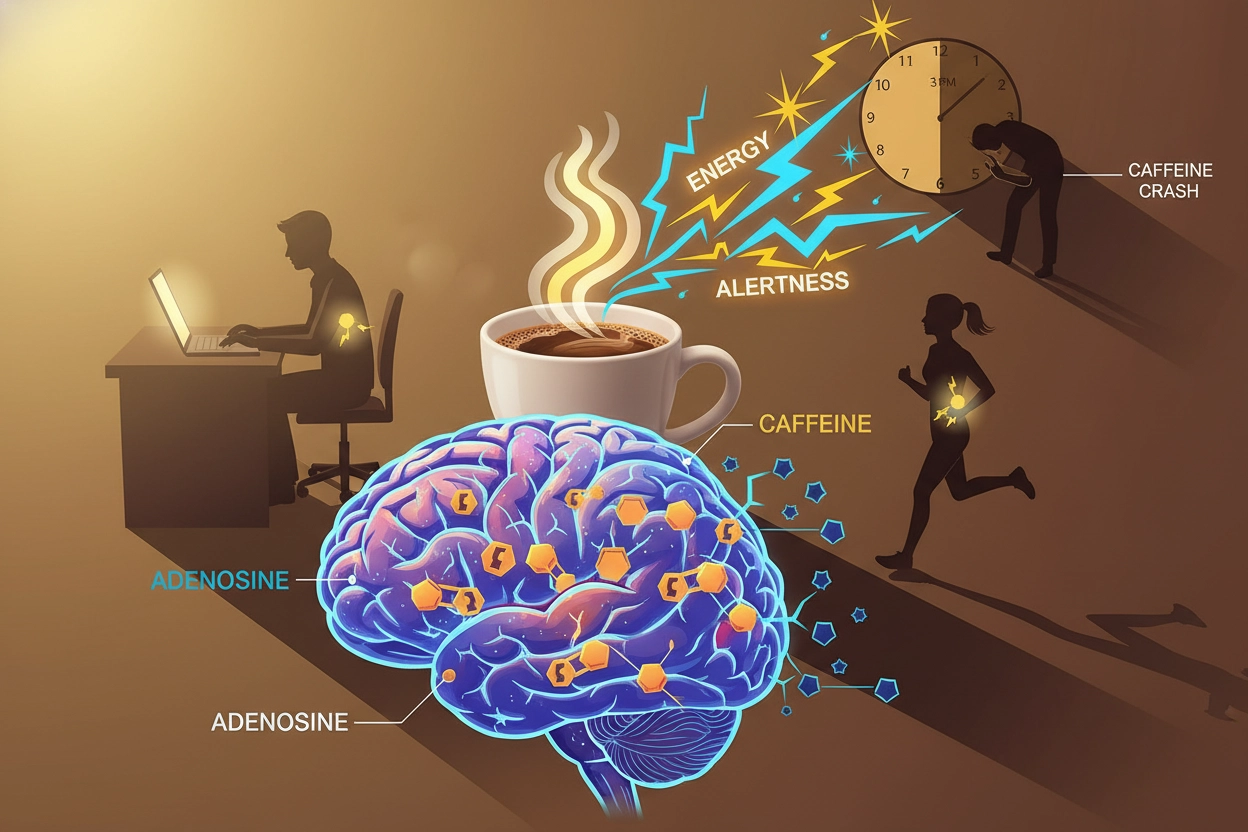
I start every morning with a steaming mug of coffee. It helps me shake off the morning fog and get ready for the day. Have you ever wondered how does caffeine work to wake you up?
It’s not magic; it’s a cool chemistry dance in your brain. This stimulant blocks certain receptors, keeping you sharp and focused for a few hours.
But, that first boost can come with a cost. Many of us feel more tired by mid-afternoon, even after drinking coffee. Understanding this cycle helps us manage our energy better.
In this article, we’ll dive into the science behind your favorite drink. We’ll look at adenosine’s role and why your body needs rest.
Key Takeaways
- Caffeine acts as a temporary stimulant by interacting with brain chemistry.
- Adenosine is the main chemical that makes you feel sleepy.
- The substance blocks adenosine receptors to prevent fatigue.
- The mid-afternoon slump happens when the stimulant wears off and adenosine levels rise.
- Knowing these metabolic processes helps you time your coffee for better energy.
The Science of Wakefulness: How Does Caffeine Work in Your Body
When I drink coffee, I feel a boost in energy. But what’s happening inside my body? Caffeine acts as a stimulant for my central nervous system. It quickly enters my bloodstream and heads to my brain.
This process is fast. In minutes, caffeine crosses the blood-brain barrier. This barrier protects my brain. It’s where caffeine alertness starts, making me feel less tired.
Caffeine works by mimicking natural signals. It blocks signals that tell my brain to sleep. By doing this, it keeps me alert and focused in the morning.
“Caffeine is the most widely used psychoactive substance in the world, acting as a gentle nudge to the nervous system to keep us moving forward.”
To understand its effects, I’ve made a table. It shows how caffeine changes my body after a cup.
| Biological System | Pre-Caffeine State | Post-Caffeine State |
|---|---|---|
| Heart Rate | Resting/Baseline | Slightly Elevated |
| Mental Focus | Low/Drowsy | Heightened/Sharp |
| Sleep Signals | Active/Accumulating | Blocked/Suppressed |
| Reaction Time | Standard | Improved |
Knowing how does caffeine work helps me use it wisely. I time my coffee to match my natural energy. This simple science boosts my daily productivity.
Understanding Adenosine: The Molecule of Sleep Pressure
Adenosine is a key player in your daily energy cycle. It acts like a sleepiness meter inside your body. As you stay awake, it builds up in your brain, causing “sleep pressure.”
When you wake up, your adenosine levels are low. As you go about your day, your brain uses energy, releasing adenosine. This shows your body is working hard.
The more adenosine you have, the more you want to sleep. It’s a smart system to help you recover. But, caffeine adenosine can mess with this natural balance, hiding your brain’s signals.
“Sleep is the golden chain that ties health and our bodies together.”
Knowing how caffeine adenosine works helps you manage your energy. Seeing fatigue as a chemical buildup helps you choose when to drink coffee. It’s not just tiredness; it’s about listening to your brain’s natural cycles.
The Molecular Tug-of-War: Caffeine and Adenosine Interaction
Imagine a tiny battle in your brain with every sip of coffee. This caffeine mechanism of action is like a game of musical chairs at a tiny scale. Your brain makes adenosine, a molecule that tells your body to slow down and rest.
When you drink coffee, caffeine goes straight to your brain. It looks a lot like adenosine, so it can fit into the same spots. By doing this, caffeine blocks the signals that tell your neurons to sleep.
This battle between caffeine adenosine makes you feel awake. Even if you’ve been working hard all day, caffeine stops your body from feeling tired. It’s like your brain is ignoring its own tiredness.
Think of it as a tug-of-war where caffeine wins. Adenosine is still there, but it can’t bind to its receptors. This caffeine adenosine fight is why your coffee makes you feel so alert and focused.
Mapping the Brain: Understanding Adenosine Receptors and Caffeine
Ever wondered why caffeine gives you a morning boost? It’s all about how caffeine interacts with your brain’s adenosine receptors. Think of your brain as a bustling network. Adenosine is like a signal that says it’s time to relax.
Adenosine molecules bind to their receptors, causing you to feel tired. But caffeine is different. It looks similar to adenosine and can fit into the receptors too. Yet, it doesn’t trigger the sleepiness response.
Caffeine blocks the adenosine receptors, stopping the “time to sleep” signal. This is called competitive inhibition. With the receptors occupied, your brain stays alert and focused.
There are several types of adenosine receptors in our bodies. But two are key for our energy:
- A1 Receptors: These are found all over the brain and are where caffeine works to reduce tiredness.
- A2A Receptors: Located in areas that control dopamine, these receptors help improve mood and alertness.
This knowledge explains why you feel more alert after drinking coffee. Caffeine prevents sleep pressure, keeping your brain active. This caffeine mechanism of action shows how small molecules can greatly impact our daily lives and mental performance.
The Pharmacokinetics of Your Morning Brew: Absorption and Metabolism
My morning coffee goes through a cool change once I drink it. To grasp why I feel a sudden energy boost, I delve into caffeine pharmacology. This field studies how my body breaks down the caffeine from the first sip to the last.
After drinking my coffee, it quickly moves to my stomach and small intestine. Here, caffeine absorption is fast. Most of the caffeine gets into my bloodstream in about 45 minutes. It’s amazing how quickly it reaches my brain to start its effects.
Once in my blood, my liver starts to metabolize caffeine. It breaks the compound down into smaller pieces. This is where my unique factors come into play. My genes and lifestyle can affect how fast or slow my liver works.
The caffeine half-life is a key concept for me. It’s the time it takes for my body to get rid of half the caffeine I drank. For most adults, this is between three to five hours. This is why a coffee in the afternoon might keep me up at night.
Many things can change how fast or slow these processes are. For example, eating a big meal before coffee can slow down caffeine absorption. But smoking can make caffeine metabolism faster, making the effects shorter.
Knowing these details helps me plan when to drink my coffee. By timing it right, I can enjoy my morning coffee without messing up my sleep. Strategic timing keeps my energy steady all day long.
Beyond Alertness: The Systemic Effects of Caffeine on the Body
It’s amazing how a single cup of coffee can affect my body in many ways. Caffeine is more than just a brain booster. It’s a stimulant that impacts my whole body. The effects of caffeine spread through different organs, changing how I function every day.
My heart rate often goes up after drinking coffee. This is because caffeine can raise caffeine blood pressure for some people. For healthy adults, this is usually okay, but it shows my body is reacting to the caffeine.

Caffeine gets into my bloodstream quickly, within minutes. It goes to my muscles, making me feel stronger and less tired. But it also gets my digestive system going, which is why I might need to use the bathroom soon after drinking coffee.
“The human body is a complex machine, and stimulants like caffeine act as a temporary override to its natural regulatory systems.”
To understand these changes better, I’ve made a table. It shows how different parts of my body react to caffeine. These changes are why I feel so different after drinking coffee in the morning.
| Body System | Primary Response | Duration |
|---|---|---|
| Cardiovascular | Increased heart rate | Short-term |
| Muscular | Improved endurance | Moderate |
| Digestive | Increased motility | Short-term |
| Circulatory | Caffeine blood pressure rise | Temporary |
The effects of caffeine go beyond just making me more alert. By knowing how caffeine absorption affects my heart, muscles, and digestion, I can control my intake better. Understanding these changes helps me see the real impact of my daily coffee habit.
The Science Behind the Caffeine Crash
Ever wondered why your afternoon coffee makes you feel more tired? It’s a cycle many of us face every day. That first cup gives us a welcome boost, but then we hit a wall.
To grasp this, we need to explore caffeine pharmacology. Caffeine blocks adenosine receptors in your brain, hiding your body’s natural sleep signals. Yet, your brain keeps making adenosine all day, even when you feel awake.
The timing of your crash depends on your caffeine half-life. This is how long it takes for your body to get rid of half the caffeine you drank. As caffeine levels drop, those blocked receptors become available again.
Suddenly, all that built-up adenosine binds with the receptors. This creates a huge wave of sleep signals your brain ignored before. Since adenosine has been building up for hours, the crash feels far more intense than the original tiredness.
Understanding how your body handles stimulants is key. By knowing your caffeine half-life, you can time your caffeine better. Learning about caffeine pharmacology helps keep your energy steady all day.
Why Your Energy Levels Dip: The Rebound Effect Explained
Ever wondered why your energy drops after morning coffee? It feels like a sudden fatigue hits when you need to be most productive. This is linked to your body’s caffeine metabolism and its effort to stay balanced.
When you drink coffee, it blocks adenosine receptors in your brain to keep you awake. But your body fights back. It makes more receptors for adenosine to signal sleepiness.
After your liver processes caffeine metabolism, the caffeine molecules leave your receptors. You then have a lot of receptors ready for adenosine. This leads to a big “sleep pressure” surge, known as the caffeine crash.
This rebound effect is your body’s way to get back to balance. By making more receptors, your system becomes more sensitive to fatigue after the stimulant fades. Knowing this cycle helps manage your daily energy better.
| Phase | Caffeine Status | Energy Level |
|---|---|---|
| Initial Intake | High in bloodstream | Increased Alertness |
| Peak Metabolism | Processing underway | Stable Focus |
| Rebound Effect | Caffeine cleared | Sudden Fatigue |
Tracking my caffeine metabolism helps me predict energy dips. Knowing my body is rebalancing its chemistry helps me prepare for afternoon lulls. You don’t have to be a victim of the crash if you understand the science behind your morning coffee.
Individual Variability: Why Caffeine Affects Everyone Differently
Ever wondered why your friend can sleep after an espresso at midnight, but you can’t after one at noon? It’s a common issue. The effects of caffeine vary greatly from person to person. Your experience with caffeine is influenced by your biology and lifestyle.
Your genes, especially the CYP1A2 gene, affect how caffeine is broken down in your liver. If you’re a “fast metabolizer,” you might need more caffeine to feel its effects. On the other hand, “slow metabolizers” are more sensitive to caffeine because it stays in their system longer.
But it’s not just genetics. Your daily habits also impact how caffeine affects you. Drinking coffee or tea every day can build a tolerance. This means your brain needs more caffeine to feel the same boost, as it adapts to the constant presence of the stimulant.
Remember, generic advice doesn’t fit everyone. What works for one person might not work for another. I always suggest listening to your own body. Pay attention to how you feel after drinking caffeine to find what works best for you.
| Factor | Fast Metabolizer | Slow Metabolizer |
|---|---|---|
| Genetic Marker | High CYP1A2 Activity | Low CYP1A2 Activity |
| Caffeine Clearance | Rapid | Delayed |
| Sensitivity Level | Low | High |
| Typical Reaction | Needs more for effect | Prone to jitters |
Understanding these differences helps you manage caffeine better. Knowing your metabolic speed and tolerance lets you adjust your caffeine intake. This way, you can get the energy you need without the unwanted side effects.
Practical Strategies to Avoid the Caffeine Crash
Making small changes to my coffee habits has made a big difference. Instead of drinking one big cup in the morning, I spread it out. This keeps my energy steady, avoiding the crash later.
It’s important to watch how caffeine affects your caffeine blood pressure. If your heart races or you feel jittery, it’s a sign. Adjusting your coffee intake based on these signs helps avoid a crash.
Drinking water with your coffee is key. It helps your body handle caffeine better. This simple step keeps your system running well.
Here are some actionable strategies to stay focused without crashing:
- Space out your doses: Try smaller, frequent servings instead of one large, concentrated dose.
- Prioritize sleep quality: Caffeine cannot replace a good night of rest, and poor sleep makes the crash feel much worse.
- Watch your timing: Avoid consuming caffeine too late in the day to protect your natural sleep cycle.
- Balance your health: Always be mindful of how caffeine blood pressure fluctuations impact your overall well-being.
By following these steps, you can better manage your caffeine use. It’s not about cutting out coffee, but using it wisely. With a little planning, you can stay alert without the crash.
Mastering Your Relationship with Caffeine for Sustainable Energy
I see my daily coffee as a tool, not magic. Knowing how caffeine works with my body helps me stay alert all day. This way, I avoid the crash that often comes later.
Let’s make your morning coffee a strategic move. Time it right to sync with your body’s natural flow. This stops sleep pressure and keeps you from getting tired too soon. Try different times to see what works for you.
Starbucks and Dunkin’ have many options, but it’s your habits that matter. You can make your routine better for lasting energy. I hope you can enjoy your coffee and stay alert all day.
What changes will you make tomorrow? Share how your energy changes with these tips. I’m excited to hear about your journey to better focus.