 Home
Home Recipes
 Beans
Beans Gear
Gear Roasting
 Brewing
 FAQ
FAQ
How often do you need a quick energy boost or coffee break during your workday, but don’t have access to an espresso machine or brewing equipment? That’s where instant coffee becomes a lifesaver. While many coffee purists dismiss instant coffee entirely, freeze-dried instant coffee has developed a dedicated following who appreciate not just its convenience, but its surprisingly good flavor profile. Among the various types of instant coffee available, freeze-dried stands out as the premium option—a dry concentrate that, when prepared, closely resembles the aroma and taste of freshly brewed coffee.
Understanding the Freeze-Dried Process
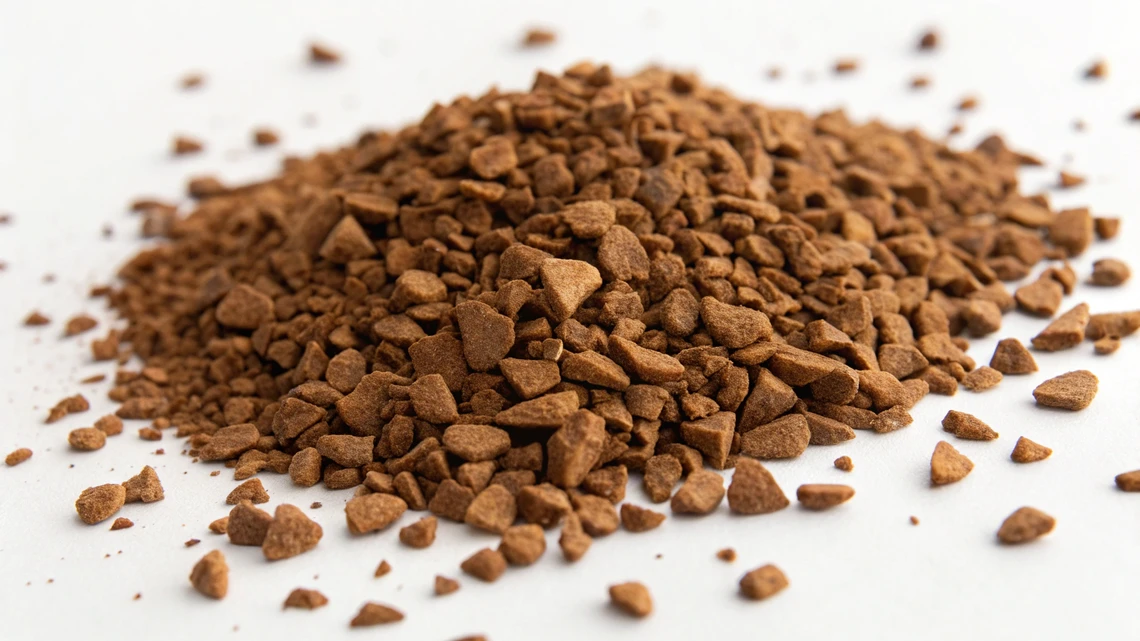
The technology behind freeze-dried coffee is called “freeze drying” or lyophilization. This sophisticated process begins with roasting and grinding high-quality coffee beans. The ground coffee is then brewed into a concentrated liquid extract under high pressure, which removes most of the moisture content. This thickened extract undergoes flash freezing at extremely low temperatures, then enters a vacuum chamber where sublimation occurs—the frozen water transitions directly from solid ice to vapor without becoming liquid. This process causes the coffee particles to fracture into irregular, angular crystals.
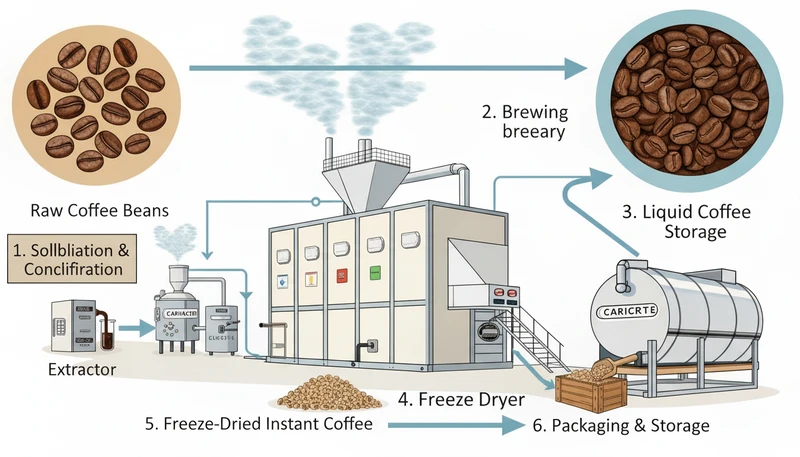
At this stage, the coffee crystals have minimal flavor or aroma—most volatile compounds have been lost during processing. To address this, manufacturers add back aromatic oils and flavor compounds in the final production step. These additives vary significantly in quality and source, ranging from coffee-derived natural oils to artificial flavorings, which explains the wide variation in taste between brands.
What’s Actually in Freeze-Dried Coffee?
How accurate is the “100% pure coffee” claim on instant coffee labels? The truth is nuanced. While freeze-dried coffee does retain some aromatic compounds from the original beans—more than other instant coffee types—it contains far fewer than whole bean coffee. Many marketing claims about preserving “all the natural goodness” of coffee beans are exaggerations, though quality freeze-dried products can contain up to 15% of the compounds found in fresh-roasted beans.
Freeze-dried coffee production doesn’t typically use premium arabica and robusta varieties. Instead, manufacturers rely on lower-grade beans, broken beans, and coffee that doesn’t meet specialty standards—what the industry calls “seconds” or “screen rejects.” However, these are still genuine coffee beans, just not the quality you’d find in your local specialty roaster’s offerings. Reputable manufacturers will specify which coffee varieties they use in production, providing transparency about bean sourcing.
Freeze-Dried vs. Other Instant Coffee Types
The key difference between freeze-dried and other instant coffees lies in the manufacturing process. While freeze-drying uses sublimation (ice directly becoming vapor), spray-dried and agglomerated instant coffees use heat-based evaporation. In spray-drying, concentrated coffee extract is sprayed into hot air, rapidly evaporating moisture and creating fine powder. This powder can be left as-is or rehydrated slightly to form granules—what you typically see labeled as “granulated instant coffee.”
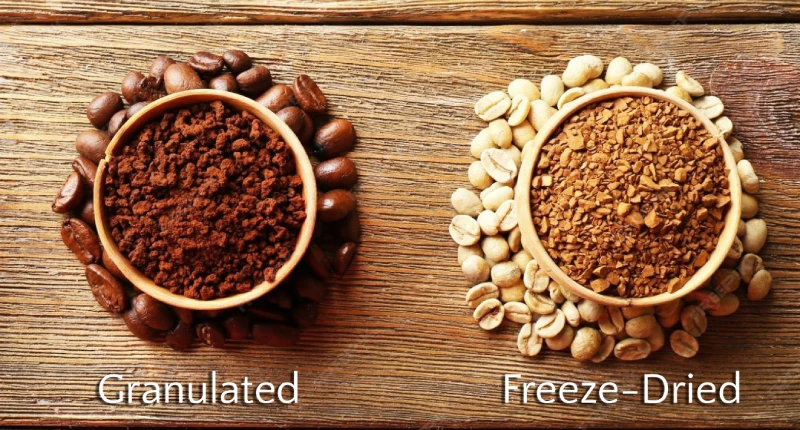
Visually, freeze-dried coffee is distinctive: light brown crystals resembling tiny pyramids or shards of thin sheets, with an irregular, angular structure. Regarding price, freeze-dried instant coffee occupies the premium segment of the instant coffee market, typically costing 30-50% more than spray-dried alternatives.
As for health benefits—while whole bean coffee consumed in moderation offers digestive support, improved alertness and endurance, and potential anti-cancer properties—freeze-dried products retain only trace amounts of beneficial compounds beyond caffeine and added flavorings.
Top Freeze-Dried Coffee Brands
Most major coffee companies now produce freeze-dried instant coffee. By the end of the 20th century, approximately 40% of all instant coffee was freeze-dried, and that percentage has grown steadily. Leading brands include Starbucks VIA, Nescafé Gold, Folgers Crystals, Maxwell House International, Waka Coffee, and Mount Hagen Organic.
Each company guards its proprietary process closely. Some claim to use only quality arabica beans with slow roasting to eliminate bitterness. Others highlight single-origin sourcing or organic certification. Determining actual quality is challenging since manufacturers protect their methods as trade secrets and rarely disclose complete ingredient lists for flavoring compounds, citing competitive reasons.
When choosing freeze-dried coffee, consider these popular options:
- Starbucks VIA Instant – Premium tier, dissolves even in cold water, closest to fresh-brewed Starbucks coffee flavor
- Nescafé Gold – Mid-range pricing, pleasant aroma, smooth taste without harsh edges
- Waka Coffee – Specialty-grade freeze-dried, 100% arabica, notably closer to fresh coffee than competitors
- Mount Hagen Organic – Organic certified, fair-trade, good for environmentally conscious consumers
- Folgers Classic Crystals – Budget-friendly, widely available, decent flavor for the price point
- Maxwell House International Café – Flavored varieties, convenient for specialty drink preferences
How Freeze-Dried Coffee Compares to Fresh
While freeze-dried instant coffee represents the pinnacle of instant coffee technology, it cannot truly compete with freshly ground and brewed coffee. The freeze-drying process, despite preserving more compounds than other instant methods, still loses much of what makes fresh coffee special: complex aromatic oils, delicate flavor notes, and the full sensory experience.
That said, freeze-dried coffee excels in specific situations:
- Convenience: Ready in seconds with just hot water
- Shelf life: Unopened containers last 2+ years, opened jars stay fresh for months
- Portability: Perfect for camping, travel, or office settings
- Consistency: Same taste every time, no skill required
- Emergency backup: When your coffee maker breaks or you’re out of beans
While freeze-dried instant coffee represents the pinnacle of instant coffee technology, it cannot truly compete with properly brewed fresh coffee. The freeze-drying process, despite preserving more compounds than other instant methods, still loses much of what makes fresh coffee special…
Making the Best Cup from Freeze-Dried Coffee
To maximize flavor from freeze-dried instant:
- Use proper water temperature: 190-200°F (88-93°C), not boiling
- Measure accurately: Follow package directions—typically 1-2 teaspoons per 6 oz water
- Stir thoroughly: Ensure complete dissolution
- Drink fresh: Don’t let it sit—instant coffee degrades quickly once prepared
- Experiment: Try adding a pinch of salt to reduce bitterness, or cinnamon for depth
The Bottom Line
Freeze-dried instant coffee offers a pleasant aroma and acceptable taste—a reasonable alternative when fresh-brewed coffee isn’t accessible. While it’s considered the best among instant coffee varieties, it remains a compromise rather than a replacement for properly brewed whole bean coffee. For true coffee lovers, freeze-dried instant serves best as a convenient backup, not a primary coffee source.
Related Articles

The Milk Pitcher: Your Essential Tool for Perfect Microfoam and Latte Art
What is a Milk Pitcher? A milk pitcher is that iconic metal jug with a pointed spout that baristas use…
Read moreDetails
The History of Coffee: From Ancient Discovery to Global Phenomenon
Today, coffee is one of the world’s most beloved beverages. Nearly half the planet’s population—perhaps even more—starts their day with…
Read moreDetails
How to Make Perfect Drip Coffee
Mastering the Automatic Drip Coffee Maker Brewing coffee in a drip coffee maker is incredibly simple and convenient. This method…
Read moreDetails
How to Make Siphon Coffee (Vacuum Pot)
Mastering the Art of Vacuum Coffee Brewing Brewing coffee in a siphon—also called a vacuum pot or vac pot—is captivating…
Read moreDetails