
 Home
Home Recipes
 Beans
Beans Gear
Gear Roasting
 Brewing
 FAQ
FAQ
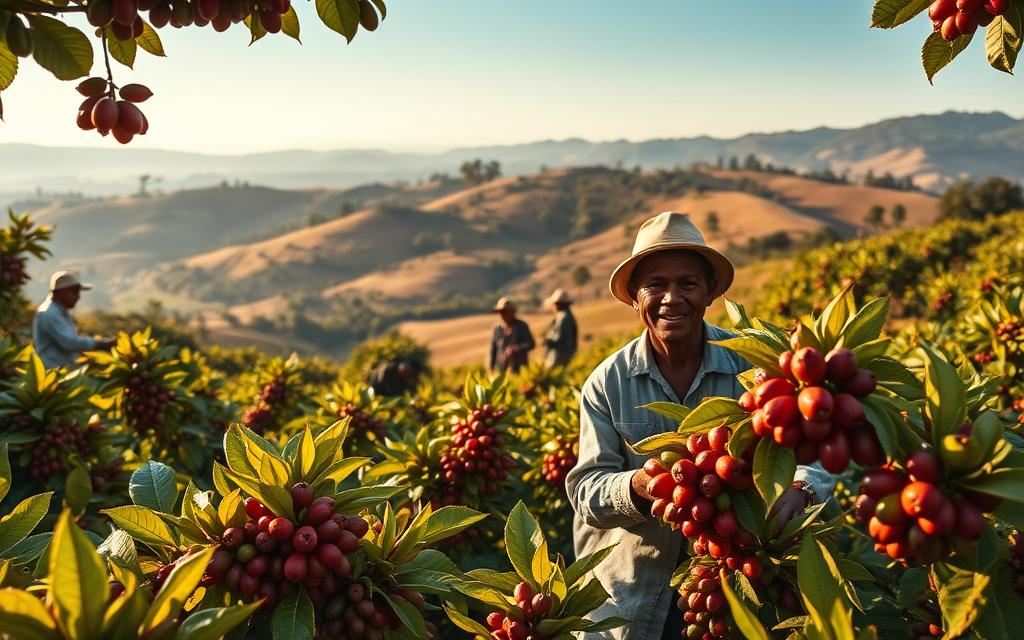
As a coffee lover, I’m thrilled to share with you the world’s best coffee-growing regions. Did you know that over 70% of the world’s coffee comes from just a few countries in South America and Southeast Asia? This fact shows how important these areas are to the global coffee world.
From Brazil and Colombia’s lush climates to Ethiopia and Kenya’s high-altitude farms, each place has its own special touch. This guide will take you through the global coffee cultivation map. We’ll look at the top coffee-producing countries that lead the industry.
Key Takeaways
- The world’s top coffee-growing regions are primarily located in South America and Southeast Asia.
- Countries like Brazil, Colombia, Ethiopia, and Kenya are among the top coffee-producing nations.
- Each region’s unique climate and geography contribute to the diverse flavors and qualities of coffee.
- Understanding these regions is crucial for appreciating the complexity of global coffee cultivation.
- The global coffee industry is significantly influenced by the production levels of these top regions.
The Global Coffee Belt: Understanding Where Coffee Thrives
The perfect climate for growing coffee is found in the coffee belt. This area includes parts of the Americas, Africa, and Asia. It’s where coffee plants do best.
Geographical Boundaries of Coffee Cultivation
Coffee grows only in a specific region near the equator. This area spans between 23.5° north and 23.5° south latitude. It’s known as the coffee belt and is home to most of the world’s coffee.
Why Coffee Grows Best Between the Tropics
The coffee belt has a unique climate that coffee plants love. It gets lots of sunlight and has a steady temperature all year.
Coffee plants need a specific temperature range to grow well. They do best between 60°F and 80°F (15°C and 27°C). If it’s too hot or too cold, they won’t grow as well or might even die.
Rainfall and Humidity Considerations
Enough rainfall and humidity are key for coffee production. Coffee plants need about 60-80 inches (1,500-2,000 mm) of rain each year. High humidity also helps keep diseases and pests away.
| Region | Ideal Temperature | Annual Rainfall |
|---|---|---|
| Coffee Belt | 60-80°F (15-27°C) | 60-80 inches (1,500-2,000 mm) |
| South America | 65-75°F (18-24°C) | 70-100 inches (1,800-2,500 mm) |
| Africa | 60-70°F (15-21°C) | 50-70 inches (1,300-1,800 mm) |
In Which Countries Does Coffee Grow? A Global Overview
Coffee is grown in over 70 countries worldwide. This shows how widespread coffee cultivation is. Climate, soil, and farming practices all play a role.
Coffee is a big deal for many economies. To get a full picture, we need to look at the leading coffee-producing countries and their yearly output.
Annual Production Statistics
The top coffee producers make up most of the world’s coffee. Brazil, Vietnam, and Colombia are among the biggest.
Historical Changes in Production Leadership
Over time, the coffee production leaders have changed. Brazil used to be the biggest, but others are catching up. Knowing these changes helps us guess what the future holds for coffee.
New Entrants to the Coffee Market
New countries are starting to grow coffee, adding to the global map. Southeast Asia and Africa are making a big impact. They bring new things to the coffee market.
Regions Expanding Their Coffee Footprint
Some areas are growing more coffee because of good weather and money reasons. This growth is good for the coffee world, but it also brings challenges for everyone involved.
In summary, the coffee world is diverse and involves many countries. As the industry grows, it’s key to understand the coffee-producing nations. This knowledge helps everyone in the coffee business.
South American Coffee Powerhouses
South America’s coffee giants, Brazil and Colombia, are key players in the global coffee scene. They have been leading in coffee production for years. Their unique regions and processing methods add to the coffee’s rich flavors.
Brazil, the largest coffee producer, has several major growing areas. Minas Gerais, São Paulo, and Bahia stand out. Each area has its own taste due to different climates and soil.
Brazilian Processing Methods and Their Impact on Flavor
Brazilian coffee’s flavor is shaped by its processing methods. Dry processing makes it sweeter and heavier. Pulped natural processing boosts its acidity. “The processing method is crucial in defining the final flavor profile of Brazilian coffee,” coffee experts say.
The Colombian Coffee Triangle
Colombia’s coffee region, known as the Coffee Triangle, includes Caldas, Quindío, and Risaralda. This area is famous for its high-quality Arabica coffee. The climate, soil, and altitude here create unique flavors.
Juan Valdez and Colombia’s Coffee Marketing Success
Colombia’s coffee industry has thrived thanks to Juan Valdez. He symbolizes Colombian coffee and its quality. The Juan Valdez brand has made Colombian coffee famous worldwide.
In summary, Brazil and Colombia are crucial in the global coffee world. Their diverse regions and processing methods enrich coffee flavors for everyone to enjoy.
Central American Coffee Regions
As a coffee lover, I’m excited to explore Central America’s coffee regions. Countries like Guatemala, Costa Rica, and Honduras are famous for their top-notch coffee.

Guatemala’s Antigua region is known for its coffee. It has rich volcanic soil and a mild climate. These conditions are perfect for growing high-quality Arabica coffee.
Huehuetenango and Its High-Altitude Beans
Huehuetenango in Guatemala is famous for its high-altitude beans. The rugged terrain and cool climate slow down the coffee’s maturation. This results in complex flavors.
Tarrazu, Tres Rios, and Central Valley Regions
Costa Rica is home to Tarrazu, Tres Rios, and the Central Valley. These areas are known for their distinct flavor profiles. You’ll find notes of citrus, berries, and honey in their coffee.
Costa Rica’s Commitment to Quality Over Quantity
Costa Rica focuses on quality coffee. Farms use shade-grown coffee and careful processing. This ensures high-quality, specialty coffee.
Honduras: The Rising Star of Central American Coffee
Honduras is becoming a big player in Central America’s coffee scene. The country’s diverse geography and climate allow for many coffee varieties. From Arabica to Robusta, there’s a lot to explore.
Nicaragua’s Volcanic Soil Advantage
Nicaragua’s coffee benefits from its volcanic soil. This soil is rich in nutrients and minerals. It gives Nicaraguan coffee its unique flavors, like chocolate and spices.
El Salvador’s Bourbon and Pacamara Varieties
El Salvador is known for its Bourbon and Pacamara coffee. These varieties are prized for their complex flavors. Despite challenges, many farms in El Salvador continue to produce high-quality coffee.
African Coffee Origins
Africa is where Arabica coffee was first found. It’s home to many countries known for their top-notch coffee. These countries add to the wide variety of coffee tastes and flavors we enjoy today.
Ethiopia is famous for its coffee, especially from Yirgacheffe, Sidamo, and Harrar. These areas are known for their unique coffee flavors.
Yirgacheffe, Sidamo, and Harrar Regions
The Yirgacheffe region is loved for its floral and citrus tastes. Sidamo coffee is known for its balanced acidity and fruit flavors. Harrar coffee is famous for its fruity and wine-like notes. These regions are known for their high-quality Arabica coffee.
Ethiopian Coffee Ceremony and Cultural Significance
Coffee is very important in Ethiopian culture. The traditional Ethiopian coffee ceremony is a sign of hospitality and community. Green coffee beans are roasted, ground, and brewed in a jebena clay pot. This ceremony is a big part of Ethiopian social life.
Kenya is also a big player in coffee production. It’s known for its high-quality coffee, like Kenya AA. These names show the quality and size of the coffee beans.
Kenya AA and Other Quality Designations
Kenya’s coffee industry is strict about quality. Only the best coffee beans are exported. The Kenya AA is especially prized for its large beans and complex flavors.
Kenya’s Auction System for Coffee Distribution
Kenya sells its coffee through a weekly auction. Buyers bid on coffee lots. This system makes sure coffee farmers get fair prices for their coffee.
| Country | Coffee Region | Notable Coffee Designation |
|---|---|---|
| Ethiopia | Yirgacheffe, Sidamo, Harrar | N/A |
| Kenya | Kiambu, Nyeri, Muranga | Kenya AA |
| Uganda | Various | Robusta |
Uganda’s Robusta Dominance
Uganda is a big producer of Robusta coffee. This coffee is used in instant coffee and espresso roasts. Ugandan Robusta is known for its high quality and adds depth to coffee blends.
Tanzania’s Peaberry Coffees
Tanzania is famous for its Peaberry coffee. This coffee has a single seed instead of the usual two. Tanzanian Peaberry coffee is loved for its bright acidity and fruit notes.
Rwanda’s Coffee Renaissance After Conflict
Rwanda has worked hard to rebuild its coffee industry after conflict. Today, Rwanda is known for its high-quality coffee, focusing on specialty coffee.
African coffee is diverse and special. From Ethiopia’s unique regions to Kenya’s high-quality coffee, African coffee stands out.
“Coffee is the common man’s gold, and like gold, it brings to every country that produces it, a majesty and an importance.”
Asian and Pacific Coffee Regions
From Vietnam to Indonesia, the Asian and Pacific coffee regions offer unique flavors and production methods. The diversity in coffee cultivation and processing techniques across these regions contributes significantly to the global coffee industry.
Vietnam has become a major player in the global coffee industry. Its coffee production is centered in the Central Highlands. The country’s coffee industry has seen rapid growth due to favorable climate conditions and government support.
Central Highlands: Vietnam’s Coffee Heartland
The Central Highlands region of Vietnam is known for its rich soil and favorable climate. It’s an ideal location for coffee cultivation. The region’s coffee is known for its distinct flavor profile, shaped by the local terroir.
Sumatra and the Wet-Hulled Process
Sumatra, an island in Indonesia, is renowned for its coffee production using the wet-hulled process. This unique processing method gives Sumatran coffee its distinct earthy and herbal notes. It’s highly prized among coffee connoisseurs.
Java, Sulawesi, and Bali: Island-Specific Characteristics
Indonesia’s islands, including Java, Sulawesi, and Bali, each have their own unique coffee characteristics. Java is known for its balanced flavor. Sulawesi coffee is appreciated for its rich body and complex flavor profile. Bali’s coffee is often described as having a bright acidity and fruity notes.
Kopi Luwak: The Controversial Delicacy
Kopi Luwak, also known as civet coffee, is one of the world’s most expensive coffee types. It’s produced from coffee beans digested by the Asian palm civet. It’s known for its unique flavor. However, the production process has raised ethical concerns due to animal welfare issues.
India’s Monsooned Malabar Process
India’s Monsooned Malabar coffee is processed using a unique method. Green coffee beans are exposed to monsoon rains, resulting in a distinct flavor profile. It’s characterized by earthy and spicy notes.
Papua New Guinea’s Smallholder Farming Model
Papua New Guinea’s coffee industry is dominated by smallholder farmers. The country’s coffee is known for its high quality and distinct flavor profiles. These are influenced by the local terroir and farming practices.
The Asian and Pacific coffee regions are not only significant for their contribution to global coffee production. They are also known for the diverse flavors and production methods they offer. As the global demand for specialty coffee continues to grow, these regions are poised to play an increasingly important role in the coffee industry.
Coffee Cultivation Methods Around the World
Coffee cultivation methods vary widely across the globe. From shade-grown coffee to mechanical harvesting, each method affects the environment, yield, and quality. Exploring the world’s coffee growing regions shows how these choices matter.
Shade-grown coffee is great for the environment. It helps conserve biodiversity and protect the soil. This method grows coffee under a tree canopy, like a natural ecosystem.
Yield Differences Between Cultivation Methods
Yield varies with cultivation methods. Sun-grown coffee often yields more, but shade-grown is usually of higher quality.
| Cultivation Method | Yield | Environmental Impact |
|---|---|---|
| Shade-Grown | Lower | Positive |
| Sun-Grown | Higher | Negative |
Chemical Use in Major Production Regions
Chemical use in coffee production is a big issue in many coffee-producing nations. Places with strict rules use fewer chemicals. Others might use a lot of pesticides and fertilizers.
“The way we grow coffee has a significant impact on the environment and the people involved in its production.”
The Growth of Organic Certification
Organic certification is becoming more popular in coffee. It means avoiding synthetic chemicals and focusing on ecological balance. This is driven by consumer demand for sustainable products.
Countries That Primarily Hand-Pick Coffee
Many countries, especially in Central and South America, still hand-pick coffee. This method ensures quality but is expensive and labor-intensive.
Regions Using Mechanical Harvesting
On the other hand, some places, like Brazil, use mechanical harvesting. This reduces labor costs and boosts efficiency. But, it can harm the environment.
Knowing about coffee cultivation methods helps us understand the coffee supply chain’s complexity. It also highlights the challenges faced by coffee-producing nations.
Specialty Coffee Origins and Micro-Regions
Exploring specialty coffee origins and micro-regions is thrilling. This part of the coffee world focuses on high-quality, unique, and distinct coffee. It’s a growing segment that excites coffee lovers.
Scoring systems and cupping protocols are key in evaluating specialty coffee. These methods check the quality and flavor of coffee beans. They decide the coffee’s score and price.
Scoring Systems and Cupping Protocols
Coffee scoring systems, like those by the Specialty Coffee Association (SCA), look at flavor, aroma, and acidity. Cupping protocols are a standard way to taste coffee. They help figure out its quality.
Price Premiums for Specialty Coffees
Specialty coffees cost more because of their high quality and unique flavors. This higher price is seen in the final product. People are willing to pay more for top-notch coffee.
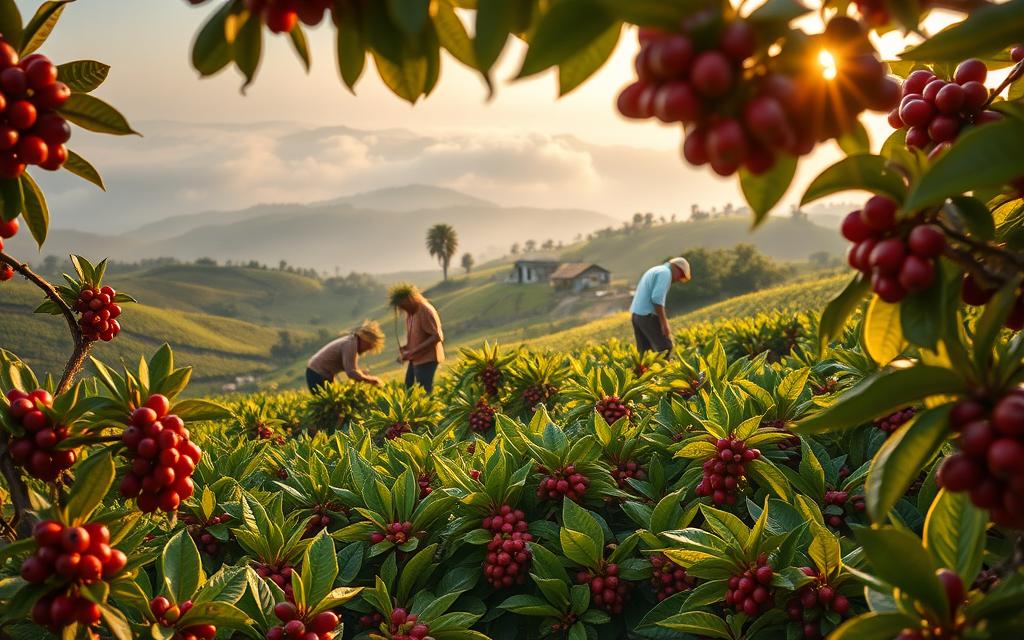
Single-estate coffees from famous farms in Ethiopia or Colombia are highly valued. They’re known for their unique flavors and quality.
The Rise of Farmer Identity in Marketing
The specialty coffee world is now more about the farmer’s story. Consumers want to know the story behind their coffee. This shows how important transparency and sustainability are in the coffee supply chain.
From Ethiopia to Panama: The Geisha Journey
The Geisha cultivar, from Ethiopia, is famous for its unique taste. Its journey to Panama and other places has led to better quality and higher prices.
Other High-Value Cultivars and Their Origins
Other valuable cultivars, like Bourbon and Typica, also have unique origins and tastes. Knowing about these cultivars helps us appreciate the variety in specialty coffee.
Sustainability Challenges in Coffee-Growing Regions
Coffee production faces many challenges, like climate change and economic ups and downs. As more people want coffee, the places where it’s grown are feeling the pressure.
Higher temperatures are changing the coffee-growing areas. Places near the equator, like Central America and Southeast Asia, are especially at risk. Countries like Guatemala and Honduras are seeing changes in rain and heat, which could harm their coffee.
Adaptation Strategies for Coffee Farmers
Coffee farmers are finding ways to deal with climate change. They’re planting shade trees, using irrigation, and trying agroforestry. These actions help fight climate change and keep the soil and plants healthy.
Fair Trade, Direct Trade, and Other Certification Models
Certifications like Fair Trade and Direct Trade help farmers get fair prices. They also push for green practices and better lives for farmers.
The Coffee Price Crisis and Its Effects on Producing Countries
Price swings in the coffee market hurt countries that grow coffee. When prices fall, farmers may not make enough to keep farming. This can lead to tough times for coffee communities.
Emerging Technologies in Coffee Farming
New tech is coming to coffee farming. Precision agriculture uses data and sensors to grow more coffee with less waste. This tech helps farmers stay ahead of climate changes and grow more.
New Varieties Developed for Climate Resilience
Scientists are creating coffee types that can handle climate change better. These new varieties resist diseases and grow well in changing weather. Using these varieties could keep coffee farming going strong for years to come.
Conclusion: The Global Journey of Your Coffee Cup
Exploring the world’s top coffee-growing regions shows us the complexity of the global coffee industry. Coffee is grown across many continents. This diversity brings a wide range of flavors and aromas to our daily cups.
Looking into in which countries does coffee grow, we find that most coffee comes from near the equator. Tropical climates and high altitudes make it perfect for growing coffee. Countries in South America, Central America, Africa, and Asia lead in coffee production, each with its own way of growing coffee.
The global coffee industry is more than just where coffee is grown. It’s about the people, traditions, and challenges of sustainability. Knowing where and how our coffee is made can make us appreciate it even more.
Related Articles
What Are Coffee Quakers? (Defects & How to Avoid Them)
What Are Coffee Quakers and how do they affect your brew I explain their causes impact on taste and how…
Read moreDetails
How Caffeine Works: Adenosine & Why You Crash Later
Wondering how does caffeine work? I break down adenosine’s role, why caffeine makes you tired later, and how to avoid…
Read moreDetails
Can You Put Coffee with Milk in a Thermos? (Safety Guide)
Can You Put Coffee with Milk in a Thermos? I explain safety tips, how long it lasts, and whether to…
Read moreDetails
How to Brew Coffee in a Thermos: Step-by-Step Guide
I’ll show you how to brew coffee in a thermos with the right coffee-to-water ratio, grind size, brewing time, and…
Read moreDetails
Jamaica Blue Mountain Coffee
Jamaica Blue Mountain stands as one of the world’s most expensive and sought-after coffees, grown exclusively in a protected zone…
Read moreDetails