 Home
Home Recipes
 Beans
Beans Gear
Gear Roasting
 Brewing
 FAQ
FAQ
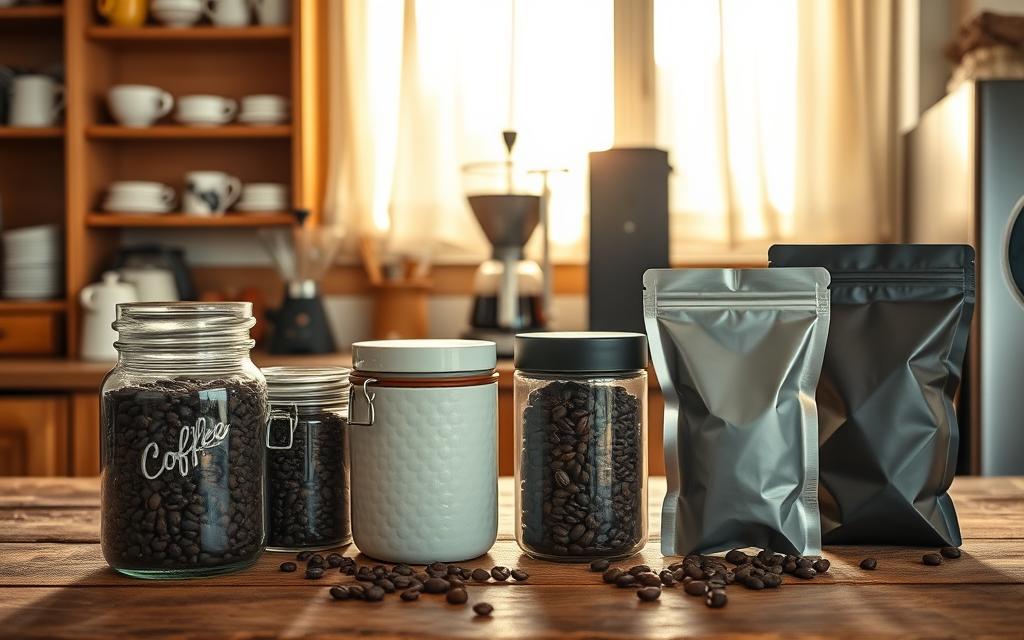
As a coffee lover, I know how vital it is to keep your coffee fresh. Keeping coffee fresh ensures every cup is perfect.
Storing coffee right is an art that needs focus. In this detailed guide, I’ll share my knowledge on coffee storage tips. You’ll learn how to keep your coffee fresh, from understanding what affects it to storing it in various forms.
Key Takeaways
- Understand the factors that affect coffee freshness
- Learn the best ways to store coffee beans
- Discover tips for storing ground coffee
- Find out how to preserve coffee freshness
- Explore the best coffee storage containers
Understanding Coffee Freshness
To store coffee well, knowing what affects its freshness is key. Coffee freshness is impacted by light, heat, moisture, and oxygen. These elements can make coffee lose its taste and smell fast.
Light is a big enemy of coffee freshness. When coffee meets light, its flavor and aroma compounds break down. This results in a less tasty cup. Heat also plays a role, speeding up the loss of freshness. It’s important to keep coffee cool.
Moisture is another factor in keeping coffee fresh. Coffee beans can soak up moisture from the air, losing flavor and aroma. Oxygen can also make coffee stale. To keep coffee fresh, it’s important to limit its exposure to these elements.
Knowing what affects coffee freshness helps you keep it fresh. Store coffee in a cool, dark place, away from moisture and oxygen. Next, we’ll look at how long coffee beans stay fresh and how to keep them fresh longer.
How Long Do Coffee Beans Stay Fresh?
Knowing how long coffee beans stay fresh is key to enjoying your coffee. Several factors affect their freshness, like storage and handling.
Coffee beans are freshest right after roasting. The best way to store coffee beans is in a sealed container, away from light, heat, and moisture. This keeps them fresh for longer.
| Storage Conditions | Freshness Duration |
|---|---|
| Stored properly in an airtight container | 2-4 weeks |
| Exposed to air, light, or heat | Less than 1 week |
| Frozen or refrigerated properly | Several months |
Storing coffee grounds is different. Ground coffee loses freshness faster because it has more surface area. Use an airtight container and consume it within a few days.
For both whole beans and ground coffee, choose coffee storage containers that are airtight. Glass or ceramic is best. Avoid containers with rubber seals that can absorb smells.
In short, coffee bean freshness depends on storage. Using the right containers and methods helps you enjoy your coffee longer.
The Enemies of Coffee Freshness
To keep coffee fresh, it’s important to know what can spoil its taste and smell. The main foes are light, heat, moisture, and oxygen.
Light can quickly make coffee lose its flavor and aroma. Keeping coffee in a dark spot or using dark containers helps. Heat also harms coffee, speeding up its spoilage. It’s best to keep coffee away from ovens or direct sunlight.
Moisture can make coffee stale or give it bad tastes. Oxygen exposure causes coffee to lose its natural oils and flavors. Using airtight containers helps keep oxygen out.
| Enemy | Effect on Coffee | Mitigation Strategy |
|---|---|---|
| Light | Loss of flavor and aroma | Store in dark or opaque containers |
| Heat | Accelerated degradation | Store away from heat sources |
| Moisture | Stale or off-flavors | Use airtight containers |
| Oxygen | Loss of natural oils and flavors | Minimize exposure with airtight containers |
By understanding and fighting these enemies, you can keep your coffee fresh longer.
Best Containers for Storing Coffee at Home
To keep your coffee fresh, picking the right storage container is key. The right one protects your coffee from air, moisture, and light. These are the main factors that can make your coffee go bad.
Airtight containers are the best for storing coffee. They keep air out, which helps your coffee stay fresh. Make sure the container has a tight lid that seals well.
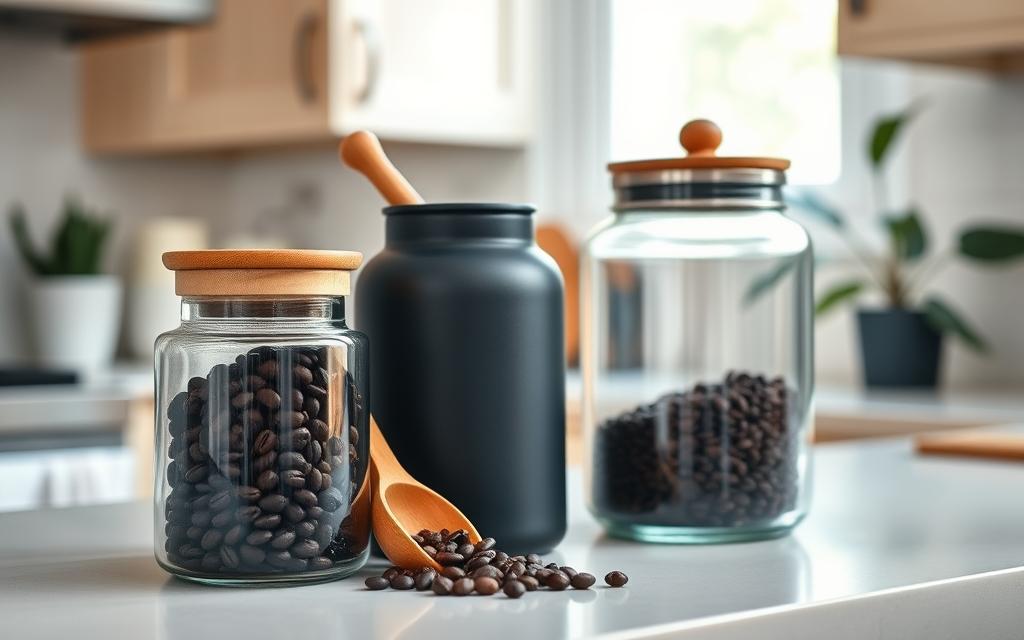
Glass jars are also great for storing coffee. Glass doesn’t react with your coffee, keeping its flavor pure. Just make sure the glass jar is airtight to keep air out.
Coffee storage canisters are loved by coffee lovers. They’re made for storing coffee and have features like airtight seals and UV protection.
When picking a coffee storage container, look for these features:
- Airtight seal to prevent air from entering
- Opaque material to block out light
- Non-reactive material to preserve flavor
- Easy-to-clean design for maintenance
Here’s a table to help you choose:
| Container Type | Airtight Seal | Material | UV Protection |
|---|---|---|---|
| Airtight Containers | Yes | Plastic/Stainless Steel | Optional |
| Glass Jars | Yes | Glass | No |
| Coffee Storage Canisters | Yes | Stainless Steel/Ceramic | Yes |
By picking the right container and storing your coffee right, you can enjoy it for longer.
How to Store Coffee at Home: The Ideal Location
To keep your coffee fresh, it’s key to store it right. The best spot is cool, dry, and out of sunlight.
Think about the pantry’s temperature. It should be between 60°F and 70°F (15°C and 21°C). Don’t keep coffee near heaters or ovens. High heat can ruin its taste and smell.
Humidity matters too. Too much moisture can make coffee stale or taste bad. Aim for a spot with humidity under 60%.
Light also plays a part. Sunlight can harm your coffee. Store it in a dark place. Use a cabinet or drawer, or a light-blocking container.
| Factor | Ideal Condition |
|---|---|
| Temperature | 60°F – 70°F (15°C – 21°C) |
| Humidity | Below 60% |
| Light | Dark or shaded area |
Choosing the right spot can keep your coffee tasting great. As a coffee lover once said,
“The secret to great coffee is not just in the beans, but in how you store them.”
Follow these tips to enjoy your coffee at its finest.
Should You Store Coffee in the Fridge or Freezer?
Coffee lovers often debate whether to store coffee in the fridge or freezer. Both methods have their advantages and disadvantages.
Storing coffee in the fridge is good for a short time. It keeps coffee away from light and heat, which can harm its taste. But, the fridge isn’t perfect for long storage because coffee can pick up smells from other foods. To avoid this, it’s key to keep coffee in a sealed container.
Freezing coffee is better for longer storage. It slows down the coffee’s breakdown, keeping its taste and smell fresh. But, freezing can make coffee moist when thawed, which might lower its quality.
When choosing between the fridge and freezer, consider these points:
- Use airtight containers to keep moisture and smells out.
- Freeze coffee in small amounts to avoid freezing and thawing too many times.
- Mark containers with the date to use the oldest coffee first.
As
“The quality of the coffee is not just about the beans, it’s about how you store them.”
This quote shows how crucial proper storage is for keeping coffee fresh.

In summary, both the fridge and freezer can store coffee. But, it’s important to know the downsides and how to avoid them. By picking the right storage method and following good storage tips, you can enjoy your coffee at its best.
How to Store Ground Coffee vs Whole Beans
Storing ground coffee and whole beans differently is crucial for keeping them fresh. Ground coffee loses its flavors and aromas quickly because of its larger surface area. This makes it more prone to oxidation and staling.
Ground coffee needs to be stored in airtight containers to prevent air, light, and moisture from getting in. Glass or ceramic containers with tight lids are best because they don’t react with the coffee. This helps keep the coffee’s flavor intact.
Whole beans, with less surface area, keep their flavors and aromas longer. But, they also need proper storage to stay fresh. The best way to store coffee beans is in a cool, dark spot, away from sunlight and heat. Using coffee storage containers with one-way valves helps too.
Choosing between ground coffee and whole beans depends on your brewing habits. If you grind beans just before brewing, whole beans might be better. But, if you like pre-ground coffee, make sure to store it right to keep its taste.
In short, both ground coffee and whole beans need careful storage to stay fresh. Using the right coffee storage containers and knowing their specific needs can make your coffee taste better.
Storing Coffee Pods: Tips for Freshness
Coffee pods are a big part of many people’s daily coffee routine. But, if not stored right, their freshness can suffer. It’s key to keep them fresh by storing them properly.
One top coffee storage tip is to store them in a cool, dry spot. Stay away from places near ovens, heaters, or direct sunlight. Heat and light can ruin the coffee’s taste and smell. Instead, pick a pantry or cupboard with a steady temperature and humidity.
Keeping coffee fresh also means keeping it away from air. Coffee pods are sealed, but storing them in an airtight container adds extra protection. This is crucial in humid places or if you have lots of pods.
For storing coffee in pantry, think about the container too. Choose one that’s airtight and dark. This keeps light out and stops coffee from picking up smells from food. These easy tips will make your coffee taste fresher every time.
In short, to store coffee pods right, keep them cool, dry, and light-free. Use the right containers to keep them fresh. By following these coffee storage tips, your coffee pods will always taste and smell their best.
Coffee Storage Solutions for Different Coffee Types
Every coffee type needs its own storage method. Knowing these needs is key to keeping your coffee fresh and flavorful.
For espresso, it’s vital to use an airtight container. This keeps the delicate oils and flavors intact. Choose a container made for espresso storage.
French press coffee needs a different approach. Store the grounds in a cool, dark spot to avoid flavor loss.
For pour-over coffee, preserving the aroma is crucial. Use a glass container with a tight lid to keep it fresh.
“The way you store your coffee can significantly impact its flavor, regardless of the type.” – Coffee Connoisseur
In summary, the right storage method depends on your brewing method. By picking the best solution, you’ll enjoy a better-tasting coffee every time.
Quick Tips to Keep Your Coffee Fresh
Keeping your coffee fresh is easier than you think. A few simple steps can make a big difference. Follow these tips to keep your coffee tasting great.
First, store your coffee in an airtight container. This is key because coffee can pick up smells and tastes from around it. An airtight container keeps it fresh.
Also, keep your coffee out of direct light. Light can make coffee lose its flavor and smell. Store it in a dark or shaded spot. Also, avoid heat sources and moisture to keep it fresh.
Here are some more coffee storage tips:
- Store coffee beans or grounds in a cool, dark place.
- Avoid storing coffee near strong-smelling foods, as it can absorb the odors.
- Use fresh coffee beans or grounds within a week or two of opening.
- Consider freezing or refrigerating coffee if you won’t be using it within a short period.
By following these preserving coffee freshness tips, you can enjoy your coffee at its best. The secret is proper storage and handling.
Conclusion
Storing coffee at home needs careful attention to keep it fresh. Knowing what affects coffee freshness helps you make the perfect cup. We’ve shared many coffee storage tips in this article.
Remember, using the right containers and keeping coffee in a cool, dark spot are key. Also, avoid the fridge or freezer unless it’s really needed. These tips are important for preserving coffee freshness at home, whether you have whole beans or ground coffee.
If you love coffee, try out different storage methods to see what works best for you. By following these easy tips, you can enjoy a more flavorful coffee every day. Now, you know how to store coffee at home to enjoy its rich flavors and aromas.
Related Articles

What is Freeze-Dried Instant Coffee?
How often do you need a quick energy boost or coffee break during your workday, but don’t have access to…
Read moreDetails
Espresso and its variations: how ristretto and lungo differ
Dive into the fascinating world of Espresso and its diverse brewing techniques, ristretto and lungo. Uncover the differences that make…
Read moreDetails
What Are Coffee Quakers? (Defects & How to Avoid Them)
What Are Coffee Quakers and how do they affect your brew I explain their causes impact on taste and how…
Read moreDetails