
 Home
Home Recipes
 Beans
Beans Gear
Gear Roasting
 Brewing
 FAQ
FAQ
What is a Milk Pitcher?
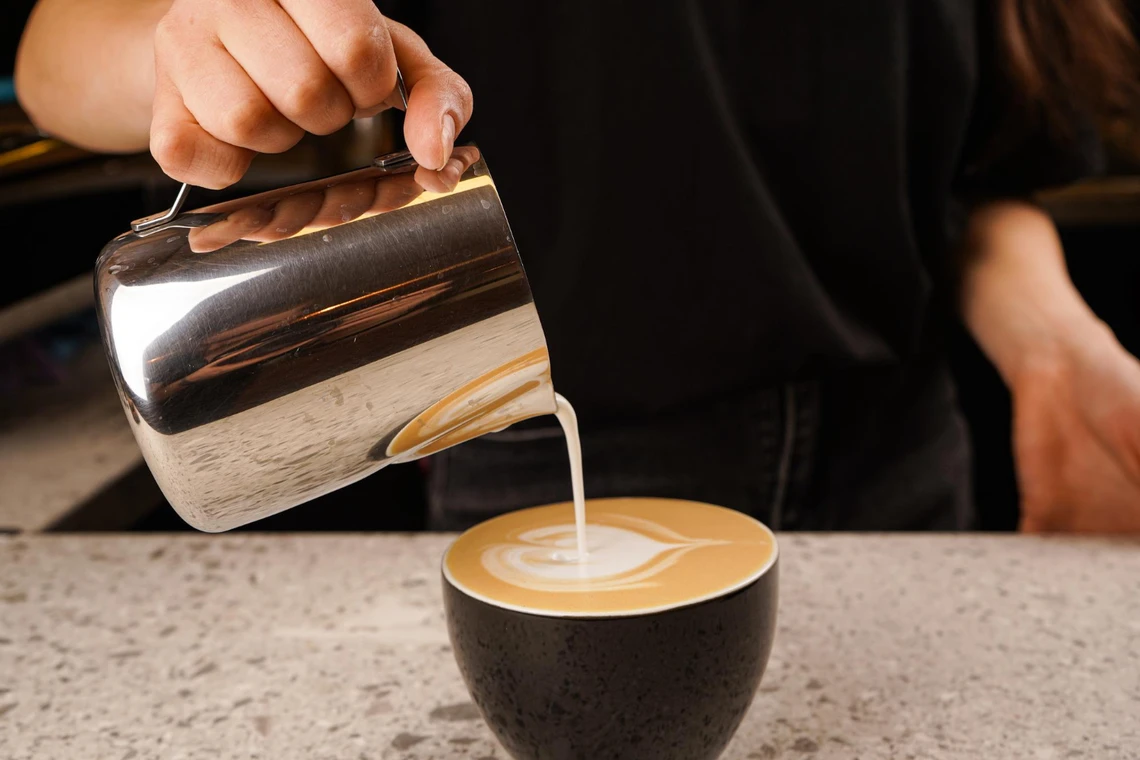
A milk pitcher is that iconic metal jug with a pointed spout that baristas use to steam milk for espresso-based milk drinks like lattes, cappuccinos, and flat whites.

A milk pitcher is that iconic metal jug with a pointed spout that baristas use to steam milk for lattes, cappuccinos, and flat whites. It’s the tool that allows them to pour those gorgeous patterns—hearts, rosettas, tulips, and swans—that make your morning latte Instagram-worthy.
But a milk pitcher does far more than just hold milk. It’s precision-engineered to help you create perfect microfoam—that smooth, velvety texture that defines a truly excellent milk-based espresso drink. The pitcher’s shape, weight, and spout design all work together to give you control over milk texture and pour precision.
Why Stainless Steel?
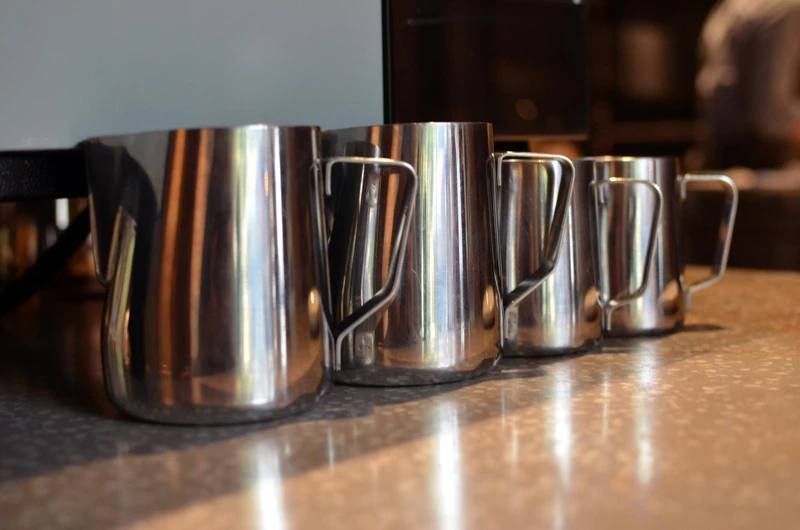
Most quality milk pitchers are made from stainless steel, and for good reason. Stainless steel conducts heat efficiently, allowing it to warm quickly under the steam wand while also letting you feel the milk’s temperature through the pitcher’s walls. This tactile feedback is crucial—experienced baristas can tell when milk reaches the ideal 140-150°F (60-65°C) without ever using a thermometer.
Stainless steel is also durable, non-reactive (won’t affect milk’s taste), and easy to clean. Some pitchers feature a Teflon coating for even better temperature sensitivity, though traditional bare stainless steel remains the professional standard.
Choosing the Right Size
Milk pitchers come in various sizes, typically ranging from 12 oz (350ml) to 32 oz (950ml) or larger. Choosing the right size matters more than you might think.
12 oz (350ml) pitchers are perfect for single drinks—one latte or cappuccino. They’re ideal for home use where you’re typically making one or two drinks at a time.
20 oz (600ml) pitchers represent the sweet spot for most home baristas. They can handle one large drink or two smaller ones, offering versatility without being unwieldy.
32 oz (950ml) and larger are professional-grade pitchers for busy cafés where baristas steam milk for multiple drinks simultaneously.
The key principle: never fill your pitcher more than halfway. Milk roughly doubles in volume when properly steamed, so you need room for expansion. A half-full pitcher also gives you space to create the whirlpool motion essential for smooth microfoam.
Spout Shapes and Their Purpose

Spout design dramatically affects your latte art capability:
Sharp, pointed spouts offer maximum precision for detailed latte art. They’re perfect for creating fine lines, intricate rosettas, and complex multi-layer designs. Brands like Barista Basics and Motta are known for their ultra-sharp spouts.
Rounded spouts provide more forgiveness for beginners. They’re easier to control when you’re learning basic pours and still capable of creating beautiful hearts and simple tulips.
Wide spouts allow faster milk flow, useful for filling large drinks quickly but less precise for detailed art.
The Science of Microfoam
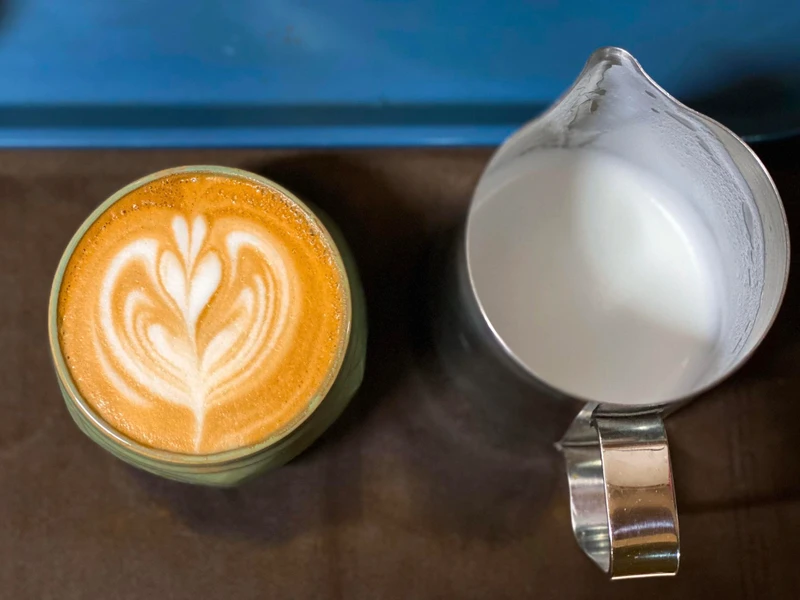
Creating perfect microfoam is where the milk pitcher truly shines. The process involves two phases:
Stretching (aeration): Introducing air into cold milk by keeping the steam wand tip just below the surface. This creates the “chirping” sound as tiny bubbles are incorporated. This phase should last just 3-5 seconds.
Texturing (emulsifying): Submerging the steam wand deeper to create a whirlpool that breaks down large bubbles into microfoam—tiny, uniform bubbles that create that silky, paint-like consistency.
The pitcher’s cylindrical shape and smooth interior promote the whirlpool motion essential for perfect texture. When done correctly, your finished milk should look like wet white paint—glossy and smooth with no visible bubbles, perfect for drinks like Flat White that showcase microfoam quality.
Temperature Control
Professional baristas know the ideal milk temperature by feel: when the pitcher becomes too hot to hold comfortably (around 140-150°F / 60-65°C), the milk is ready. Beyond 160°F (71°C), milk proteins begin to break down, creating a less pleasant taste and texture.
The Italian tradition suggests that milk foam should be like a “first kiss”—warm, gentle, and leaving you wanting more. This poetic description actually captures perfect milk texture: not scalding hot, pleasantly warm, and irresistibly smooth.
Basic Latte Art Patterns

Once you’ve mastered microfoam, your pitcher becomes an artist’s brush:
The Heart: The foundational pattern. Pour steadily into the center, then push through when the cup is 2/3 full to create the heart shape.
The Rosetta (Fern Leaf): Rock the pitcher side-to-side while moving backward to create the classic leaf pattern.
The Tulip: Multiple controlled pours create layered circles that resemble a tulip flower.
Advanced baristas can create swans, phoenixes, and incredibly detailed designs—all controlled by how they manipulate the milk pitcher’s pour.
Care and Maintenance
Proper pitcher care ensures longevity and consistent performance. Like cleaning your espresso equipment regularly, maintaining your milk pitcher is essential for great-tasting coffee:
- Rinse immediately after each use—don’t let milk dry inside
- Deep clean daily with hot, soapy water, paying attention to the spout
- Avoid abrasive scrubbers that can scratch the interior
- Dry thoroughly to prevent water spots
- Polish occasionally to maintain that professional shine
Tips for Beginners
Starting your latte art journey? Here’s what helps:
- Practice with water and dish soap before wasting milk—you can see the patterns clearly
- Start with whole milk—higher fat content is more forgiving and creates better microfoam
- Watch your pour height—start high (3-4 inches) for mixing, drop low (1 inch) for pattern creation
- Focus on consistency before attempting complex designs
- Film yourself to identify technique issues
Do You Need a Milk Pitcher at Home?
If you own an espresso machine with a steam wand, a quality milk pitcher is essential—not optional. It’s the difference between mediocre, bubbly foam and café-quality microfoam. Even if you’re not interested in latte art, proper steaming technique (which requires a proper pitcher) creates dramatically better-tasting milk drinks.
For home use, invest in one quality 20 oz pitcher. Brands like Rattleware, Barista Basics, and Motta offer excellent options at reasonable prices ($20-40). It’s a small investment that transforms your home espresso game.
So, do you have a milk pitcher at home? Have you tried creating latte art? The learning curve is real, but the satisfaction of pouring your first successful heart or rosetta makes it all worthwhile.
Related Articles

How to Make Siphon Coffee (Vacuum Pot)
Mastering the Art of Vacuum Coffee Brewing Brewing coffee in a siphon—also called a vacuum pot or vac pot—is captivating…
Read moreDetails
How to Make Perfect Drip Coffee
Mastering the Automatic Drip Coffee Maker Brewing coffee in a drip coffee maker is incredibly simple and convenient. This method…
Read moreDetails
The History of Coffee: From Ancient Discovery to Global Phenomenon
Today, coffee is one of the world’s most beloved beverages. Nearly half the planet’s population—perhaps even more—starts their day with…
Read moreDetails