 Home
Home Recipes
 Beans
Beans Gear
Gear Roasting
 Brewing
 FAQ
FAQ
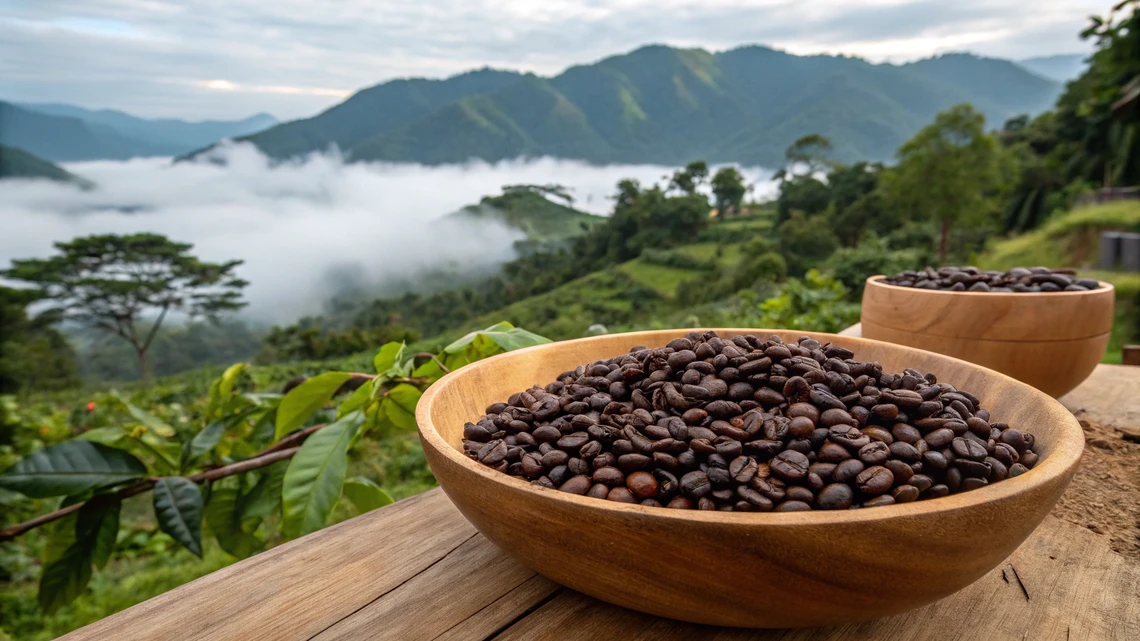
Nicaragua SHB (Strictly Hard Bean) represents Central America’s exceptional value proposition in specialty coffee—high-altitude beans delivering balanced, approachable quality at prices that make daily specialty coffee affordable. As Nicaragua rebuilds its coffee reputation after decades of political instability, SHB designation marks beans grown above 4,000 feet where shade-grown cultivation, volcanic soil, and traditional methods create smooth, chocolatey cups with pleasant acidity. While less famous than Guatemala Antigua or Costa Rica Tarrazu, Nicaragua quietly produces consistent, crowd-pleasing coffee that proves exceptional quality doesn’t require premium pricing.
Understanding Nicaragua’s Grading System
Nicaragua uses an altitude-based grading system similar to other Central American countries:
| Grade | Elevation | Abbreviation | Quality Level |
|---|---|---|---|
| Strictly Hard Bean | 4,000-5,000+ feet (1,200-1,500+ m) | SHB | Highest, specialty |
| High Grown | 3,300-4,000 feet (1,000-1,200 m) | HG | Good quality |
| Medium Grown | 2,000-3,300 feet (600-1,000 m) | MG | Commercial |
| Low Grown | Below 2,000 feet (600 m) | LG | Lower commercial |
SHB specifications:
- Grown between 4,000-5,000+ feet elevation
- Dense, hard beans from slow maturation
- Premium specialty designation
- Cool temperatures create extended growing season
- What quality roasters seek
Nicaragua’s SHB sits comfortably in the middle of Central American altitude ranges—not as extreme as some Guatemalan or Costa Rican lots (which can reach 6,000+ feet), but consistently high enough for excellent quality at more accessible prices.
Nicaragua’s Coffee Regions
Three main northern regions produce most of Nicaragua’s premium SHB coffee:
Jinotega (North-central highlands):
- Elevation: 3,900-5,900 feet
- Largest specialty coffee region
- Balanced, chocolate, caramel notes
- Consistent quality, good infrastructure
- Cool climate, volcanic soil
Matagalpa (North-central):
- Elevation: 3,600-5,200 feet
- Historic coffee region
- Full body, chocolate, nuts
- Shade-grown tradition
- Well-established cooperatives
Nueva Segovia (Northern mountains, near Honduras):
- Elevation: 3,900-5,600 feet
- Smaller production, high quality
- Bright acidity, citrus notes
- Complex, clean cups
- Emerging specialty focus
Other regions:
- Estelí – Northern, good quality
- Madriz – Northern highlands, developing
- Boaco – Central, commercial production
Most specialty SHB comes from Jinotega and Matagalpa, where elevation, shade cultivation, and farmer cooperatives ensure consistent quality.
Flavor Profile and Characteristics
Nicaragua SHB delivers approachable Central American balance with distinctive smoothness:
Common tasting notes:
- Chocolate – Milk chocolate, cocoa, dark chocolate
- Nuts – Almond, hazelnut, walnut, cashew
- Caramel – Brown sugar, toffee, butterscotch
- Stone fruits – Peach, plum, apricot (subtle)
- Citrus – Orange, lemon (mild, not sharp)
- Vanilla – Sweet, creamy undertones
- Honey – Light floral sweetness
Key characteristics:
- Acidity: Medium – pleasant, balanced, not aggressive
- Body: Medium to medium-full – smooth, round
- Sweetness: Moderate, chocolate-caramel
- Balance: Excellent harmony, nothing overpowering
- Approachability: Very accessible, crowd-pleasing
- Finish: Clean, sweet, lingering chocolate-nut
What defines Nicaragua: The signature is smoothness and balance—nothing extreme or challenging. It’s not as bright as Costa Rica, not as bold as Kenya AA, not as sweet as El Salvador SHG. Instead, Nicaragua occupies the comfortable middle ground: reliably good, consistently pleasant, universally approachable.
“Nicaragua SHB is my ‘gateway coffee’ recommendation—it’s what I give people who are curious about specialty coffee but intimidated by flavor descriptions. Chocolate, nuts, smooth body, pleasant acidity—it tastes like what most people imagine ‘good coffee’ should taste like. No surprises, no polarizing flavors, just solid, satisfying coffee every single time.”
— Alex Thompson
Shade-Grown Tradition
Nicaragua maintains strong shade-grown coffee traditions, differentiating it from some intensive commercial operations:
Shade cultivation benefits:
- Slower cherry maturation – More complex flavor development
- Environmental sustainability – Biodiversity preservation
- Temperature regulation – Protects from extreme heat
- Soil health – Leaf matter enriches soil
- Pest management – Natural ecosystem balance
Common shade trees:
- Fruit trees (citrus, banana)
- Timber species (cedar, pine)
- Nitrogen-fixing legumes
- Indigenous forest species
Result: Nicaragua’s shade-grown SHB often has rounder, more developed sweetness compared to sun-grown coffee, contributing to its characteristic smoothness.
Processing Methods
Nicaragua primarily uses washed processing, with honey and natural gaining popularity:
Washed Processing (75-85%):
- Classic Central American method
- Clean, balanced profile
- Chocolate and nut notes highlighted
- Medium body
- Most common for SHB
Honey Processing (10-15%):
- Growing in specialty sector
- Enhanced sweetness and body
- Caramel and stone fruit
- Red and yellow honey popular
- Premium pricing
Natural Processing (5-10%):
- Experimental, small lots
- Fruit-forward, berry notes
- Fuller body
- Maintains Nicaraguan smoothness
Eco-pulping innovation: Nicaragua has invested in ecological processing equipment (eco-pulpers) that reduces water usage while maintaining washed coffee quality—important for sustainability-conscious buyers.
Best Brewing Methods
Nicaragua SHB’s balanced nature makes it exceptionally versatile:
Drip Coffee Maker:
- Perfect everyday choice – Where Nicaragua shines
- Medium grind, standard brewing
- Result: Consistent, smooth, chocolate-rich daily coffee
Pour-Over (V60, Chemex, Kalita):
- Highlights clarity and balance
- Medium grind, 200-205°F
- Ratio 1:16
- Result: Clean, sweet, nuanced cup
French Press:
- Develops fuller body and chocolate
- Medium-coarse grind, 4 minutes
- Result: Rich, smooth, nut-forward
Espresso:
- Works well in espresso blends
- Sweet, mild shots
- Good in milk-based drinks
- Ratio 1:2 to 1:2.5
- Result: Smooth espresso, excellent for lattes
Cold Brew:
- Brings out natural sweetness
- 18-24 hour steep
- Result: Incredibly smooth, chocolate-dominant
Moka Pot:
- Good match for bold brewing
- Result: Rich, chocolate-forward
Nicaragua’s forgiving nature means it’s hard to brew badly—ideal for beginners or those wanting reliable results without fussy technique.
Roast Level Recommendations
Nicaragua SHB adapts well across the roast spectrum:
Light roast:
- Preserves acidity and complexity
- Citrus and stone fruit emerge
- Good for pour-over enthusiasts
Light-medium roast:
- Balanced, developing sweetness
- Chocolate and caramel notes
- Appeals to wide audience
Medium roast (MOST POPULAR):
- Ideal for Nicaragua SHB
- Maximizes chocolate and nut character
- Full body, balanced acidity
- What most roasters offer
- Perfect for drip and espresso
Medium-dark roast:
- Very acceptable – Nicaragua handles it well
- Chocolate dominant, minimal acidity
- Smooth, rich, no harsh bitterness
- Good for darker roast preferences
Dark roast:
- Still drinkable (unlike delicate origins)
- Loses origin character but remains smooth
- Better choices exist, but Nicaragua survives
Nicaragua’s inherent smoothness and chocolate character mean it’s one of the most forgiving origins for roasting—it rarely develops harsh bitterness even with darker development.
How to Select Quality Nicaragua SHB
Nicaragua offers excellent value in specialty coffee:
Quality indicators:
- “SHB” or “Strictly Hard Bean” clearly stated
- Specific region (Jinotega, Matagalpa, Nueva Segovia)
- Cooperative or farm name for traceability
- Processing method specified
- Shade-grown or organic certification (common)
- Roast date within 3-4 weeks
Price expectations:
- Standard Nicaragua SHB: $13-18/lb
- Single-estate or organic: $18-24/lb
- Specialty micro-lots: $25-32/lb
Value proposition: Nicaragua typically costs 15-25% less than equivalent quality from Guatemala, Costa Rica, or El Salvador while delivering comparable cup quality—exceptional value for daily specialty coffee.
What to avoid:
- Generic “Nicaragua” without SHB designation
- Extremely cheap pricing under $11/lb (old crop or low quality)
- No regional or processing information
- Very old roast dates
Nicaragua vs. Other Central American SHG/SHB
Comparing altitude-graded Central American origins:
| Characteristic | Nicaragua SHB | Honduras SHG | El Salvador SHG | Guatemala SHG |
|---|---|---|---|---|
| Acidity | Medium | Medium-high | Medium-high | Medium-high |
| Body | Medium to medium-full | Medium-full | Medium-full | Full |
| Primary notes | Chocolate, nuts | Chocolate, caramel | Honey, caramel | Chocolate, spice |
| Balance | Excellent | Very good | Excellent | Very good |
| Approachability | Highest | High | High | Moderate |
| Price range | $13-24/lb | $14-28/lb | $16-30/lb | $16-32/lb |
Nicaragua’s position:
- Most approachable and smooth
- Best value among Central American SHG/SHB coffees
- Less distinctive than neighbors (pro or con depending on preference)
- Most forgiving for brewing and roasting
- Ideal daily drinker
Sustainability and Social Impact
Nicaragua’s coffee sector has strong cooperative structure and sustainability focus:
Cooperative dominance:
- 60-70% of smallholder farmers work through cooperatives
- Fair pricing structures
- Quality improvement programs
- Infrastructure investment
Certifications common:
- Organic – Widespread due to traditional farming methods
- Fair Trade – Strong cooperative participation
- Rainforest Alliance – Shade-grown emphasis
- Bird-friendly – Biodiversity focus
Shade-grown tradition: Nicaragua maintains environmental sustainability better than some intensive commercial operations, making it attractive for eco-conscious buyers.
Why Choose Nicaragua SHB
Advantages:
- Exceptional value – Premium quality, accessible pricing
- Consistent quality – Reliable crop-to-crop
- Approachable flavor – Universally pleasant
- Versatility – Works in all brewing methods and roast levels
- Sustainability – Strong organic/Fair Trade availability
- Forgiving – Hard to brew poorly
Ideal for:
- Daily specialty coffee drinking
- Budget-conscious quality seekers
- Those new to specialty coffee
- Café house blends and espresso
- Anyone wanting “just good coffee” without complications
Less ideal for:
- Exotic flavor seekers (choose Ethiopian Yirgacheffe)
- Maximum brightness lovers (choose Costa Rica)
- Collectors seeking rare lots
- Those wanting distinctive origin character
Perfect use cases:
- Office coffee that everyone will enjoy
- Reliable espresso blend base
- First specialty coffee purchase
- Budget-friendly daily drinker
- Foolproof brewing for beginners
Nicaragua SHB proves that great coffee doesn’t require extreme prices or exotic origins. It’s Central American specialty coffee at its most democratic—consistently good, universally approachable, and affordable enough to drink daily without guilt. While it may never win “most exciting origin” awards, Nicaragua SHB wins where it matters most: delivering reliable, satisfying cups that make specialty coffee accessible to everyone. For roasters building house blends or coffee lovers seeking dependable quality, Nicaragua SHB is Central America’s best-kept secret for value and consistency.
Related Articles

My Guide to Understanding the Anatomy of Taste
Dive into the inner workings of the anatomy of taste. Understand how your taste buds and sense of smell work…
Read moreDetails
The Impact of Coffee on My Well-Being
As a coffee lover, I dive into how this beloved beverage impacts my daily life and overall health.
Read moreDetails
Discover the 8 Latte Art Techniques I Use Every Day
Discover the 8 latte art techniques I use every day to create stunning coffee drinks.
Read moreDetails