Espresso Barista .COM
  • Home
  • Recipes
  • Beans
  • Gear
  • Roasting
  • Brewing
    • Espresso
    • Turkish (Cezve)
    • Moka Pot
    • Pour Over
    • Drip Brew
    • Siphon
    • Chemex
    • French Press
  • Glossary
    • Coffee varieties
      • Main species of coffee trees
      • Coffee Names by Origin
  • FAQ
No Result
View All Result
  • Home
  • Recipes
  • Beans
  • Gear
  • Roasting
  • Brewing
    • Espresso
    • Turkish (Cezve)
    • Moka Pot
    • Pour Over
    • Drip Brew
    • Siphon
    • Chemex
    • French Press
  • Glossary
    • Coffee varieties
      • Main species of coffee trees
      • Coffee Names by Origin
  • FAQ
No Result
View All Result
Espresso Barista .COM
No Result
View All Result
Home Glossary Coffee varieties

Arabica (Coffea arabica)

Alex Thompson by Alex Thompson
08.02.2026
in Coffee varieties, Glossary, Main species of coffee trees
Reading Time: 5 mins read
A A
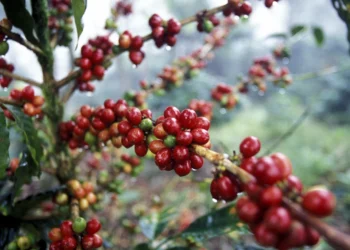
Arabica cherries at different stages of ripeness
Share on FacebookShare on TwitterShare on PinterestShare on Reddit

Table of Contents

Toggle
  • Definition
  • Description
  • See also
  • FAQ
    • Why is Arabica coffee considered superior to other species?
    • Is Arabica coffee higher in caffeine?
    • Why is Arabica coffee more expensive?
    • How can I identify Arabica coffee when purchasing?
  • Video
    • Arabica: The Queen of Coffee – From Ethiopian Forests to Your Cup
    • Rare Coffee Varieties
    • Jamaica Blue Mountain Coffee
    • Hawaiian Kona Coffee
    • Nicaragua SHB Coffee
    • El Salvador SHG Coffee
    • Honduras SHG Coffee
    • Panama Geisha Coffee
    • Related Articles
    • How to Make Pour Over Coffee
    • How is decaffeinated coffee (decaf) made? Benefits, harms and differences

Definition

Coffea arabica (comparison with robusta) is the most widely cultivated and consumed coffee species, known for its superior taste profile and accounting for approximately 60-70% of global coffee production.

Description

Arabica coffee originated in the highlands of Ethiopia and is believed to be the first species of coffee to be cultivated, dating back to around the 12th century in Yemen. The name “arabica” refers to the Arabian Peninsula where it was first commercially cultivated.

Arabica trees typically grow at higher elevations, preferring altitudes between 600-2,000 meters (2,000-6,500 feet) above sea level. These trees thrive in cool, tropical climates with well-defined rainy and dry seasons, ideally with temperatures between 15-24°C (59-75°F). The trees are relatively delicate, susceptible to disease and frost, and generally require more care than other coffee species.

In terms of physical characteristics, Arabica trees grow to 5-8 meters (16-26 feet) tall when left unpruned. The leaves are glossy, dark green, and oval-shaped with pointed tips. The coffee cherries are oval and take about 7-9 months to ripen, changing from green to red or sometimes yellow when fully ripe.

The flavor profile of Arabica is distinguished by its complexity, balanced acidity, and aromatic qualities. Typical tasting notes include fruitiness, sweetness, and bright acidity, with flavors ranging from berries and citrus to chocolate and caramel, depending on the variety and growing region. Arabica beans contain approximately 1.2-1.5% caffeine by weight, which is lower than Robusta.

Commercially, Arabica dominates the specialty coffee market and commands higher prices due to its superior flavor characteristics and more challenging cultivation requirements. Notable Arabica varieties include Typica, Bourbon, Caturra, Gesha/Geisha, SL-28, and Pacamara, each with distinct flavor profiles. Well-known growing regions include Ethiopia, Colombia, Guatemala, Costa Rica, Kenya, and Panama, with brands like Starbucks Reserve, Intelligentsia, Counter Culture, and Blue Bottle featuring premium single-origin Arabica coffees (origin affects flavor).

See also

  • Typica (Arabica variety)
  • Bourbon (Arabica variety)
  • Gesha/Geisha (Arabica variety)
  • Robusta (Coffea canephora)
  • Coffee Cupping
  • Coffee Bean Grading

FAQ

Why is Arabica coffee considered superior to other species?

Arabica is prized for its complex flavor profile, balanced acidity, and aromatic qualities. It typically offers a smoother, sweeter taste with less bitterness than other species like Robusta. The growing conditions at higher altitudes also contribute to a slower development of the coffee cherry, allowing more complex flavors to develop.

Is Arabica coffee higher in caffeine?

No, Arabica actually contains less caffeine than Robusta coffee. Arabica beans have approximately 1.2-1.5% caffeine content by weight, while Robusta contains about 2.2-2.7%. The lower caffeine content in Arabica is one factor that contributes to its generally smoother, less bitter taste.

Why is Arabica coffee more expensive?

Arabica coffee commands higher prices due to several factors: it’s more difficult to cultivate, requiring specific altitude and climate conditions; the trees are more susceptible to diseases and pests (particularly coffee leaf rust); they produce fewer cherries per tree than Robusta; and the beans have more desirable flavor characteristics that are valued in the specialty coffee market.

How can I identify Arabica coffee when purchasing?

Look for packaging that specifically states “100% Arabica” or “Arabica beans.” Specialty coffee shops and third-wave roasters predominantly use Arabica. Additionally, descriptors like “single-origin,” references to specific growing regions (e.g., Ethiopian Yirgacheffe, Colombian Supremo), or flavor notes describing fruitiness, floral qualities, or chocolate notes often indicate Arabica coffee.

Video

Arabica: The Queen of Coffee – From Ethiopian Forests to Your Cup

Rare Coffee Varieties

Jamaica Blue Mountain coffee beans from Blue Mountains with distinctive blue-green color
Coffee Names by Origin

Jamaica Blue Mountain Coffee

by Alex Thompson
24.02.2026

Jamaica Blue Mountain stands as one of the world’s most expensive and sought-after coffees, grown exclusively in a protected zone…

Read moreDetails
Hawaiian Kona coffee beans from Big Island volcanic slopes
Coffee Names by Origin

Hawaiian Kona Coffee

by Alex Thompson
19.02.2026

Hawaiian Kona represents America’s only internationally recognized premium coffee, grown exclusively on volcanic slopes of Hawaii’s Big Island where unique…

Read moreDetails
Nicaragua SHB coffee beans from shade-grown high-altitude farms
Coffee Names by Origin

Nicaragua SHB Coffee

by Alex Thompson
18.02.2026

Nicaragua SHB (Strictly Hard Bean) represents Central America’s exceptional value proposition in specialty coffee—high-altitude beans delivering balanced, approachable quality at…

Read moreDetails
El Salvador SHG coffee beans from high-altitude Bourbon varietals
Coffee Names by Origin

El Salvador SHG Coffee

by Alex Thompson
17.02.2026

El Salvador SHG (Strictly High Grown) represents Central America’s boutique specialty coffee origin—a small country producing limited volumes but exceptional…

Read moreDetails
Honduras SHG coffee beans showing consistent size and quality from high-altitude farms
Coffee Names by Origin

Honduras SHG Coffee

by Alex Thompson
15.02.2026

Honduras SHG (Strictly High Grown) represents Central America’s best-kept secret in specialty coffee—high-altitude beans offering exceptional quality at more accessible…

Read moreDetails
Panama Geisha coffee beans showing elongated shape and light green color
Coffee Names by Origin

Panama Geisha Coffee

by Alex Thompson
13.02.2026

Panama Geisha (also spelled Gesha) represents the pinnacle of specialty coffee—a legendary varietal that has shattered auction records, redefined expectations…

Read moreDetails

Related Articles

Pour over coffee brewing with hot water being poured over grounds in dripper
Coffee Brewing

How to Make Pour Over Coffee

by Alex Thompson
31.01.2026

Mastering Manual Brewing: Pour Over Tips and Techniques Pour over coffee represents one of the most popular manual brewing methods,…

Read moreDetails

Decaf coffee methods benefits
Coffee Brewing

How is decaffeinated coffee (decaf) made? Benefits, harms and differences

by Alex Thompson
28.12.2025

Let me clarify right away, instant decaffeinated coffee is not the subject of this article, because all instant coffee is…

Read moreDetails

Alex Thompson

Alex Thompson

Alex is a certified coffee expert and content creator with over a decade of experience in the specialty coffee industry. Based in Seattle, they combine hands-on experience as a former roasting consultant with extensive travel across major coffee-growing regions in Ethiopia, Colombia, and Indonesia. When not writing about the perfect cup or conducting coffee tastings, Alex experiments with new brewing methods and judges regional barista championships.

Related Posts

Costa Rica Tarrazu coffee beans with bright green color before roasting
Coffee Names by Origin

Costa Rica Tarrazu Coffee

13.02.2026
Coffea stenophylla
Coffee varieties

Stenophylla (Coffea stenophylla)

08.02.2026
El Salvador SHG coffee beans from high-altitude Bourbon varietals
Coffee Names by Origin

El Salvador SHG Coffee

17.02.2026
Brazilian Santos coffee beans with smooth texture and medium roast
Coffee Names by Origin

Brazilian Santos Coffee

08.02.2026
Excelsa (Coffea excelsa or Coffea dewevrei)
Coffee varieties

Excelsa (Coffea excelsa or Coffea dewevrei)

08.02.2026
Ethiopian Guji coffee beans displaying vibrant fruit-forward characteristics
Coffee Names by Origin

Ethiopian Guji Coffee

09.02.2026
Eugenioides (Coffea eugenioides)
Coffee varieties

Eugenioides (Coffea eugenioides)

08.02.2026
Jamaica Blue Mountain coffee beans from Blue Mountains with distinctive blue-green color
Coffee Names by Origin

Jamaica Blue Mountain Coffee

24.02.2026
logo-eb

EspressoBarista.com is your trusted companion in the world of coffee. We provide expert knowledge and practical guides to help you brew the perfect cup at home.

  • Home
  • Recipes
  • Beans
  • Gear
  • Roasting
  • Brewing
  • Glossary
  • FAQ

© 2025 espressobarista.com | Privacy policy

Welcome Back!

Login to your account below

Forgotten Password?

Retrieve your password

Please enter your username or email address to reset your password.

Log In

Add New Playlist

Table of Contents

×
  • Definition
  • Description
  • See also
  • FAQ
    • Why is Arabica coffee considered superior to other species?
    • Is Arabica coffee higher in caffeine?
    • Why is Arabica coffee more expensive?
    • How can I identify Arabica coffee when purchasing?
  • Video
    • Arabica: The Queen of Coffee – From Ethiopian Forests to Your Cup
    • Rare Coffee Varieties
    • Jamaica Blue Mountain Coffee
    • Hawaiian Kona Coffee
    • Nicaragua SHB Coffee
    • El Salvador SHG Coffee
    • Honduras SHG Coffee
    • Panama Geisha Coffee
    • Related Articles
    • How to Make Pour Over Coffee
    • How is decaffeinated coffee (decaf) made? Benefits, harms and differences
→ Table of Contents
No Result
View All Result
  • Home
  • Recipes
  • Beans
  • Gear
  • Roasting
  • Brewing
    • Espresso
    • Turkish (Cezve)
    • Moka Pot
    • Pour Over
    • Drip Brew
    • Siphon
    • Chemex
    • French Press
  • Glossary
    • Coffee varieties
      • Main species of coffee trees
      • Coffee Names by Origin
  • FAQ

© 2025 espressobarista.com | Privacy policy

This website uses cookies. By continuing to use this website you are giving consent to cookies being used. Visit our Privacy and Cookie Policy.