 Home
Home Recipes
 Beans
Beans Gear
Gear Roasting
 Brewing
 FAQ
FAQ
Definition
Coffea charrieriana is one of the most recently discovered coffee species, found in Cameroon in 2008, notable for being the first known naturally caffeine-free coffee species and for its potential significance in developing naturally decaffeinated coffee varieties.
Description
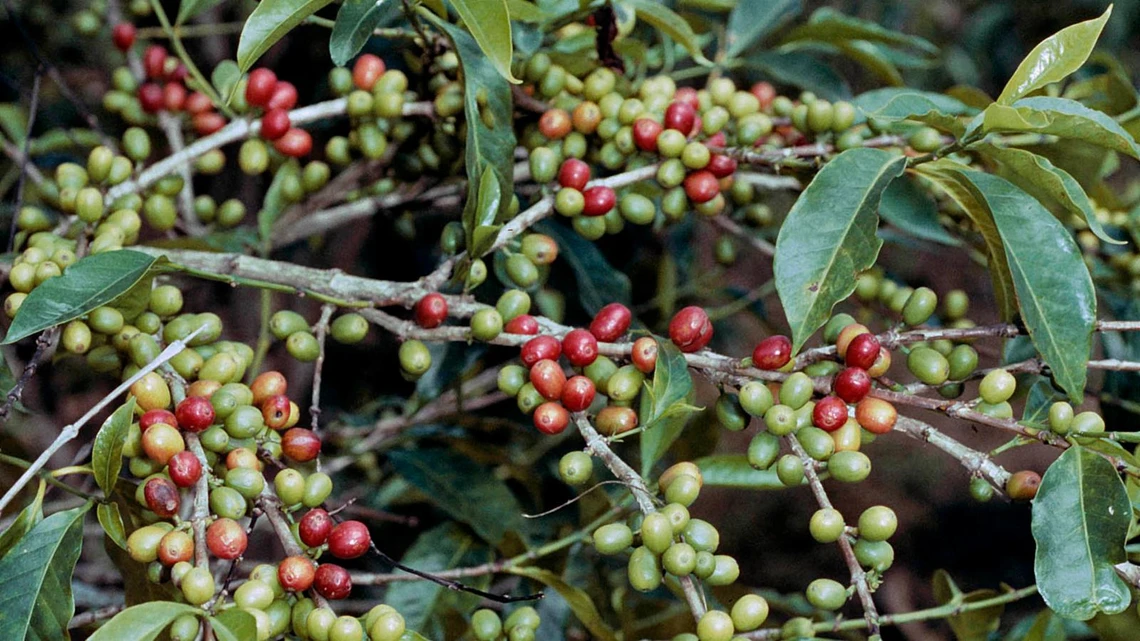
Charrieriana coffee was discovered in 2008 by French botanists in the Bakossi Forest Reserve in western Cameroon. It was named in honor of coffee researcher André Charrier, who made significant contributions to coffee genetic research. This species represents one of the most recent additions to the coffee genus, with its formal scientific description published in 2008.
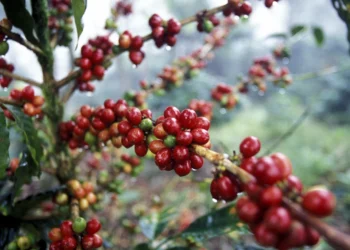
The Charrieriana plant is a small understory tree, growing to approximately 3-5 meters (10-16 feet) in height. It features glossy leaves that are relatively small compared to commercial coffee species. The plant grows in the understory of tropical forests at moderate elevations in western Cameroon, a region known for its rich biodiversity and numerous endemic plant species.
What makes Charrieriana truly remarkable and scientifically significant is that it is the first coffee species discovered to naturally contain no caffeine whatsoever. This characteristic immediately distinguished it from all previously known coffee species, which contain at least some caffeine, albeit in varying amounts. This natural caffeine-free quality occurs through a different genetic pathway than in other low-caffeine coffee species, offering new insights into the evolution of caffeine production in plants.
Given its recent discovery and extremely limited distribution, very few people have had the opportunity to taste Charrieriana coffee. Preliminary sensory evaluations suggest it produces a mild cup with moderate body and subtle flavor notes, though comprehensive flavor analysis has been limited by the scarcity of samples. Reports indicate herbaceous notes with mild acidity and some natural sweetness.
Commercially, Charrieriana does not exist in any meaningful sense. It is not cultivated commercially and exists primarily as a research specimen in botanical collections and gene banks. Its primary significance lies in its potential contribution to coffee breeding programs, particularly those focused on developing naturally caffeine-free coffee varieties that wouldn’t require chemical processing for decaffeination.
Several research institutions, including the French Agricultural Research Centre for International Development (CIRAD) and various universities, are studying Charrieriana’s genetics to understand the mechanisms behind its caffeine-free nature. Coffee breeding programs are exploring the possibility of crossing Charrieriana with commercial species, though such hybridization faces significant challenges due to genetic differences between species.
The wild habitat of Charrieriana is under threat from deforestation and climate change, making conservation efforts critical for preserving this unique species. It is classified as endangered according to IUCN criteria, highlighting the urgent need for habitat protection in the Bakossi Forest Region of Cameroon.
See also
- Caffeine in Coffee
- Decaffeination Processes
- Coffee Genetic Research
- Endangered Coffee Species
- Coffee Conservation
- Cameroon Biodiversity
FAQ
Can Charrieriana be used to make naturally caffeine-free coffee?
While Charrieriana is indeed naturally caffeine-free, several challenges prevent its immediate use as a commercial decaffeinated alternative. The species is extremely rare and not domesticated for agricultural production. Its flavor profile, while not fully characterized, may differ significantly from Arabica or Robusta that consumers expect. The most promising approach involves using its genetics in breeding programs to potentially transfer the caffeine-free trait to commercial species, though this is a complex, long-term process that faces significant biological hurdles, including potential cross-species compatibility issues.
Why is the discovery of Charrieriana significant to coffee research?
The discovery of Charrieriana represents a significant breakthrough for coffee research for several reasons: it’s the first documented naturally caffeine-free coffee species, providing new insights into caffeine biosynthesis pathways; it demonstrates greater genetic diversity within the coffee genus than previously understood; it offers potential genetic resources for developing naturally caffeine-free commercial varieties; and it highlights the importance of biodiversity conservation, as this valuable species was discovered only recently in a threatened forest habitat. Its unique properties have generated new research directions in coffee genetics and biochemistry.
Is Charrieriana endangered?
Yes, Charrieriana is considered endangered. It has an extremely limited known range, having been found only in the Bakossi Forest Reserve in western Cameroon. This habitat faces significant threats from deforestation, agricultural expansion, and climate change. The species’ restricted distribution makes it particularly vulnerable to environmental changes and human activities. Conservation efforts are underway, including habitat protection initiatives in Cameroon and ex-situ conservation through seed banking and cultivation in botanical research facilities, but its long-term survival remains precarious.
How was Charrieriana discovered and what does its name mean?
Charrieriana was discovered in 2008 by a team of French botanists led by Francois Anthony and Aaron Davis during a botanical expedition in the Bakossi Forest Reserve in Cameroon. The team was specifically searching for wild coffee species as part of broader research into coffee genetic resources. Upon analysis, they found this species completely lacked caffeine, making it a significant discovery. It was named Coffea charrieriana in honor of Professor André Charrier, a pioneering French geneticist who made substantial contributions to coffee genetic research and conservation at the French Agricultural Research Centre for International Development (CIRAD).
Video
Charrieriana: The Holy Grail of Caffeine-Free Coffee – A Botanical Treasure from Cameroon’s Forests
Read more about Coffea racemosaa on Wikipedia