 Home
Home Recipes
 Beans
Beans Gear
Gear Roasting
 Brewing
 FAQ
FAQ
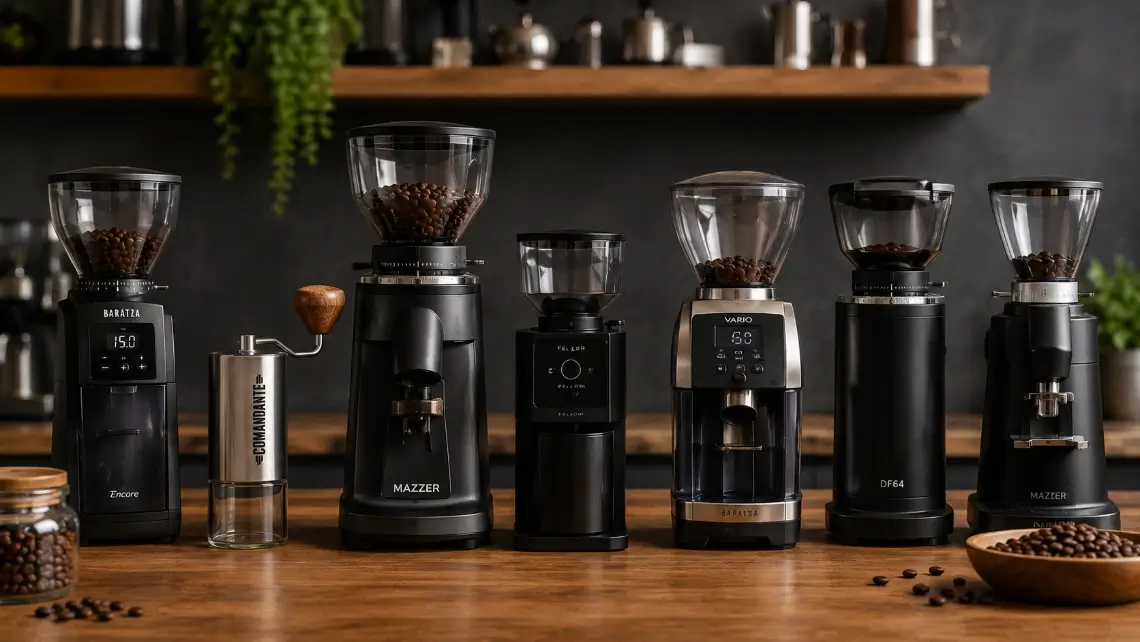
Once you know what type of grinder you want — burr vs. blade, manual vs. electric, home vs. commercial — the brand you buy from determines the build quality, parts availability, and support behind it. Some names have earned their reputation over decades behind café counters; others built theirs in the last few years on single-dosing and enthusiast forums. Here’s what each major brand is actually known for, so you’re paying for reputation that matches your setup, not just a familiar logo.
Baratza
The default recommendation for most North American home setups, and for good reason: Baratza built its name on repairability, with widely stocked replacement parts and burrs long after a model’s release. The Encore is the workhorse entry point, the Virtuoso+ steps up burr quality, and the Vario/Vario+ targets prosumer flat-burr precision. Worth noting: Sette is Baratza’s own single-dose product line, not a separate manufacturer — if you’ve seen it listed as a standalone brand, that’s the correction to make.
Fellow
A design-forward consumer brand best known outside grinders for its kettles and drippers, Fellow’s Ode Gen 2 brought flat-burr grinding to a mainstream audience with an emphasis on countertop looks as much as performance. It’s built for pour-over and drip rather than espresso, and it’s a common recommendation for buyers who want a step up from a basic conical grinder without stepping into prosumer territory.
Wilfa
A Scandinavian home-brand staple, Wilfa’s Svart and Uniform grinders pair conical burrs with straightforward controls at accessible mid-range pricing. They’re most often bought alongside Wilfa’s own drip brewers as a matched home setup rather than as standalone enthusiast purchases.
Timemore
Timemore popularized affordable precision in manual grinding — the Chestnut C2/C3 line brought stepless, steel-burr hand grinders to a price point well under the established Western brands. The brand has since expanded into electric with the Sculptor line for home espresso, keeping the same value-focused positioning.
Eureka
One of the longest-running Italian grinder manufacturers, Eureka’s Mignon series is among the most common home espresso grinders in the world — compact, flat-burr, and purpose-built for espresso rather than adapted from a filter-coffee design.
Ceado
Ceado brings commercial-grade engineering down to a home footprint. The E37S is a favorite among home espresso enthusiasts chasing café-level flat-burr performance without buying an actual commercial machine.
Niche
The Niche Zero carved out its own category: a single conical burr grinder engineered specifically for single-dosing with near-zero retention between grinds. It sits at the boundary between home and prosumer pricing and is one of the most-recommended boutique grinders for buyers who don’t want beans sitting in a hopper.
Mahlkönig
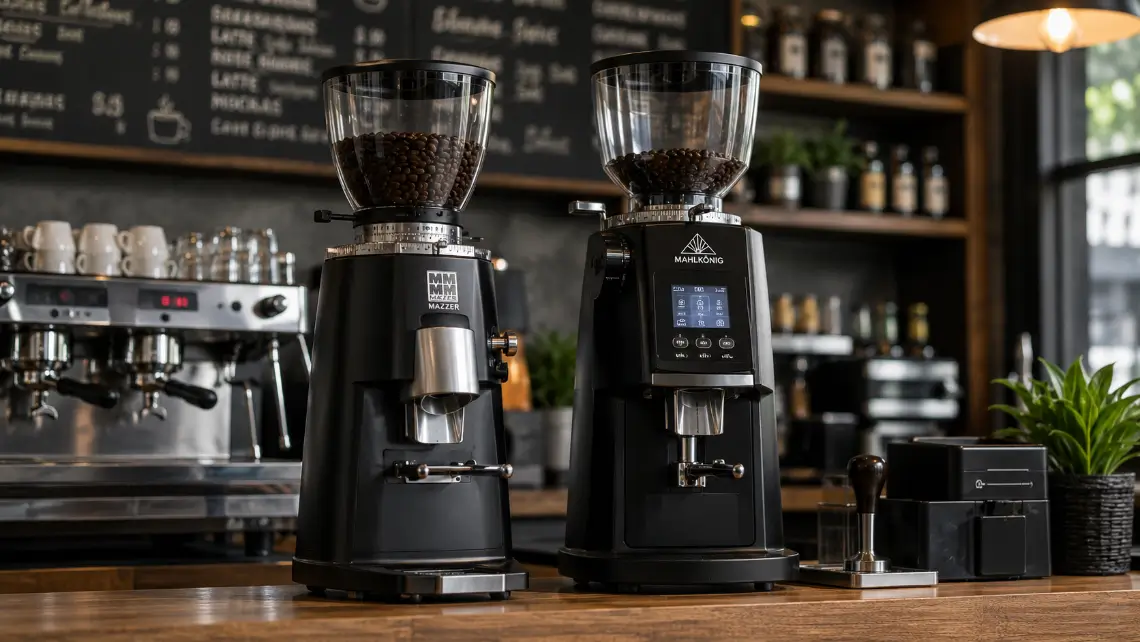
A specialty-coffee industry fixture, Mahlkönig’s EK43 became an unlikely icon after dominating brewed-coffee competitions well beyond what it was originally designed for. Alongside newer models like the X54, Mahlkönig grinders are a common sight in high-volume cafés and roasteries.
Mazzer
Few names are more recognizable behind a café counter. The Mini, Super Jolly, and Kony have been commercial-grade standards for decades — built for continuous daily volume rather than home use, and priced accordingly.
Fuji Royal
Long associated with Japanese café and siphon coffee culture, Fuji Royal’s R-440 and R-220 flat-burr grinders are common in commercial settings, particularly for filter and siphon brewing rather than espresso-first cafés.
Comandante
The reference point for premium manual grinders. The C40 is widely regarded as the standard hand grinder in the specialty coffee community — prized for grind consistency and portability, and often the grinder enthusiasts benchmark every other manual model against.
Kinu
An Austrian brand built around precision machining, Kinu’s M38 and M47 models emphasize engineering and durability for buyers who grind exclusively by hand and want a tool built to last well beyond a typical product cycle.
Helor
A newer entrant in manual grinding, Helor has built a following with twin-burr hand grinders like the 101 and 106 that undercut established Western brands on price while using comparable burr sets — a common recommendation for buyers priced out of Comandante or Kinu.
Weber Workshops
Founded in 2014 by a former Apple product designer, Weber Workshops built the EG-1 as one of the first grinders designed specifically for single-dosing, and it remains a boutique, top-tier option for enthusiasts and competition use — at a price point that reflects its position at the very top of the market.
Quick Reference Table: Brands at a Glance
| Brand | Origin | Segment | Known For |
|---|---|---|---|
| Baratza | USA | Home/Prosumer | Repairability, parts availability |
| Fellow | USA | Home | Design-forward pour-over grinding |
| Wilfa | Norway | Home | Accessible, matched brewer setups |
| Timemore | China | Manual/Electric | Affordable precision |
| Eureka | Italy | Home Espresso | Compact flat-burr espresso grinders |
| Ceado | Italy | Home/Prosumer Espresso | Commercial engineering, home footprint |
| Niche | UK | Boutique Home | Single-dosing, near-zero retention |
| Mahlkönig | Germany | Commercial | Café and roastery standard |
| Mazzer | Italy | Commercial | Decades-long café counter standard |
| Fuji Royal | Japan | Commercial | Filter and siphon coffee culture |
| Comandante | Germany | Premium Manual | Benchmark hand grinder |
| Kinu | Austria | Premium Manual | Precision machining, durability |
| Helor | China | Manual | Budget alternative to premium hand grinders |
| Weber Workshops | USA | Boutique/Competition | Pioneering single-dose design |
“Chasing a brand name is the wrong instinct — chase the burr set and the adjustment range for what you actually brew. A well-built $200 grinder from a lesser-known brand will beat a famous brand’s entry-level model every time.” — Alex Thompson