
 Home
Home Recipes
 Beans
Beans Gear
Gear Roasting
 Brewing
 FAQ
FAQ
How to Clean Your Coffee Machine the Smart Way
Today I’d like to discuss an important aspect of any appliance, especially expensive ones — ensuring their smooth operation. Many people consider this the very essence of “reliability.” Fair warning: this is a lengthy article, so grab yourself a cup of… coffee!
Let’s start with the main point: Regular cleaning of your coffee machine is the key to its long service life. This is a fact, and there’s no debating it. If you neglect your machine, the likelihood of expensive repairs grows exponentially (fancy word there, if I do say so myself).
And typically, repairing a coffee machine involves… professional cleaning! Or replacing parts that have “served their time.” Usually, there’s nothing to actually repair. You might need to replace the boiler, brewing unit, pump, or control board. And parts for coffee machines are expensive. Letting it get to the point of needing “cleaning service repair” is simply short-sighted. It’s much easier and more economical to clean your coffee equipment yourself (equipment cleanliness affects taste).
1. Descaling Your Coffee Machine — The Essential Cleaning Process That 100% of Coffee Equipment Needs
Yes, limescale is the most common cause of coffee machine repairs
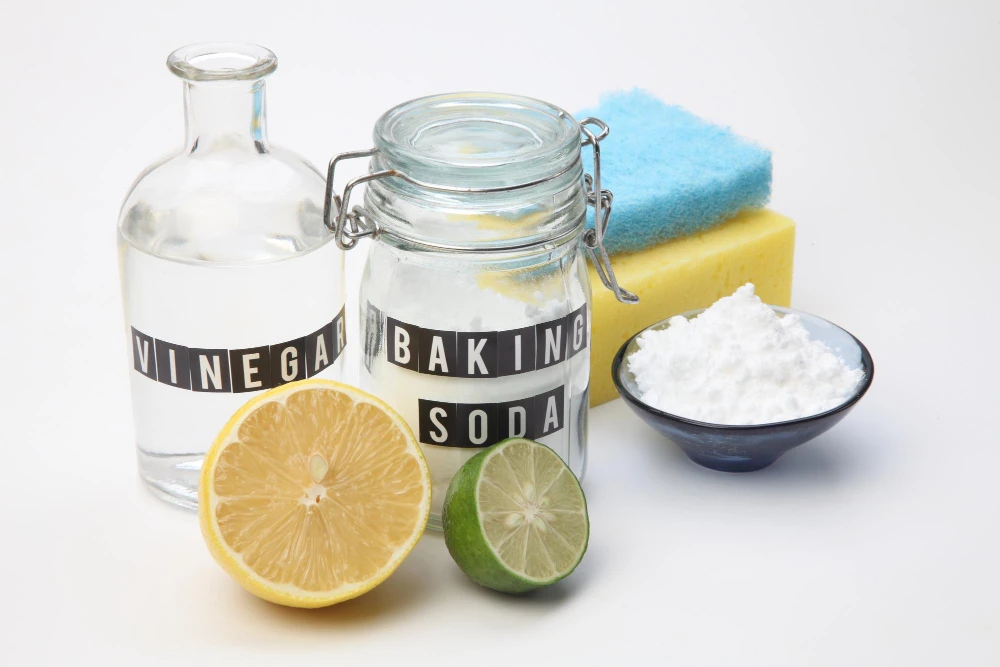
Regular wiping of surfaces, rinsing the brewing unit, and automatic channel flushing that every coffee machine does automatically when turning on and off — these aren’t what I (or most users) typically mean by “cleaning a coffee machine” (moka pots also need cleaning). But while external wiping may not significantly extend your machine’s life, just enhancing its appearance, don’t neglect washing the brewing unit.
So, what’s the right way to clean a coffee machine?
“Enough theory, we already know this, smarty-pants, give us the specifics” — I can already hear these unspoken comments.
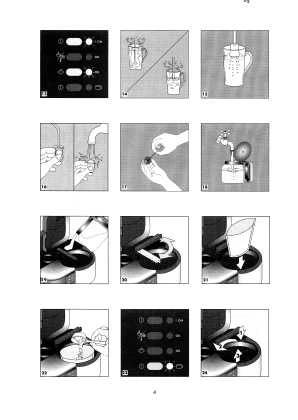
The answer is very simple: follow the manual! Yes, if you haven’t looked at it yet, go read it now. Every single manual includes step-by-step instructions for this typically simple procedure. There’s no universal recipe for specific button presses and actions for all machines. You need to know which button to press, and what to pour where and when.
Sometimes you’ll need to perform about 10 different actions during the 15-20 minutes required for cleaning. If you make a mistake, you’ll often need to start the process over. But don’t be afraid. It’s all simple; you just need to follow the instructions. Any “child” aged 14 or older can handle it.
For “high-end” machines (roughly speaking, priced from $500-600, but this isn’t a hard rule), the cleaning procedure might require just two actions: “loading” the cleaning agent and starting a fully automated program with one button press. But again, I recommend checking the manual to see which button to press.
What if you don’t have the manual?
Maybe it’s lost, thrown away, or perhaps you’ve been assigned to an office machine and have no idea how it appeared in your “environment.” There aren’t many options here. Figuring it out yourself can be risky. Here’s my recommendation:
- Search for a review of your model on my website (in the upper right corner). Below all reviews, in the technical specifications, there’s a link to the manual.
- If I don’t have a review of your model, try Google.
- Search for “manual {full model name, which can almost always be found on the coffee machine itself, no need to include the curly brackets}.”
- On the first page of search results, with 95% probability, there will be a link to download the manual or view it directly in your browser — open the document and find the relevant section in the table of contents, something like “cleaning the coffee machine” or “cleaning and maintenance.”
There’s also the option of calling a specially trained person who, if the machine is rare, will perform the above steps on their tablet or smartphone while standing next to the machine. For you. For a fee. If your machine is common, they’ll remember the sequence from memory. But that won’t be free either.
What else do you need to clean a coffee machine?
Besides the manual, you’ll definitely need a cleaning agent. Essentially, it’s a descaler, nothing more. Almost always, you need to use it first, pouring it into the clean water tank. Along with clean water, in a specific proportion. This is usually the first or one of the first steps. How do you determine the proportion? The answer will definitely be given on the packaging of the cleaning agent. There’s no single formula for all products.
“But which cleaning agent should I use for my coffee machine? I’ve heard something about tablets for coffee machines…”
In any manual that you’ve probably found and even timidly opened by now, there will be something along the lines of: “for cleaning the coffee machine, use only {coffee machine manufacturer’s brand name + something personal for identification}!” For example, Philips Saeco, DeLonghi, Bosch, and almost all other well-known manufacturers produce their “branded” coffee machine cleaning products: Jura, Melitta, Krups, etc.
Yes, the price might surprise you. It includes the coffee machine manufacturer’s margin, although the product itself is actually made by an OEM contractor with absolutely no connection to the specific coffee machine manufacturer. None of the companies listed above make cleaning agents themselves. Consequently, you can safely use products from any other brand for any coffee machine. Of the branded ones, Bosch and Melitta are typically the cheapest.
In reality, you can use any “cleaning agent for automatic coffee machines,” something like Cafedem, Top House, CUP, or Topperr, etc. They all have roughly the same effectiveness. Just follow the proportions written on the bottle. Most likely, you can find something at your local appliance store, or maybe at a home goods store.
Oh yes, regarding descaling tablets. They’re “the same thing, different format.” The active ingredients are just compressed into a tablet, that’s the only difference. Tablets for coffee machines are approximately as effective as liquid agents. But the price per cleaning may be lower (or not). Yes, you can use them confidently. But! Don’t forget to make sure the tablet is COMPLETELY dissolved in the water container BEFORE starting the process. In clean water, naturally. Fill the container to the MAX mark.
“Why pay extra? You can just use citric acid!”
“Or vinegar, or even Coca-Cola — they even clean carburetors with it!” — haven’t you heard such advice yet? There are plenty of these advisors.
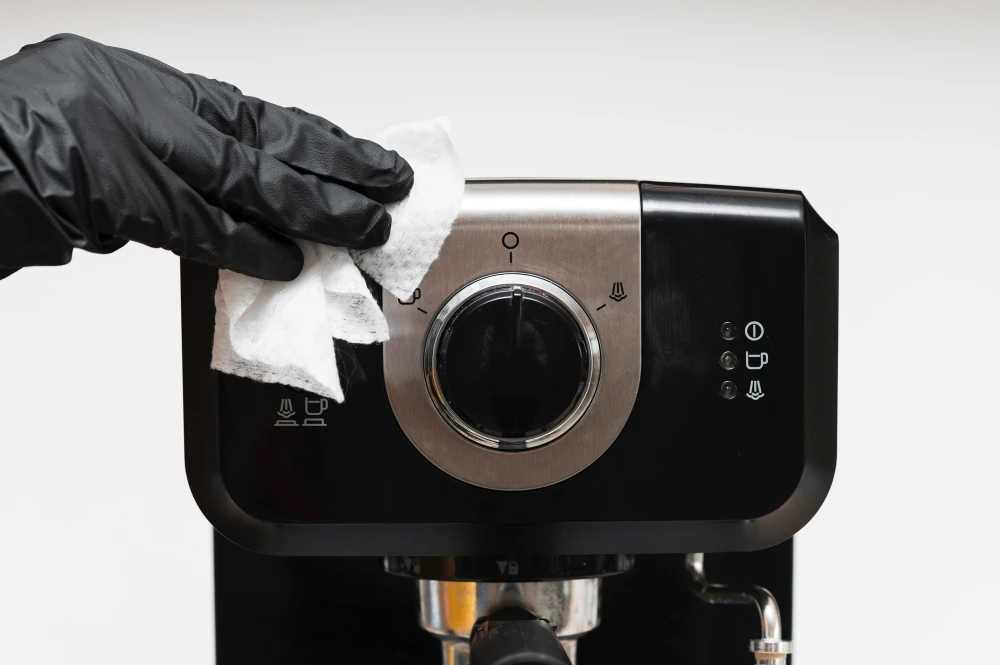
In short, don’t do it. You shouldn’t clean with vinegar or cola at all. Citric acid, with some caveats, can be used. The recipe in this case is: dissolve the acid at a rate of 1.5 teaspoons per quart of water, pour this solution into the clean water tank, and then follow the program.
But citric acid is less effective than special products, and conversely, more chemically aggressive. This is “penny-wise, pound-foolish.” A special descaling agent for coffee machines costs “pennies” compared to the coffee machine itself and even compared to good coffee, not to mention calling a technician to repair a ruined aluminum tube or “eaten” rubber gasket. Both types of components are abundant in automatic coffee machines.
How often should you descale your coffee machine?
Generally speaking, the coffee machine will request cleaning itself, lighting up a corresponding indicator or displaying a demand on the screen. But there are nuances here. First, you need to understand how the machine determines it’s time for maintenance.
No coffee machine has any sensors that detect limescale. All coffee machines simply count the number of portions prepared.
Roughly speaking, if the program sets “cleaning after 200 cups,” it will signal exactly after 200. Meanwhile, your boiler might be either crystal clean by this time or already in extremely poor condition.
The intensity of limescale formation is influenced by the quality and composition of the water you pour into the coffee machine. Water can be clean, or conditionally dirty in terms of limescale — hard. The harder the water, the faster the heating element gets covered with limescale. How do you correlate the number of cups with water quality and “contamination” speed?
For this purpose, almost all models are equipped with a water hardness programming function. It’s always described in the manual. In 99% of cases, the manufacturer includes a special test strip in the machine’s package, which you need to dip in water, and depending on its reading, program the machine.
Now the machine will count the number of portions until cleaning according to the set water hardness. By default, the factory setting is usually the “hardest” setting, meaning the most frequent. It might be that tap water is actually soft. If you don’t set the correct hardness value, you’ll just be wasting descaling agent. The reverse can also be true: the manufacturer set a medium hardness value, but you have extremely “hard” water. The boiler will suffer.
When you notice the descaling requirement signal, don’t delay the process. Depending on the specific model, the machine might simply refuse to work; it gets blocked. This is already unpleasant. But there aren’t many models like this. I recommend always having cleaning agent on hand for a couple of procedures.
Depending on the frequency of coffee consumption, some machines can “tolerate” up to 1-3 months after the warning signal lights up. But I don’t advise delaying. First, no one can predict the exact period of “painless waiting,” and second—see the first section of this article. Repairing a coffee machine will definitely be more expensive.
So how do you reduce the frequency of descaling your coffee machine?
There’s a way to extend the “service interval.” That is, to reduce the frequency of descaling your coffee machine:
Use purified (less effective) or bottled (more effective) water
Basically, clean and “soft” water. In this case, you’ll need to program the machine for the least hard water, and it will request cleaning very rarely. This approach works with coffee machines with built-in water filters too. Keep in mind, any such filter is less effective than a regular Brita or PUR pitcher (if you regularly change the cartridges), not to mention bottled water. And the standard filters for coffee machines are noticeably more expensive. For example, a Philips Saeco costs about $15, and a replacement cartridge for a DeLonghi coffee machine costs about $10-15 (if not on sale).
I’ll say more. When choosing a coffee machine, you can ignore built-in water filters altogether. Instead, buy a separate household filter. Maintaining it will be immeasurably simpler and cheaper. This way, you’ll also get clean water for other purposes.
There’s an important point here. If you use a built-in filter, the machine might not require descaling at all. That could be the program. It will assume the water is ideal, and limescale doesn’t build up. In any case, I recommend cleaning the coffee machine once a year, even if you use reverse osmosis water (there are such household water purification systems — reverse osmosis).
By the way, in the latter case, you need to indicate in the menu that you’re using a branded filter, so that the machine either doesn’t request cleaning at all, or at least does so as rarely as possible. Water purified by reverse osmosis, like some bottled liquids, really doesn’t form limescale. But you should clean once a year regardless of anything.
Let’s summarize the descaling process:
- The coffee machine will request cleaning itself. No need to monitor specially. You just need to correctly set the hardness of the water you use according to the procedure indicated in the manual. I don’t recommend delaying the process after the signal is given. To reduce cleaning frequency, use filtered or, even better, bottled water. It’s better not to use built-in coffee machine filters, as they’re simply more expensive. In this case, set the softest water in the menu or indicate that you’re using a branded filter, if such an option exists in the menu. If the machine still frequently requests descaling, while you’re using crystal-clear bottled water or a powerful reverse osmosis system, run the descaling program with clean water to reset the portion counter.
- To descale your coffee machine, you need a manual (paper or found on the Internet) and a cleaning agent (liquid or tablets — doesn’t matter), which doesn’t have to be the brand’s own. I don’t recommend using “folk methods” such as vinegar, citric acid, cola, and other budget-conscious student experiments, although no coffee maker has ever died from a couple of citric acid rinses.
- The process itself is described in detail in the manual, and it’s better not to experiment on your own or follow unverified Internet advice. The procedure may differ for each coffee machine model; there’s no universal algorithm. Find the instruction manual (for example, I have a file attached under each review in the technical specifications section) and follow the steps sequentially, it’s simple. The required time is about 15-30 minutes.
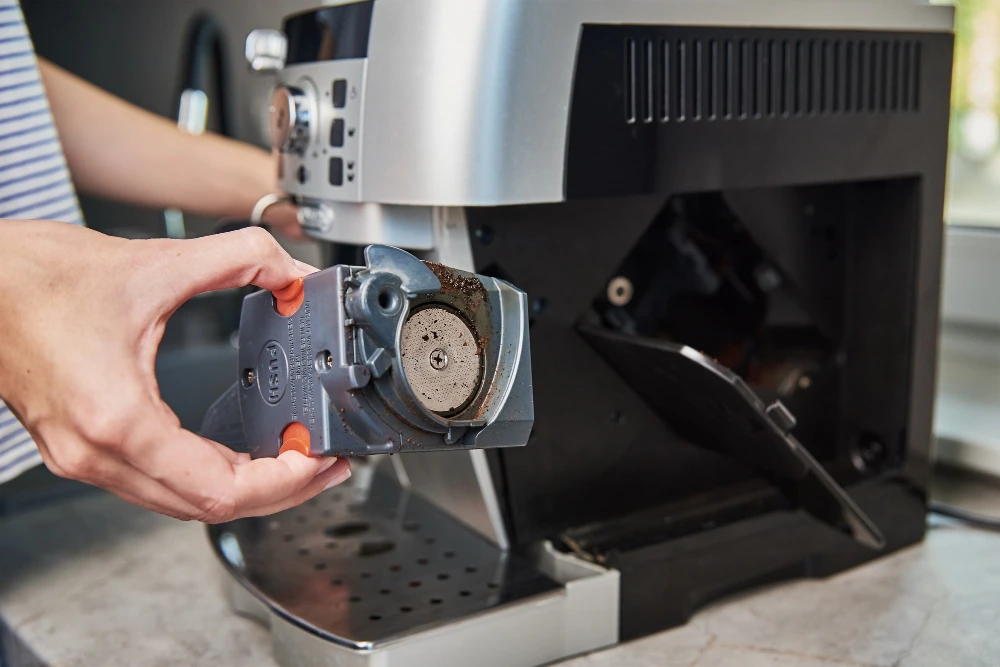
2. Cleaning the brewing unit, including coffee oils
Every bean-to-cup coffee machine has a brewing unit (in portafilter machines, this function is performed by the portafilter, in capsule machines — by the capsule), which over time gets contaminated with ground coffee particles and its oils. Coffee machines are divided into two major classes — those with a built-in brewing unit (BU) and those with a removable one (for what’s better — read the “FAQ“).
Alex Garcia, service engineer for a national chain:
“Americans love strong coffee and often set their machines to maximum brewing intensity. This increases stress on the brewing unit and leads to rapid accumulation of coffee oils. Then owners complain about bitter taste and perform descaling, but the problem persists. It’s important to understand that different agents are used for cleaning coffee oils and descaling — in the US, I recommend Urnex Cafiza for organic contaminants and Dezcal for mineral deposits.”
Basically, cleaning is the cornerstone of this division. A removable BU can (and should!) be taken out and rinsed once every 1-3 weeks under running water (from the tap), then allowed to dry and reinstalled in the machine. But besides this express-rinse, every 200-500 cups it’s recommended to clean the BU and the coffee machine’s water system with special tablets for cleaning coffee oils.
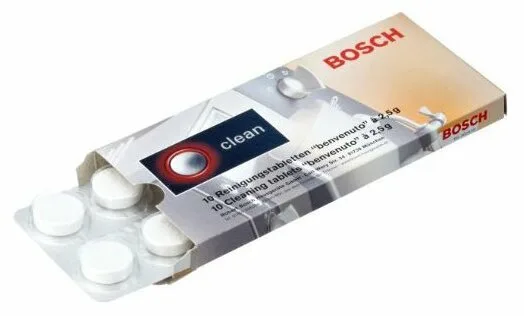
And while for machines with removable BUs this is still a recommendation, I wouldn’t say it’s a strict requirement, machines with non-removable BUs (Jura, Krups) VITALLY need to be cleaned with such tablets strictly upon the machine’s request (it will definitely signal), otherwise they won’t last long, 100%.
With “tablets for cleaning the coffee system” or “tablets for coffee oils” (these are the most common names for such products), the situation is exactly the same as with descaling agents. That is, all manufacturers warn that you can only use their branded products, although in reality they’re all the same, and you can also use “non-branded” ones. However, “non-original” tablets for coffee oils are harder to find. Among the originals, traditionally the most accessible are Bosch (in a pack of 10 tablets) and Melitta. Among the “non-originals,” some of the most affordable (about half the price of the branded ones) are Topper 3037. Alternative options: Cafedem, Cafiza, CUP tablets.
Usually, the process is described in detail in the manual, but sometimes manufacturers keep completely silent about the need for such cleaning. For example, DeLonghi doesn’t mention it in any manual. You can skip this cleaning, but it’s still worth doing. If the process isn’t described in the instructions, you should do the following:
- Make sure your model has a chute and corresponding program for brewing coffee from pre-ground beans, in short, from ground coffee.
- Activate the “Ground Coffee” mode.
- Drop one tablet of the cleaner into the ground coffee chute.
- Place a capacious cup under the dispenser and start brewing the largest possible espresso volume.
- Discard the water.
- Repeat two preparations of maximum volume espresso from pre-ground coffee, WITHOUT ADDING ground coffee. Pour the water dispensed by the machine down the drain.
Tyler Johnson, technical consultant, Denver:
“Unlike in Europe, many automatic coffee machine owners in the US don’t even know that the brewing unit can and should be removed and washed. Working with clients in Colorado, I often find real ‘ecosystems’ of mold behind the service door. Our dry climate creates a false sense of security — people think mold doesn’t develop in dry air, but inside a warm, humid coffee machine, conditions are completely different.”
What if I don’t have a ground coffee chute or the machine won’t start brewing with a tablet, without coffee?
Option for machines with a dedicated coffee tract flushing button, for example, DeLonghi
- With the machine turned on, drop a tablet into the ground coffee chute; you can crush/crumble it and pour in the powder. In this case, afterwards, before the last step in these instructions, brush the chute to knock down any powder residue if it remains on the walls.
- Press the flush button, the one that’s a separate button on the control panel.
- When about 10-20 ml has poured from the machine into the glass, pull the plug from the power outlet. Yes, right during operation.
- Wait 10 minutes.
- Turn on the machine; it will discard the tablet remains into the waste, which is normal.
- Flush the coffee tract with the same flush function (button on the panel) about 6-8 times.
Option for machines without a dedicated button/program for flushing the coffee tract
There are coffee machines (for example, Philips HD8649, HD8827/8829) without a ground coffee chute. Also, some coffee machines with a chute have a sensor that detects the presence of coffee in this chute, and if there’s only a tablet, not coffee, the machine doesn’t start the brewing process.
This is the most difficult case. In principle, if you regularly wash the brewer under running water, you can skip this cleaning. But there’s a “hack” with about half the effectiveness:
- Remove the brewer with the machine turned off.
- Wash it, dry it.
- Place a tablet for coffee oils in the removed brewing unit, in the coffee compartment (the funnel on top, where ground coffee is poured from the grinder), you can crush/crumble it. In this case, afterwards, before step 8 in these instructions, brush the chute to knock down any powder residue if it remains on the walls.
- Insert the brewer into the machine, turn on the machine. It will start flushing.
- After about 10 ml has poured from the dispenser, turn off the machine by unplugging the power cord. Yes, right during operation.
- Wait 10 minutes.
- Turn on the machine — it finishes the flushing procedure, returning to its initial state.
- After this, you need to flush the coffee tract. Depending on the model, forced start of flushing might be a separate menu item or button. It might not exist at all. Then simply turn off and then turn on the machine a couple of times; at each startup, it usually always flushes. Or make a “sacrificial coffee” of maximum volume — to be discarded.
- Cleaning is complete. In the grounds compartment, there might be a half-dissolved tablet — discard it.
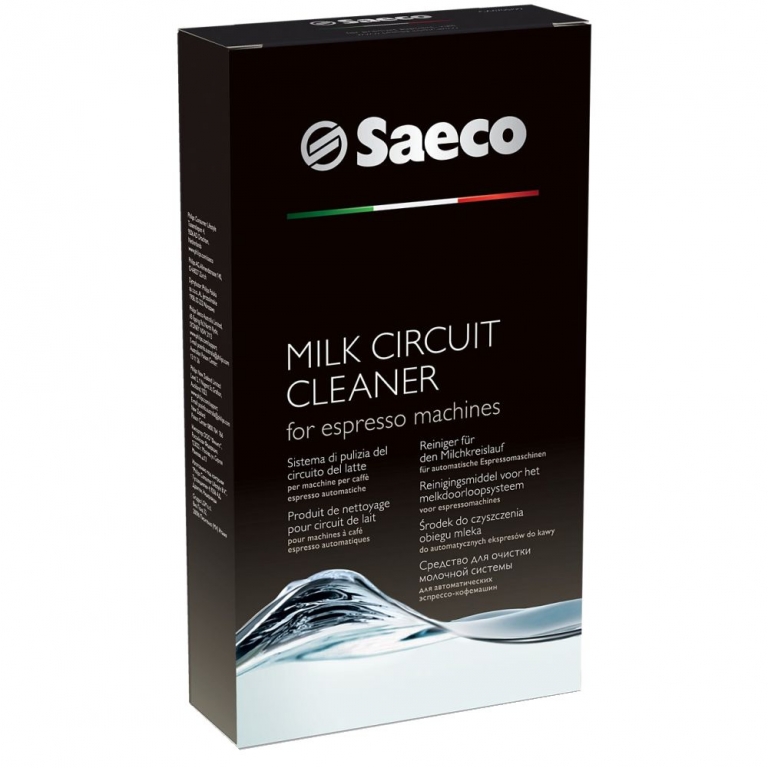
3. Cleaning the milk system (circuit) in milk frothers
Another cleaning may be relevant for milk frothers with automatic cappuccinators, both with a built-in jug and with an outlet tube. Cleaning the milk system, which I also call the circuit.
In principle, if you clean the milk frother/cappuccinatore regularly by disassembling it (described in the manual for each milk frother), you can do without this chemical. But nevertheless, sometimes it’s relevant: either you missed a cleaning, or the milk turned out to be old, or something else, and as a result, the milk system became clogged and doesn’t froth well. The simplest solution is to conduct a cleaning with a specially developed agent.
Here the situation is familiar again. Each coffee equipment manufacturer produces its own branded product, made by third-party companies, and adds a margin according to their greed. In fact, you can use any product for any milk frother. I’m already embarrassed to repeat myself, but here too, the most affordable “branded” option is from Melitta. For example, the Saeco analogue — CA6705 — costs about $10 without discounts. DeLonghi is a bit cheaper without discounts — $7-8.
There are also non-branded analogues. Moreover, I can give you a universal recipe for making a substitute at home. Dissolve 1 tablespoon of baking soda in 1 quart of warm water and — voila! Pour the soda solution into a pot, disassemble the cappuccinatore and soak it for a couple of hours, then rinse with running water.
But in general, it’s better not to let the cappuccinatore reach the state where only chemicals can help it. As a rule, all parts of automatic cappuccinators can be washed in the dishwasher.
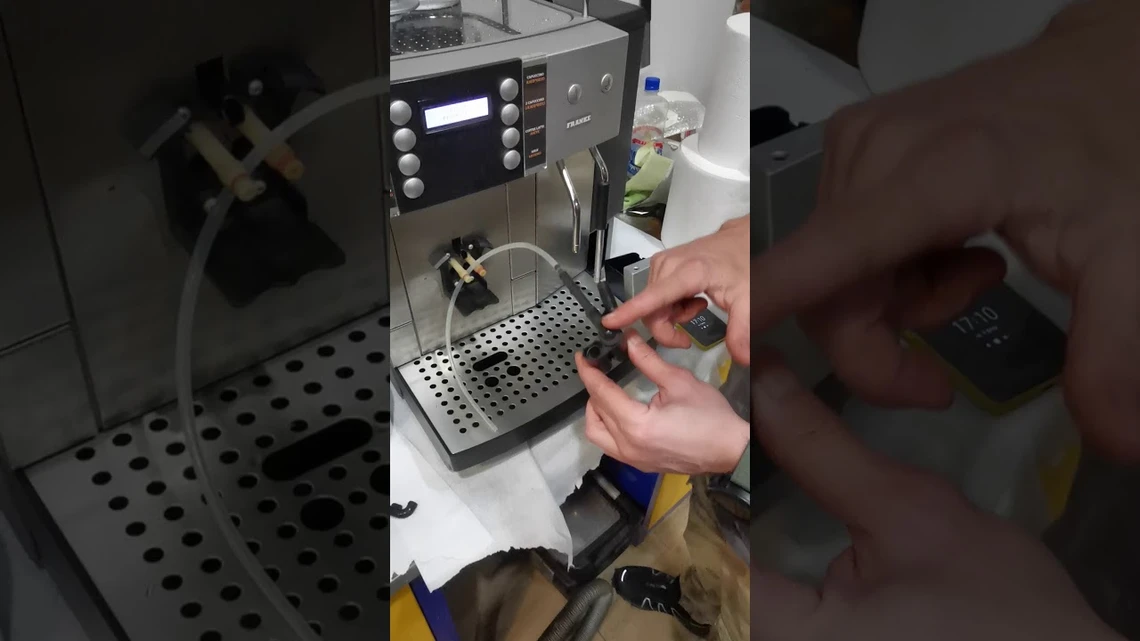
P.S. Haven’t bought a coffee machine yet, but already thinking about cleaning it? Some models (usually not cheap) have a full set of fully automatic cleaning programs. Read more about them in my reviews.
P.P.S. By the way, capsule coffee machines also require descaling. And no less frequently. But you don’t need to clean the brewing unit from coffee oils. And 95% of capsule machines simply don’t have a milk system.
Signs Your Coffee Machine Needs Cleaning
Many coffee machine owners only rely on the built-in indicator that signals when cleaning is necessary. However, these indicators work by counting the number of cups brewed, without taking into account the actual condition of the machine. It’s important to recognize clear signs that your coffee machine needs cleaning, even if the indicator hasn’t lit up yet.
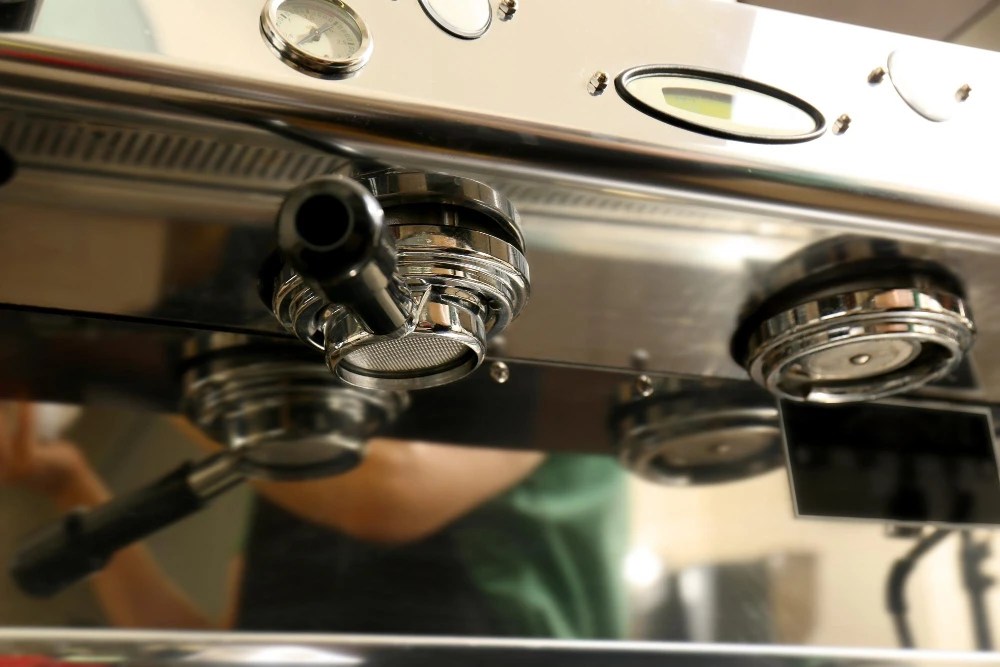
Changes in Coffee Taste and Quality
- Bitterness and acidity – the appearance of pronounced bitterness or a metallic aftertaste in coffee often indicates that the brewing unit is contaminated with coffee oils.
- Reduced aroma intensity – scale and contaminants in the tubes prevent full extraction of aromatic compounds from the beans.
- Pale color of the beverage – has your espresso lost its rich color and characteristic crema? This is a signal to clean the brewing unit.
- Uneven extraction – if coffee flows unevenly from the dispenser or only comes out of one hole, the channels are likely clogged.
Brandon Wilson, coffee equipment calibration expert, Seattle:
“In the US, especially in the Pacific Northwest, many people use special high-acidity coffee varieties, which affects the rate of scale formation. Want your machine to last longer? Set the water hardness to minimum in the programming, but clean twice as often as the manufacturer recommends. This way, you’ll prevent machine blockage while ensuring system cleanliness.”
Changes in Coffee Machine Operation
- Increased brewing time – if coffee takes noticeably longer to brew, this is a clear sign of contamination in the hydraulic system.
- Unusual sounds – the appearance of loud humming, gurgling, or whistling signals problems with the pump due to scale buildup.
- Reduced water pressure – weak water flow during rinsing or insufficient pressure during brewing indicates blockage.
- Insufficient heating – if coffee comes out not hot enough, this may indicate scale on the heating element.
Katherine Lee, certified service specialist, Boston:
“In the northeastern states with continental climate, it’s especially important to monitor seals and gaskets. Due to sharp fluctuations in temperature and humidity, they lose elasticity faster. These parts cost $10-15 but can prevent leaks and short circuits. In the US, many service centers offer annual maintenance plans with replacement of all gaskets – it costs about $100-150 per year but pays for itself many times over.”
Milk System Problems
- Poor milk foam quality – if foam from the cappuccino maker has become runny, uneven, or bubbly, it’s time to clean the milk circuit.
- Milk solidifying in the cappuccino maker – the appearance of white clumps or difficulties with milk delivery indicate clogging in the milk circuit.
- Strange sounds when frothing milk – intermittent hissing or fading sound of the cappuccino maker indicates partial blockage of the system.
Visible Signs of Contamination
- Change in water color in the tank – appearance of whitish residue or flakes in the water.
- Scale on visible parts – formation of white residue on metal parts and in the water container.
- Coffee grounds in the cup – if particles of coffee grounds appear in the finished drink, the brewing unit needs cleaning.
- Water leakage – the appearance of drops or puddles under the coffee machine may indicate clogged internal channels and increased pressure in the system.
Functionality Problems
- Spontaneous stops during brewing – interruption of operation in the middle of the brewing cycle is often associated with system blockage due to contamination.
- Program failures – if the machine doesn’t complete the full brewing cycle or arbitrarily changes settings, this may be caused by sensor problems due to contamination.
- Failure to activate individual functions – for example, if the auto-cappuccino maker has stopped working but other functions are fine, the milk system needs cleaning.
Richard Peterson, technical director of a coffee equipment service company, Austin:
“In Texas and southern states, heat is a particular problem. Coffee machines overheat, and the high ambient temperature accelerates oxidation processes. In my 20 years of work, I’ve developed a formula for coffee machine longevity in American conditions: quality filtered water + regular cleaning + proper placement away from direct sunlight and heat sources. And be sure to use quality beans – the American market has lots of cheap coffee with additives that leave a sticky residue on the burrs.”
Seasonal and Operational Signs
- After a break in use – if the machine hasn’t been used for more than 2-3 weeks, cleaning should be performed before operation.
- When changing water type – switching from filtered to tap water or changing the brand of bottled water may require an unscheduled descaling.
- After replacing components – installing a new brewing unit or other parts recommends performing preventive cleaning of the entire system.
Regularly pay attention to these signs and don’t wait until the cleaning indicator lights up. Timely maintenance will extend the life of your coffee machine and ensure consistently high-quality beverages.
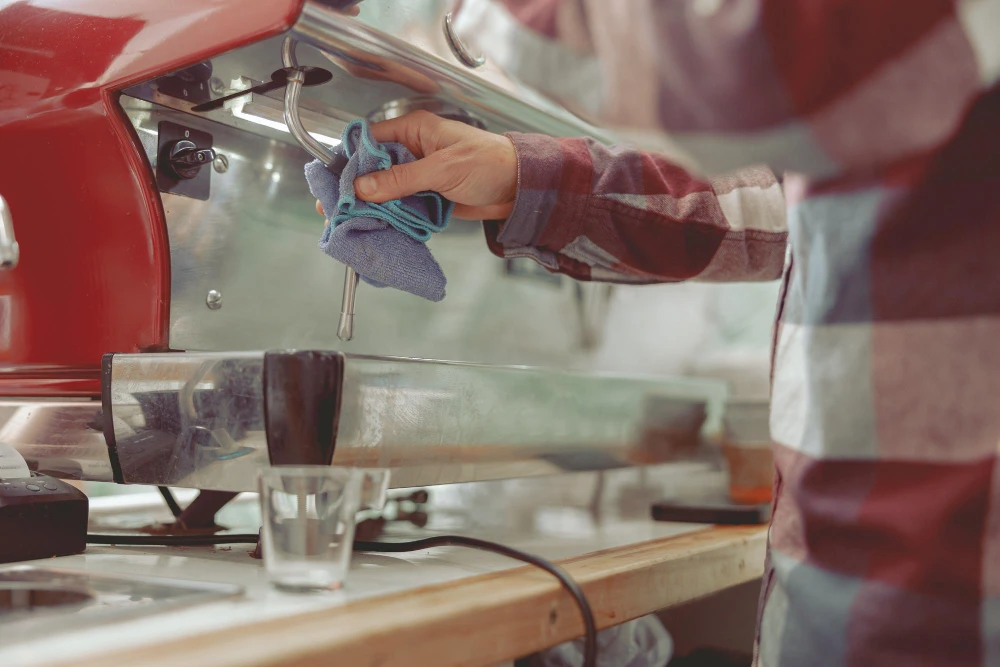
Coffee Machine Care Checklist
Jason Miller, US Coffee Champion 2023:
“In my 12 years in the coffee industry, I’ve learned one thing – a clean machine equals clean taste. In our Seattle coffee shops, we clean the groups every two hours, even if it slows down service. For a home espresso machine (maintaining espresso quality), a weekly backflush is sufficient, but the more often, the better. The quality of your first cup of espresso in the morning directly depends on how thoroughly you cleaned the machine the night before.”
Daily Care
- Emptying and rinsing the drip tray – prevents mold and odor formation
- Removing used coffee – coffee oils can go rancid if left in the waste container
- Running a quick rinse cycle – most machines have a special button; use it after the last cup of coffee
- Wiping the steam wand – for espresso machines, clean immediately after use with a damp cloth
- Removing and emptying the milk container – store remaining milk in the refrigerator, not in the machine
- Wiping external surfaces – use microfiber to prevent fingerprints and dust accumulation
Samantha Rodriguez, barista trainer at Blue Bottle Coffee chain:
“Many coffee machine owners underestimate the importance of a clean cappuccino maker. If after frothing milk you simply wipe the steam wand with a damp cloth and purge it for 2-3 seconds – this will save you hours of struggling with dried milk. Our chain strictly monitors this. Milk residue in the system is not just bad taste, but a real health threat due to rapid bacterial growth, especially considering high kitchen temperatures.”
Weekly Care
- Thorough cleaning of the cappuccino maker – disassemble all removable parts and wash with warm water or in the dishwasher (if allowed by the manufacturer)
- Washing the water reservoir – use warm water without detergents
- Cleaning the ground coffee funnel – remove coffee residue with a brush or dry cloth
- Removing and washing the brewing unit – (for machines with a removable unit) rinse under running water and allow to dry
- Cleaning the display and control panel – use a slightly damp cloth without aggressive cleaning agents
Michael Chang, specialty coffee shop owner in Portland:
“When La Marzocco specialists come to service our machines, I always peek at their work. The best advice I got was regular cleaning of the doser and ground coffee chute. This is especially important in high humidity conditions, like we have in the Pacific Northwest. Coffee dust from static electricity accumulates there and can seriously affect dosing accuracy, which is critical for espresso quality.”
Monthly Care
- Replacing the water filter – if used, follow the manufacturer’s recommendations for frequency
- Cleaning the coffee grinder – use special tablets for cleaning coffee grinders or a dry brush
- Deep cleaning of the brewing unit – use tablets to remove coffee oils
- Checking seals and gaskets – inspect for wear or damage
- Inspecting internal channels – check for visible contamination or blockages
Quarterly Care (every 3 months)
- Descaling (removing limescale) – even if the indicator is not on, preventive cleaning is necessary
- Complete cleaning of the milk system – using special products for the milk circuit
- Checking filters and screens – cleaning or replacing water microfilters
- Calibrating the coffee grinder – checking grind settings and adjusting if necessary

Recommendations for Extending Coffee Machine Lifespan
Robert Jenkins, service engineer with 15 years of experience, New York:
“I can confidently say that most home coffee machines in the US suffer from improper water. In eastern states, especially New York and Boston, water is much harder than people think. Every day, machines with totally clogged boilers are brought to me. There’s a peculiarity in the US – many don’t trust tap water even for coffee machines, but instead use regular bottled water without checking its mineral content. The right water is one-third filtered water.”
Proper Operation
- Use only quality coffee beans – cheap coffee often contains additives that can damage the grinder
- Don’t skimp on water – use filtered or bottled water with low mineral content
- Let the machine warm up – before making the first cup, give the machine 3-5 minutes to reach optimal temperature
- Don’t turn off the machine during operation – always wait for the program to complete
- Monitor water level – running “dry” can damage the pump and heating element
Preventive Measures
- Set the correct water hardness in the machine settings – this will help more accurately determine the need for descaling
- Replace water filters on time – an expired filter can become a source of bacteria
- Perform maintenance before problems arise – don’t wait until coffee quality noticeably deteriorates
- Store coffee beans properly – in an airtight package, away from sunlight, moisture, and strong odors
- Use regularly – long periods of inactivity can lead to water stagnation in the system and bacterial growth
Protection from External Factors
- Protect from voltage fluctuations – use a voltage stabilizer or surge protector
- Avoid high humidity – don’t place the coffee machine next to the sink or stove
- Protect from dust – cover the machine if it’s not used for an extended period
- Choose the right location – ensure sufficient space around for ventilation
- Avoid direct sunlight – it can damage plastic parts and electronics
What to Do If Cleaning Doesn’t Help
Melissa Thompson, specialist in premium machine repair, Los Angeles:
“The most difficult case for me is when clients try to fix the machine following advice from Reddit or YouTube. In California, ‘eco-solutions’ are popular, and recently someone brought me a La Specialista worth $800 with completely corroded gaskets after cleaning with ‘natural apple cider vinegar.’ I want to dispel the myth – organic cleaning agents don’t mean they’re safe for your coffee machine. The repair cost the owner $300.”
Diagnosing Serious Problems
- Constant leakage – may indicate damaged seals or a crack in the boiler
- Loud noise during operation – sign of problems with the pump or motor
- Shutting down during operation – possible problems with electronics or overheating
- Error messages – if errors persist after cleaning and restarting
- Inability to reach operating temperature – problems with the thermostat or heating element
When to Contact a Service Center
- If there’s a burning smell or smoke – immediately disconnect the machine from power
- If water is hotter than usual – the thermostat may be malfunctioning
- If there’s significant mechanical damage – cracks, chips on the body
- If a lot of white residue remains after descaling – the boiler may be severely damaged by scale
- If strange error codes appear – which are not described in the manual
David Cohen, service center manager in Chicago:
“In the central states, water often contains high amounts of minerals, and many locals don’t understand why their coffee machine doesn’t last even two years. Never ignore descaling instructions! Measure the product and procedure time precisely. In the US, there’s a good alternative to store-bought products – Dezcal, it’s inexpensive at Target or Amazon, but works just as well as branded alternatives. The main thing is not to exceed the concentration.”
DIY Minor Repairs
- Replacing O-rings – available for many models, requires minimal skills
- Cleaning valves – can be performed using special brushes and solutions
- Calibrating sensors – some models allow resetting settings and recalibrating the system
- Checking electrical connections – make sure all contacts are firmly connected (only with power disconnected)
- Cleaning the water filter – sometimes blockage can be too deep for regular cleaning
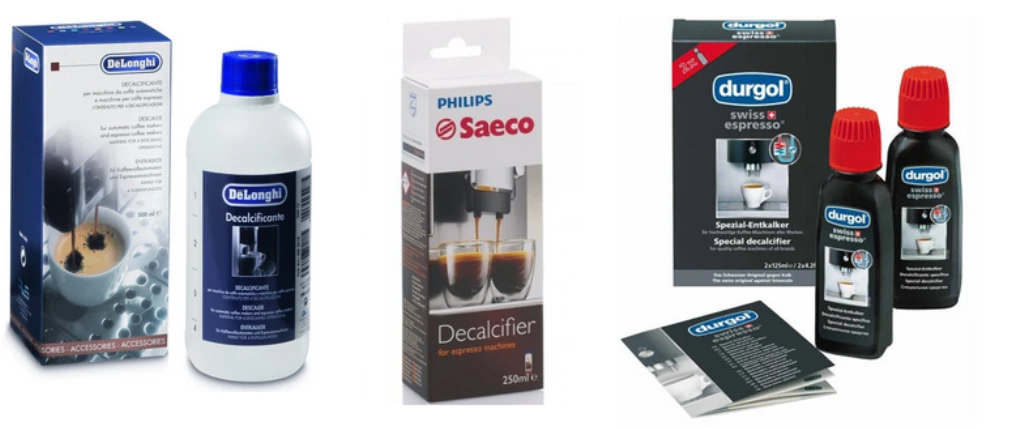
Where to Buy Cleaning Products with the Best Price/Quality Ratio
Online Stores
- Amazon.com – wide selection of products with reviews from real buyers, frequent discounts on popular brands
- Specialtycoffee.com – high-quality professional products for coffee equipment
- Wholelattelove.com – specialized store with quality products for cleaning espresso machines
- eBay – opportunity to find original products at good discounts or bulk packaging
Retail Stores
- Target and Walmart – basic cleaning products at affordable prices
- Bed Bath & Beyond – often offers coupons with discounts on appliance care products
- Best Buy – sells original cleaning products along with coffee machines
- Specialty Coffee Shops – local coffee shops often sell professional cleaning products
Optimal Products for Home Use
- Urnex Cleancaf – universal product for removing coffee oils and scale (~$10 for a pack of 8 sachets)
- Dezcal Descaler – effective scale remover with a gentle formula (~$15 for 900 ml)
- Full Circle Tablets – tablets for cleaning coffee oils (~$20 for 120 tablets)
- Cafiza Espresso Machine Cleaner – professional product used in coffee shops (~$12 for 566 g)
- Rinza Milk Frother Cleaner – specialized product for cappuccino makers (~$13 for 1 L)
Alternative Options (for economical but caring owners)
- Buying in bulk – many products can be purchased in bulk with significant discounts
- Cleaning kits – product sets often cost less than buying separately
- Subscription for regular delivery – Amazon Subscribe & Save offers an additional 5-15% discount
- Promo codes and seasonal sales – subscribe to specialized store newsletters
- Loyalty programs – many stores offer bonuses for regular purchases
Remember that saving on coffee machine cleaning products can lead to costly repairs in the future. Choose proven products from reliable manufacturers, even if their price is slightly higher.
Cleaning Specifics by Coffee Machine Types
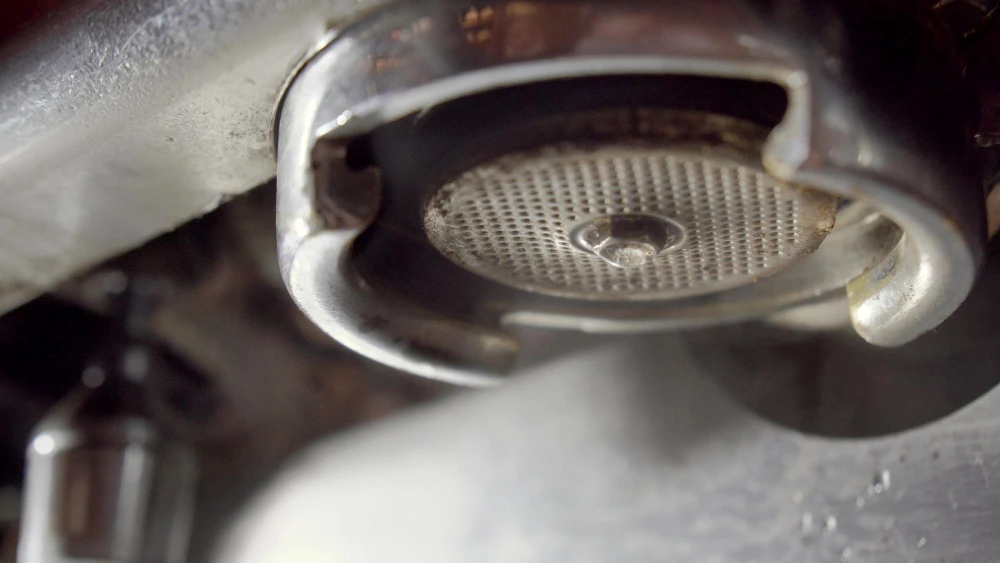
Cleaning Features of Espresso Machines
Espresso (semi-automatic) machines have their own maintenance specifics, as most operations are performed manually. Regular care for such machines is critically important for maintaining espresso taste and machine operability.
Daily Cleaning of an Espresso Machine
- Cleaning the group head and shower screen:
- After each coffee preparation, remove the portafilter and turn on water flow for 2-3 seconds to remove coffee residue
- Wipe the rubber gasket of the group with a damp cloth, removing ground coffee particles
- At the end of the day, remove the shower screen (if the design allows) and rinse it under running water
- Portafilter care:
- After each use, empty and rinse the portafilter with hot water
- Regularly check filter basket holes for blockage
- To remove coffee oils, soak the portafilter and filter baskets in a solution of special cleaner (such as Cafiza) for 15-20 minutes once a week
- Steam wand cleaning:
- Immediately after use, wipe the steam wand with a damp cloth
- Purge the wand by opening steam for 1-2 seconds
- Remove the tip from the steam wand and wash it in warm water
Weekly Cleaning
- Backflushing:
- Insert a blind filter (without holes) into the portafilter
- Add a special cleaning agent (1/4-1/2 teaspoon)
- Install the portafilter in the group and start the water flow cycle for 10 seconds
- Repeat the cycle 5-6 times, then rinse the group with clean water
- Deep cleaning of the portafilter and filter baskets:
- Disassemble the portafilter into component parts
- Soak all metal parts in a solution of special cleaner for 30 minutes
- Thoroughly rinse and dry all parts before assembly
- Check rubber gaskets for damage
Monthly Descaling
- Removing scale from the boiler:
- Follow the manufacturer’s instructions for descaling solution proportions
- Pour the solution into the water reservoir
- Run several water flow cycles through the group and steam wand
- Completely rinse the system with clean water
- Pressure check:
- Many espresso machines have a pressure gauge
- Make sure that when brewing espresso, the pressure reaches 9 bars
- If the pressure is lower, the pump may need cleaning or adjustment
Special Recommendations for Espresso Machines
- Use a soft brush for cleaning the filter holder and the filter itself
- Regularly check the group gasket – this is a consumable that needs periodic replacement (usually once every 6-12 months)
- Monitor water hardness – espresso machines are particularly sensitive to scale due to high water temperature
- Use special lubricants for moving parts of the portafilter and levers (only food-grade silicone lubricants)
- Check the condition of gaskets in the steam wand – their wear can lead to steam leakage

Cleaning Features of Capsule Coffee Machines
Capsule coffee machines are considered the simplest to maintain, however, neglecting their cleaning can lead to decreased coffee quality and breakdowns. Different brands have their own maintenance features.
General Rules for Cleaning Capsule Coffee Machines
- Daily care:
- Empty the used capsule container and drip tray
- Remove and rinse the water reservoir
- Wipe the external surfaces of the machine
- Weekly cleaning:
- Remove and wash all removable parts
- Check the piercing mechanism for contamination
- Run a rinse cycle without a capsule installed
Nespresso Cleaning Features
- Descaling:
- Use only original Nespresso descaling product
- The machine itself signals the need for cleaning by flashing buttons
- To start descaling mode, simultaneously press and hold all buttons (exact combination depends on the model)
- The process takes about 30 minutes and requires periodic user participation
- Cleaning the piercing mechanism:
- Raise and lower the lever 3-4 times without a capsule
- Use a special cleaning capsule from Nespresso
- Check for possible blockages in the piercing needles
- Cleaning the cappuccino maker (for models with milk system):
- Disassemble and rinse the milk container after each use
- Weekly use a special cleaner for milk systems
Dolce Gusto Cleaning Features
- Descaling:
- Use official descaling kits
- To start cleaning mode, press and hold the power button for 5 seconds until it starts flashing
- Follow the instructions on the screen (for models with display)
- Needle cleaning:
- Use the needle cleaning tool that comes with the machine
- Regularly clean the needle from coffee residue
Tassimo Cleaning Features
- T-Disc cleaning system:
- Use the special yellow Service T-Disc
- Start the cleaning process according to instructions (usually once a month)
- The disc is reusable, store it in the special compartment of the machine
- Descaling:
- Use soluble descaling tablets
- When cleaning is necessary, a special “CALC” indicator lights up
Tips for Capsule Coffee Machine Care
- Empty the machine before long-term storage
- Don’t use abrasive cleaning agents – they can damage plastic parts
- Regularly wipe the coffee dispenser – coffee oils accumulate on it
- Periodically check the condition of gaskets – their wear can lead to leaks
- Monitor pump operation – if coffee flows slower than usual, descaling is required
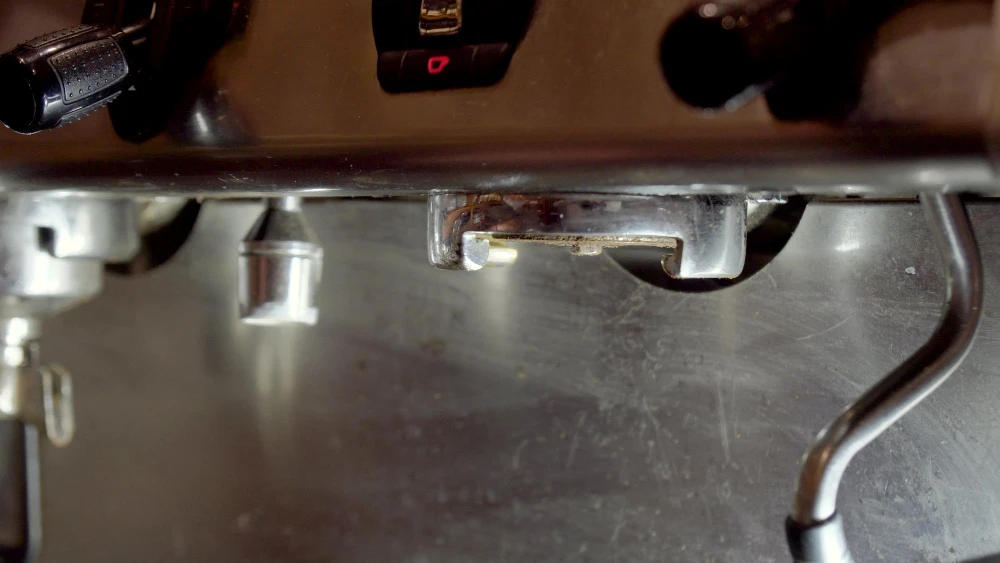
Cleaning Features of Professional Coffee Machines for Cafes
Professional coffee machines for commercial use require a special approach to maintenance due to high-intensity operation and complex construction. Proper cleaning not only maintains coffee quality but also significantly extends the life of expensive equipment.
Laura King, specialist in servicing elite coffee machines, Miami:
“In Florida and other humid regions, it’s especially important to monitor the hygiene of the water reservoir. Always keep the lid closed and change the water daily. In warm humid climates, bacteria multiply quickly in standing water. I also recommend washing the reservoir with a baking soda solution once a week and rinsing thoroughly – this will prevent unpleasant odors.”
Daily Cleaning (at the end of the workday)
- Group head flushing:
- Backflush each group using a professional cleaner (such as Cafiza)
- Use a blind filter and run 5-6 rinse cycles on each group
- Rinse the groups with clean water to remove cleaner residue
- Steam wand cleaning:
- Disassemble steam wands, removing tips
- Soak the tips in a solution of special cleaner
- Use a thin needle to clean holes in the steam wand
- After assembly, purge the wand with steam to remove cleaner residue
- Drain tray maintenance:
- Remove the grate and tray
- Clean the drainage system of coffee grounds
- Wash with hot water and detergent
- Make sure the drain holes are not clogged
- Grinder cleaning:
- Empty the bean hopper
- Use special grinder cleaning tablets (such as Grindz)
- Wipe the hopper with a dry cloth without using water
- Adjust the grind setting after cleaning
Weekly Cleaning
- Deep cleaning of the group head:
- Remove shower screen and diffuser
- Soak all parts in cleaning solution
- Use a special brush to clean the group head
- Check the condition of gaskets and seals
- Portafilter cleaning:
- Disassemble portafilters, remove filter baskets and springs
- Soak all metal parts in cleaning solution for 15-30 minutes
- Thoroughly rinse and dry
- Check the condition of filter baskets for clogged holes
- Water treatment system maintenance:
- Check the condition of water filters
- Measure water hardness to control filtration effectiveness
- Replace cartridges if necessary
Monthly Cleaning
- Boiler descaling:
- Use professional descaling products
- Follow the manufacturer’s recommendations for the procedure
- After descaling, thoroughly rinse the system to remove all product residue
- Check temperature and pressure settings
- Valve and solenoid check:
- Ensure there are no leaks
- Check the operation of safety valves
- Clean solenoid valves if necessary
- Pump check:
- Make sure the pressure is normal (usually 9 bar for espresso)
- Check for unusual noises during operation
- Inspect supply hoses for damage
Semi-Annual Maintenance
- Replacing gaskets and seals:
- Replace group gaskets
- Check and if necessary replace seals in steam wands
- Replace gaskets in portafilters
- Checking electrical components:
- Inspect wiring for wear
- Check the condition of contacts and sensors
- Ensure correct operation of the PID controller (if present)
Kevin Chen, coffee machine repair expert, Las Vegas:
“In the dry climate of Nevada and Arizona, coffee machines suffer from rapid water evaporation, which increases mineral concentration and accelerates scale formation. If you’re going on vacation for more than a week, be sure to thoroughly clean and dry your coffee machine. In the US, many people return from vacation to find their $15,000 machine unusable due to moldy interiors. Believe me, it’s easier to spend 30 minutes preparing the machine for downtime.”
Special Recommendations for Professional Machines
- Use only professional cleaning products designed specifically for commercial coffee machines
- Keep a maintenance journal, recording all cleaning procedures and part replacements
- Train staff in correct daily cleaning procedures – this will reduce repair costs
- Contract with a service center for regular technical maintenance (usually once every 3-6 months)
- Use a quality water filtration system – this will significantly reduce scale buildup
- Regularly calibrate pressure and temperature to ensure stable extraction quality
- Use products to prevent blockages in the drainage system – they will help avoid unpleasant odors and water drainage problems
Professional coffee machines require a systematic approach to maintenance, but with proper care, they can work for decades, providing consistently high coffee quality. Investments in regular maintenance always pay off through reduced repair costs and extended life of expensive equipment.
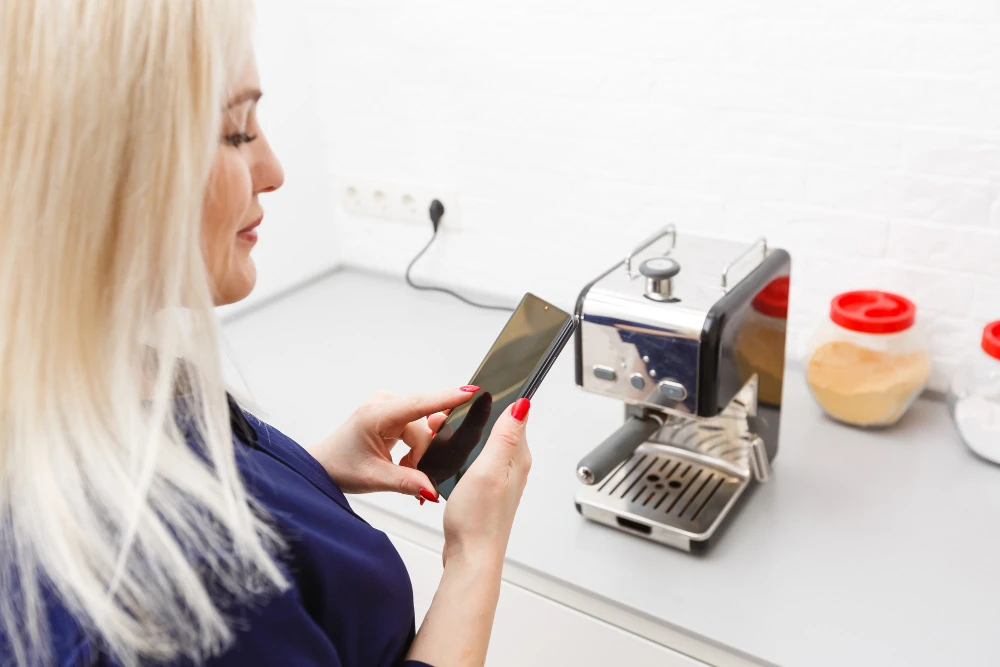
FAQ: Frequently Asked Questions About Coffee Machine Cleaning
1. What should I do if my coffee machine keeps requesting descaling, even after I’ve recently performed the procedure?
Answer: If your coffee machine continues to demand descaling shortly after you’ve completed the cleaning, there could be several reasons:
The cleaning counter wasn’t properly reset. Try repeating the descaling procedure, strictly following the manual.
The water hardness is set too high in the menu. Check the settings and adjust them according to the actual hardness of your water.
There might be an electronic malfunction in the coffee machine. In this case, contact an authorized service center.
To reset the cleaning counter without actually performing the procedure (if you’ve done it recently), some models allow you to run the descaling program with clean water instead of descaling solution.
2. Can I clean removable coffee machine parts in the dishwasher?
Answer: This depends on the specific model and material of the parts:
Plastic water tanks, drip trays, and used coffee containers can typically be washed in the dishwasher.
Many removable milk frothers can also be washed in the dishwasher.
The brewing unit is usually NOT recommended for dishwasher cleaning, as high temperatures and aggressive detergents can damage precision mechanisms.
Always check your coffee machine’s manual—it should list which parts are dishwasher-safe. If in doubt, it’s safer to wash them by hand with warm water without using detergents.
3. How can I tell if my coffee machine needs cleaning if the indicator light isn’t on?
Answer: Even if the cleaning indicator isn’t active, the following signs indicate that cleaning is necessary:
Change in coffee taste: bitterness or metallic aftertaste.
Increased brewing time: if the machine has become slower.
Unusual sounds: gurgling, whistling, or loud pump operation.
Reduced coffee temperature: the drink isn’t hot enough.
Weak pressure or intermittent flow: may indicate clogged channels.
Visible residue on internal surfaces or discoloration of water in the tank.
If you notice one or more of these signs, it’s recommended to clean the machine even if the indicator isn’t lit. For preventive maintenance, you should clean your coffee machine at least once every 3 months with heavy use.
4. What are the dangers of using vinegar to clean a coffee machine instead of specialized products?
Answer: Despite the popularity of the “home remedy” cleaning method with vinegar, its use can seriously damage your coffee machine:
Damage to rubber seals and gaskets: acetic acid is aggressive to rubber elements and can cause them to deteriorate or lose elasticity, leading to leaks.
Corrosion of metal parts: aluminum tubes and connections, which are common in coffee machines, are particularly vulnerable.
Incomplete limescale removal: vinegar is less effective against mineral deposits than specialized products.
Persistent smell and aftertaste: vinegar aroma can remain in the system for a long time and transfer to beverages.
Warranty invalidation: manufacturers explicitly discourage the use of vinegar and may refuse warranty service if traces of such cleaning are found.
Specialized descaling products are designed with coffee machine materials in mind and provide effective cleaning without the risk of damage.
5. Should I clean my coffee machine before long-term storage (for example, before a vacation)?
Answer: Absolutely! Proper preparation of your coffee machine for storage ensures that you won’t face problems when you resume using it:
Perform a complete descaling, even if the cleaning indicator isn’t active. This will protect internal parts from damage by limescale residue.
Clean the brewing unit of coffee oils using specialized tablets or thoroughly rinse the removable unit under running water.
Completely empty the system of water. Most automatic coffee machines have an “empty system” program specifically for this purpose. If there’s no such program, run several rinse cycles and then drain all remaining water from the tank and internal reservoirs.
Clean and dry all removable parts — water container, drip tray, used coffee container, and milk frother.
Leave the service compartment door slightly open to prevent mold and musty odors.
When resuming use, run 2-3 rinse cycles with clean water before making coffee.
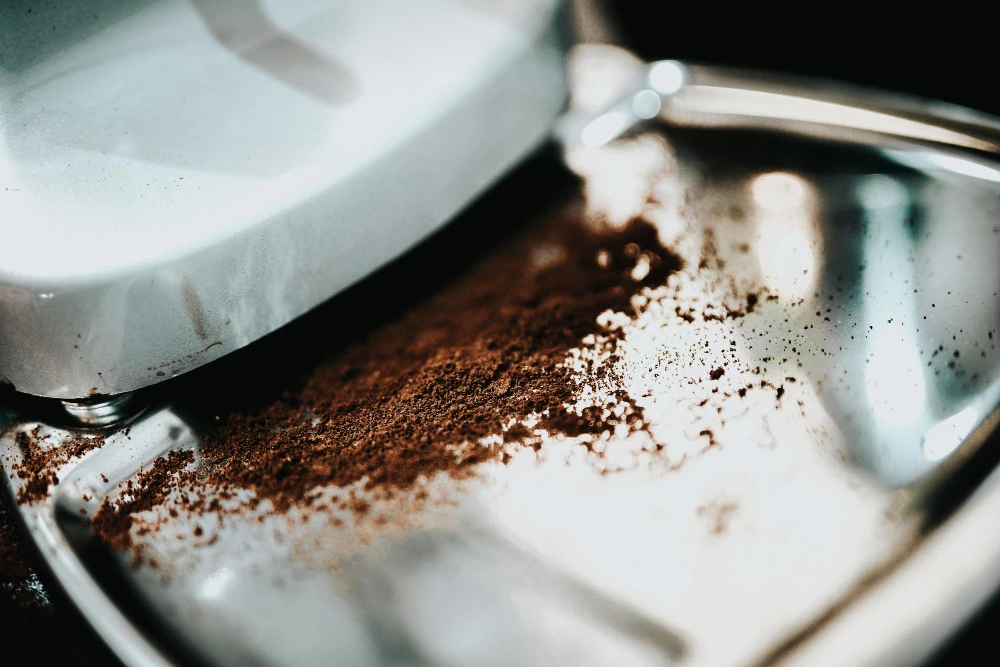
Conclusion: Cleanliness is the Key to Delicious Coffee and Long Machine Life
Brief Summary of Key Points
Proper care of your coffee machine not only extends its lifespan but also guarantees consistently high quality beverages day after day. Let’s recall the key aspects we’ve covered in this article:
1. Descaling (limescale removal) is a mandatory procedure for all types of coffee machines. In the United States, with its wide variety of mineral content in water across different regions, this issue is particularly important. Don’t ignore your machine’s cleaning signals and use only specialized products instead of “home remedies.”
2. Cleaning coffee oils is necessary for all bean-to-cup machines. Deterioration in coffee taste is the first sign that the brewing unit needs cleaning. For the American market, optimal choices include Urnex Cafiza or Puly Caff, available at specialty retailers like Williams Sonoma or online through Amazon.
3. Milk system care should become a daily habit. In the warm climate of southern states like Florida or Texas, this deserves special attention to prevent bacterial growth.
4. Different types of coffee machines require different maintenance approaches. This is especially true for professional machines, where repair costs can reach thousands of dollars.
5. Regular maintenance is much more important than using expensive products. As American baristas emphasize, it’s better to perform basic cleaning more frequently than to do deep cleaning rarely.
6. Water quality is a key factor in machine longevity in the US. Specialists recommend using filtration systems or specialized coffee water.
7. Signs that cleaning is needed include taste changes, increased brewing time, and unusual sounds during operation.
8. Prevention is always cheaper than repairs. Regular maintenance costs are several times lower than the price of boiler repair or brewing unit replacement, which can range from $200-$500 at authorized service centers.
Remember that every minute spent on coffee machine maintenance comes back to you in consistently delicious coffee and significant savings on repairs. Start applying this knowledge today, and your coffee machine will serve you for many years.
Poll: How Often Do You Clean Your Coffee Machine?
Share in the comments your experience caring for your coffee machine and the results you’ve noticed after starting regular cleaning. What changed in the taste of your coffee? How many years has your machine served without serious breakdowns?
Don’t forget to subscribe to our blog to receive more useful tips about coffee and coffee equipment. And if you have questions about cleaning your specific coffee machine model — ask them in the comments!
Related Articles

Moka Pot: Pros and Cons
Not by coffee machines alone, so to speak. After all, they’re simply expensive. Even portafilter coffee makers aren’t as affordable…
Read moreDetails
How to Make Turkish Coffee: Tips and Techniques
The Turkish coffee pot—known as a cezve, ibrik, or simply a Turkish coffee pot—represents one of the world’s oldest coffee…
Read moreDetails


