 Home
Home Recipes
 Beans
Beans Gear
Gear Roasting
 Brewing
 FAQ
FAQ
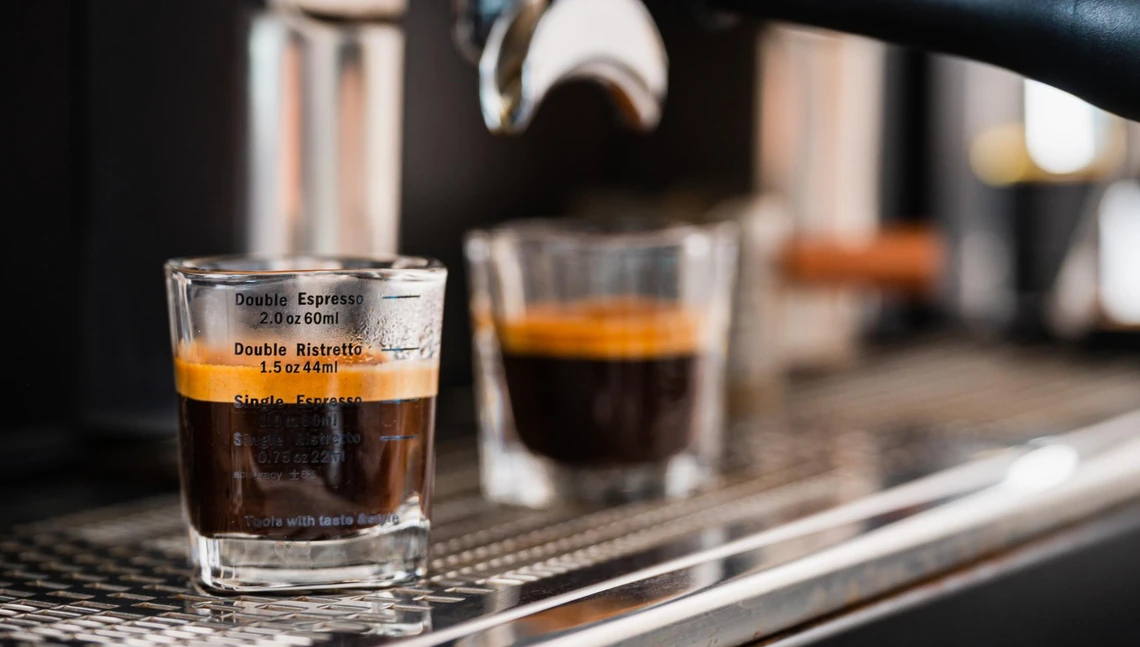
Ristretto is an Italian coffee drink that is a shortened version of espresso. It is prepared similarly to espresso, but with less water and a shorter extraction time.
A ristretto is simply a “short” espresso (concentrated espresso variation). That is, with a volume of 15-20 ml (0.5-0.7 fl oz), not 30-40 ml (1-1.35 fl oz).
You get a very strong coffee with a small volume. But it’s not just the size. Because of the fact that during the preparation of espresso different flavors from the coffee are released sequentially, then stopped at a volume of 20 ml (0.7 fl oz) the drink turns out: More sour, less bitter all other things being equal.
Sometimes sweeter. Paradoxically, it contains less caffeine. To be more precise – almost none, since caffeine is “leached” out of coffee later. Some sources say that 15 ml (0.5 fl oz) of ristretto contains no more than 60 mg of caffeine, but it all depends on the bean, of course. For comparison, a standard espresso/cappuccino made from decaf beans has up to 15 mg. I wrote in detail about the caffeine content of coffee in this article.

Main characteristics of a ristretto
- Volume: Usually 15-25 ml (0.5-0.85 fl oz), as opposed to a standard espresso which is 30-40 ml (1-1.35 fl oz).
- Extraction time: For ristretto, the extraction time is 12-20 seconds, which is shorter than for espresso. This allows for more concentrated flavors and oils to be extracted from the coffee, but less caffeine.
- Flavor: Ristretto has a rich and sweet flavor with high acidity and less bitterness compared to espresso.
This is because the short extraction time allows essential oils and acids to enter the drink, and the bitterness that comes later in the extraction process is left out.
But even if you don’t drink such strong, concentrated coffee, knowing a ristretto recipe can still be helpful. For example, you can order a cappuccino and a fleur-de-lys made with a ristretto base rather than espresso (as in the classic recipe). Have no fear, any barista will have no problem fulfilling your request. The drink will have a different flavor profile, less caffeine, but all the strength, density will still “dissolve” in the milk. By the way, it is the fleck-white that is often prepared on the basis of double or even triple ristretto.
Differences from espresso
- Concentration: Although ristretto has a smaller volume, it may be more concentrated in flavor, but not necessarily in caffeine content (another concentrated brewing method). A ristretto can have about 7-10 mg of caffeine per serving, while a standard espresso can have about 30 mg.
- Preparation method: Both drinks are prepared using the same amount of ground coffee and water pressure, but differences in water volume and extraction time create different flavor profiles.
Ristretto became popular in the 1980s thanks to baristas and coffee experts who were looking for new ways to bring out the flavors of coffee.
Making ristretto in automatic coffee machines or carob coffee makers
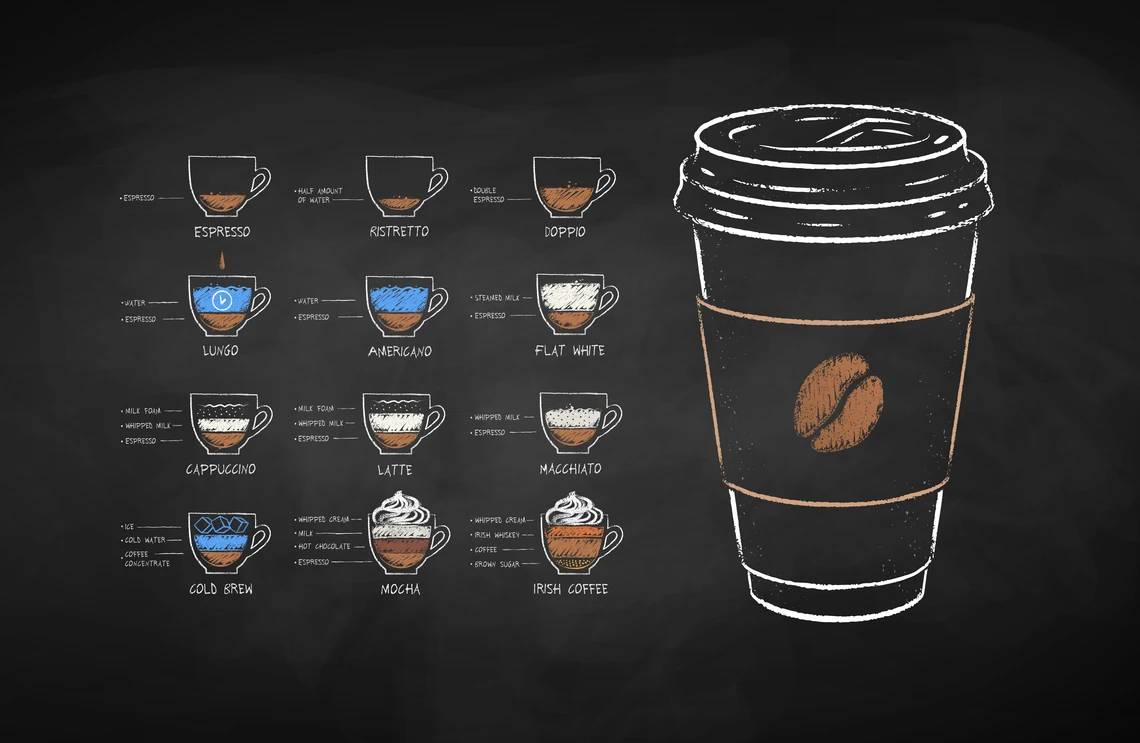
If you see the possibility of “making ristretto coffee” stated somewhere, then you should know that it is mostly a trick. After all, any espresso machine will also make ristretto, even if there is no separate button for it. Just change the espresso recipe to 20 ml (0.7 fl oz).
The situation is similar with lungo coffee, which is made from a standard recipe by simply readjusting it to 50-100 ml (1.7-3.4 fl oz). But more about that and the difference between lungo and Americano here.
Although, no, I’m lying. There are rare coffee machines – for example, the new Philips 1200, 2200 and 3200 series – where the minimum espresso size is limited to 35 ml (1.2 fl oz), you simply can’t adjust anything smaller. Even so, you can start making espresso and interrupt the process prematurely manually.
To be fair, the manufacturers themselves – even in promotional materials – rarely artificially increase the purity of the drinks by adding that very same ristretto to them. Mostly, descriptions in online stores suffer from this. And all major coffee companies (Delonghi, Philips, Krups, Jura, etc.) include it in the list of recipes only if a separate button/item in the menu is allocated for ristretto. Yes, the record holder for the minimum volume of the drink is Jura, and even the most affordable models – they can pour from 15 ml (0.5 fl oz).
Which coffee is best for those who want to enjoy a rich coffee flavor
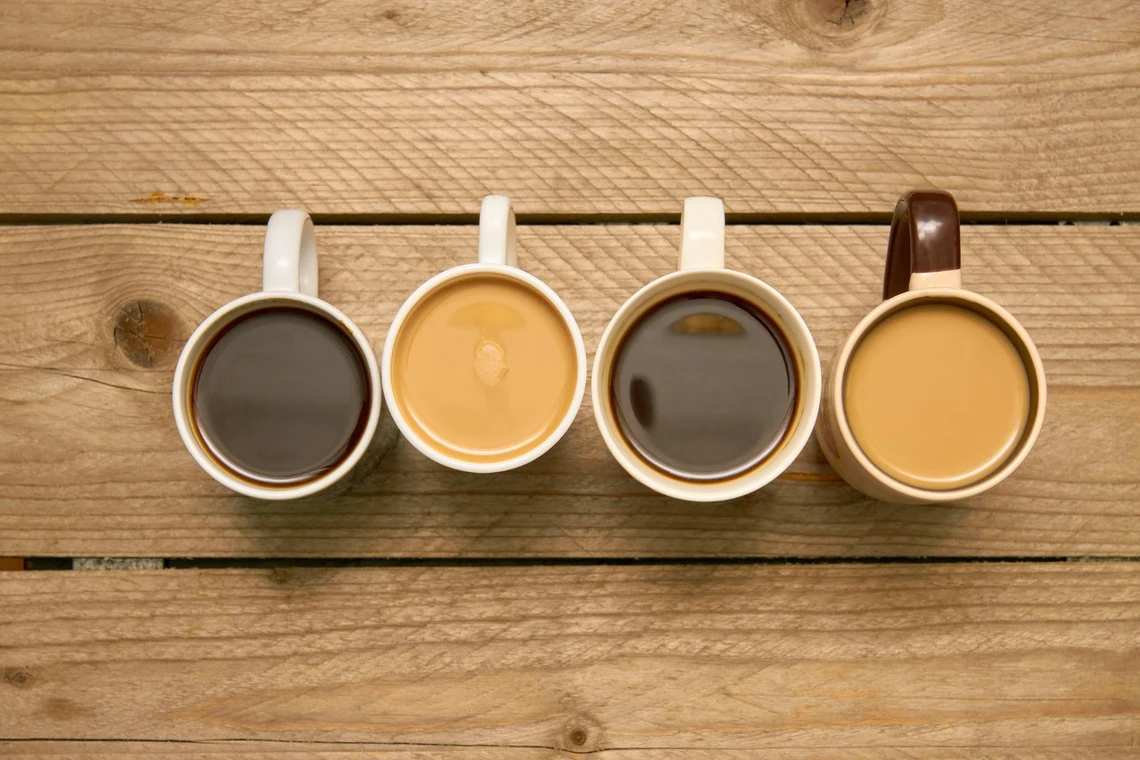
For those who want to enjoy a full-bodied coffee flavor, the following options are worth considering:
- Espresso. Espresso is a concentrated coffee drink that has an intense flavor and aroma. It is prepared using high pressure and a small amount of water, which allows you to extract all the richness of aroma and flavor from the coffee beans (high-quality arabica beans). Espresso is ideal for those who appreciate strong and rich coffee.
- Ristretto. Ristretto is a shortened version of espresso that is made with less water. It has a sweet and rich flavor with high acidity and less bitterness, making it a great choice for lovers of deep flavors.
- Dark Roast Coffee. Coffees labeled “dark roast” or “French roast” are characterized by a rich flavor and aroma. They often have rich chocolate notes and a pleasant bitterness, making them ideal for espresso or cappuccino.
French Press. Coffee prepared in a French press can also offer a rich flavor due to the long extraction time. This method allows you to extract more oils and aromas from the coffee beans, creating a full and deep flavor. The choice of coffee depends on personal preference, but the above options will provide a deep and rich coffee experience.
Related Articles
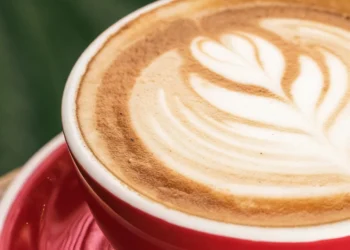
How to prepare Flat White coffee: recipe, differences from cappuccino and latte
Flat White is a rather strong coffee-milk drink based on double espresso with a minimum of milk foam. It is…
Read moreDetails
Caffeine in coffee: how many mg in a cup of instant, ground and filter coffee, in espresso and in green coffee
I will not write about the benefits and harms of caffeine, its effect on the body, the content of caffeine…
Read moreDetails


