 Home
Home Recipes
 Beans
Beans Gear
Gear Roasting
 Brewing
 FAQ
FAQ
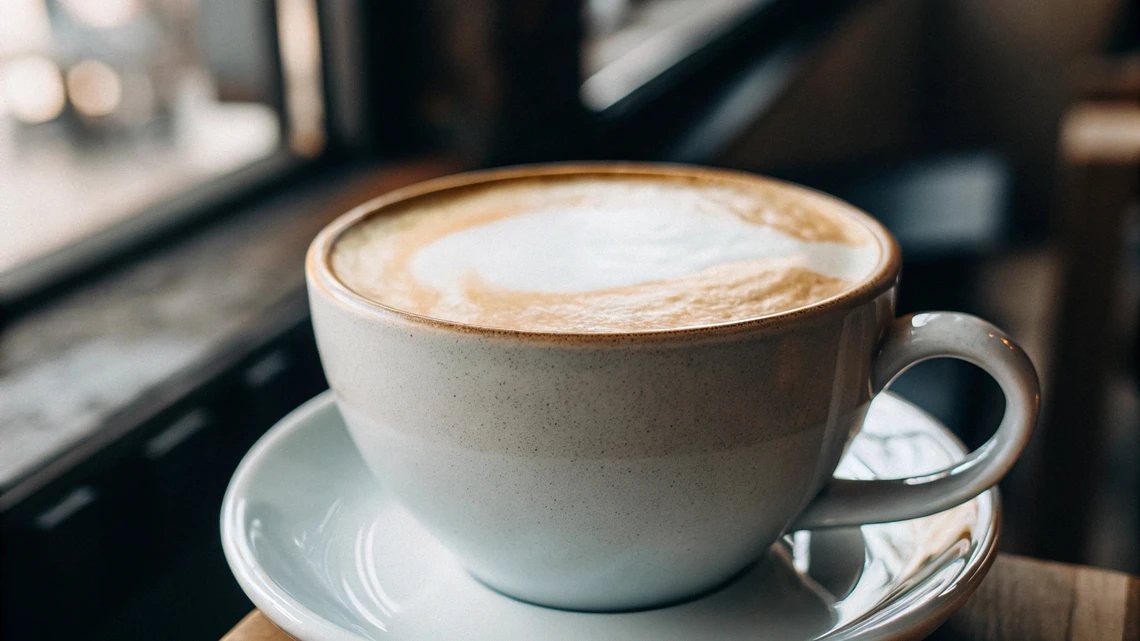
We are going to talk about the classic vanilla recipe that started the history of RAF. It is believed that it was invented by Gleb Neveykin, Artyom Berestov and Galina Samokhina in 1996-1997 in the Moscow coffee house “Coffee Bean” for their regular guest Rafael, after whom the drink is named. RAF is practically unknown outside the CIS.
RAF coffee is a very creamy, but without leaving in the taste of butter, sweet, homogeneous dense drink with minimal coffee flavor. Easy to make, hard to spoil – forgives the flaws of espresso as the cream and sugar take the hit.

Ingredients, what you need for cooking
- Cream 10-11%, an edge of up to 15% is acceptable – 150-200 ml
- Cane and/or vanilla sugar – 10 g, can be mixed in half.
- Espresso – 1 shot, 30-40 ml (quality espresso is the foundation)
- Glass beaker (authentically – faceted)
- Pitcher
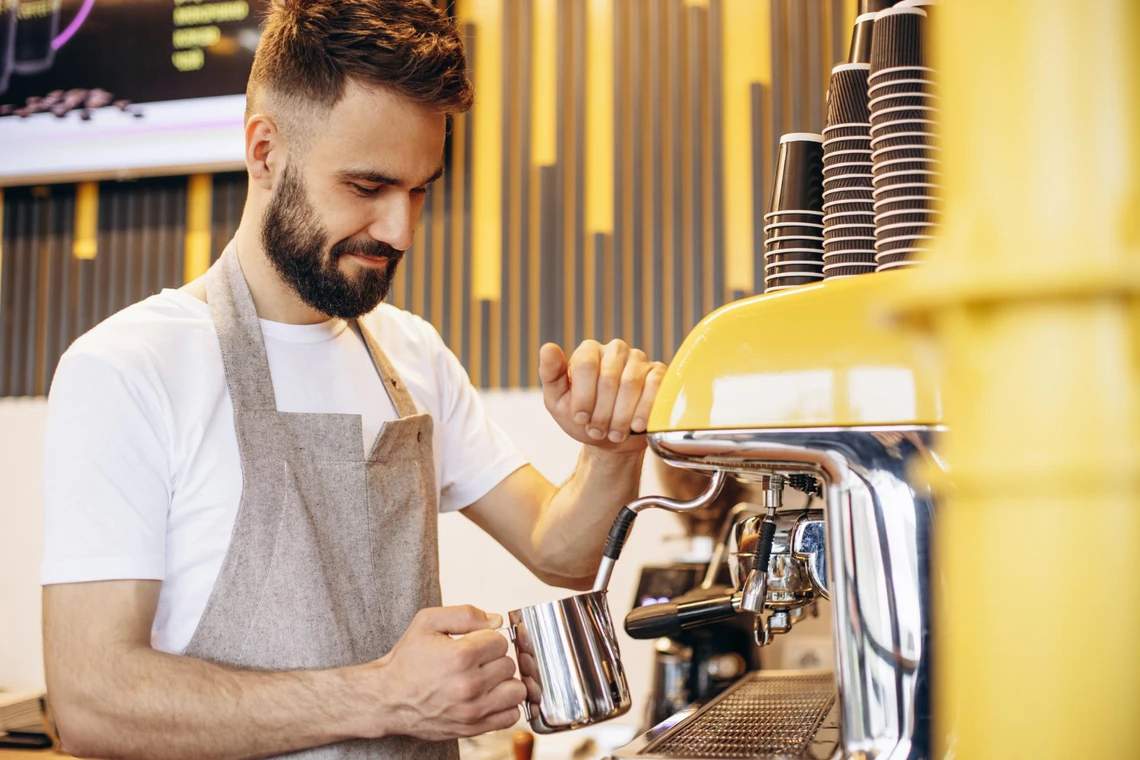
- Horn maker or espresso machine with steam tap
Procedure (step by step)
Step 1
Pour 150-170 ml of cream into the pitcher, but you can use a little more. It is best to use 10-11% fat content. Less – will not be creamy enough to taste, more – there is a flavor of butter, which becomes especially noticeable if you cook with 20-25% cream.
Step 2
Add 10 grams of sugar, you can add less, 5-7 grams. 10 grams is about 2 teaspoons. Sugar in the original was used in half cane and vanilla, in principle, you can use one of them, at least the usual at the extreme.
Step 3
Make one shot of espresso 30-40 g. You can pour it directly into the pitcher with the rest of the ingredients, if it fits under the dispenser of your coffee machine.
Step 4
You heat the resulting mixture and steam froth with an expansion of about 10-15% of the original volume. In other words, about the same as when making a regular latte.
Step 5
Pour the resulting substance into a glass beaker.
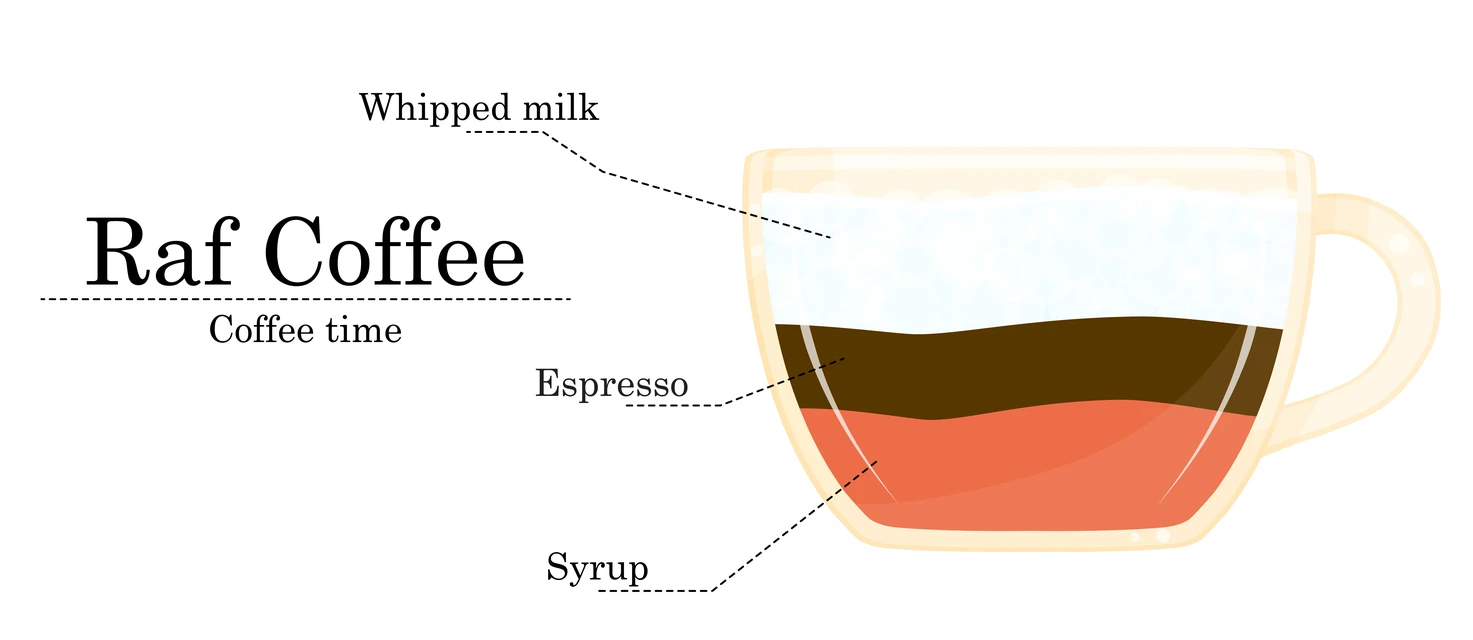
The main difference from lattes and cappuccinos is cream instead of milk, the presence of sugar, and the steaming of the entire mass.
It comes in cheese, orange/citrus, vanilla, coconut, lavender (dried lavender flowers are ground into powder, can be made on the simplest knife grinder, invented at Doublebee), peanut, walnut, etc. RAF. Variations are achieved by adding syrup to the pitcher in the first step. Or not syrup, but actual products: melted cheese, orange juice or ground zest, peanut or nut paste. You can garnish the drink with cocoa or cinnamon on top. All to taste.
Equipment nuances, which coffee machines are suitable for making RAF coffee
Note, you can find a bunch of “RAF coffee at home without a coffee machine” recipes on the internet. This is all from the evil one. It is clear that you can always experiment. And call your drink whatever you like. But all traditional variations of RAF are made on the basis of espresso and provide for heating with steam. And this can only be done if you have an espresso maker or coffee machine. No turbo, geyser, French press, whisk or microwave will help you make a real RAF.
The drink was originally invented and is now prepared in coffee houses using professional carob coffee makers. Accordingly, RAF can also be prepared on a home carob coffee maker with a manual cappuccinator. A bean machine with a manual cappuccinator will also do. But as for coffee machines with automatic cappuccinators, there is a nuance. The mixture of cream, coffee and sugar, and especially syrup, if you add it to the recipe, clogs thin tubes and air ducts in automatic cappuccinators, and in most cases the machine will immediately refuse to foam such a mixture.
Even if the heating/fluffing is successful and the beverage can be prepared and consumed, it is still necessary to rinse the autocupuccinator immediately. Completely, with disassembly into all the constituent parts. As a rule, this procedure kills the desire to mess around like this from the very first time.
But there are a number of coffee machines in which it is possible to prepare RAF and it is not difficult to clean the equipment after use.
- All automatic machines with manual cappuccinator (I repeat myself, but let it be for the completeness of the list).
- Siemens EQ.3/300 because of the original cappuccinator, which is actually manual, no matter how the manufacturer and sellers call it.
- Krups Barista – also because of the original cappuccinator.
- Philips with cappuccinator-cup LatteGo (pictured): series EP2200, 3200 (these series have no “milk” program, so to foam RAF you need to do a workaround: start cappuccino on ground coffee, NOT pouring ground coffee), 5000, 4300, 5400 (these series have just a hot milk program – run it). All ingredients for RAF should be added to LatteGo at once.
- Machines that have a second manual cappuccinator in addition to the autocappuccinator: Delonghi Maestosa, ECAM 650.xx, 550.75/85, 510.55, ESAM 460.80, Gaggia Accademia, Babila.
The second, third and fourth options are, in my opinion, generally a poor choice among coffee machines, primarily due to their poor reliability for various reasons and mediocre black coffee flavor. Working options are the first and fifth.
P.S. If you are interested in my opinion, I don’t like RAF coffee – too sweet and caloric for me
Recipe Notes & Tips:
Cream Temperature:
- Start with cold cream for best results
- Don’t overheat – keep below 160°F (71°C) to maintain smooth texture
Sugar Options:
- Vanilla sugar adds aromatic sweetness
- Cane sugar provides molasses notes
- Mix both for complex flavor
- Adjust sweetness to personal preference
Espresso Quality:
- Use freshly ground, quality coffee beans
- Proper espresso extraction is crucial
- Aim for balanced, not overly bitter shot
Common Mistakes to Avoid:
- Using cream that’s too high in fat (creates buttery taste)
- Overheating the mixture (breaks down cream proteins)
- Not steaming long enough (results in separated texture)
- Using stale espresso or pre-ground coffee
Popular RAF Coffee Variations:
Citrus RAF: Add 0.5-1 oz (15-30ml) fresh orange juice or ground orange zest to the pitcher before steaming
Cheese RAF: Add small amount of melted cream cheese or mascarpone for savory-sweet combination
Vanilla RAF: Use vanilla syrup or vanilla bean paste instead of vanilla sugar for stronger vanilla flavor
Nut RAF: Add 1 tablespoon peanut butter or almond butter to cream before steaming
Lavender RAF: Add 1/4 teaspoon ground dried lavender flowers (grind in spice grinder)
Coconut RAF: Substitute half the cream with coconut cream and add coconut syrup
Nutrition Information (approximate per serving):
Calories: 280-320 kcal (depending on cream fat percentage)
Breakdown:
- Total Fat: 18-22g
- Saturated Fat: 11-14g
- Carbohydrates: 15-18g
- Sugars: 12-15g
- Protein: 4-5g
- Caffeine: 60-80mg
Note: Nutrition values vary based on cream fat content and sugar amount used
Key Differences from Other Coffee Drinks:
RAF vs. Latte:
- Uses cream instead of milk
- Sugar is steamed with the liquid (not added after)
- Entire mixture is steamed together
- Sweeter and richer flavor profile
RAF vs. Cappuccino:
- Much creamier texture
- Contains sugar in the recipe
- Less foam, more velvety texture
- Larger serving size (7-8 oz vs. 5-6 oz)
Serving Suggestions:
Best Served:
- In a clear glass to showcase the creamy texture
- Immediately after preparation
- As a dessert coffee or afternoon treat
- At 140-150°F (60-65°C)
Pairs Well With:
- Sweet pastries
- Cookies or biscotti
- Chocolate desserts
- Breakfast pastries
FAQ
Which type of coffee is better to use for raffa: arabica or robusta
When choosing the best type of coffee for making Raf coffee, Arabica (works best with arabica) is generally preferred over Robusta. Here’s a breakdown of the reasons:
Flavor Profile
• Arabica: Known for its rich flavor and aromatic qualities, Arabica coffee contains higher levels of sugars and lipids, which contribute to a more complex taste profile. It often has fruity and floral notes, making it ideal for those who enjoy a sweeter and more nuanced cup of coffee.
• Robusta: While Robusta has a stronger and more bitter flavor due to its higher caffeine content, it lacks the aromatic richness found in Arabica. The taste can be described as flat and harsh, which may not be suitable for the delicate balance desired in Raf coffee.
Caffeine Content
• Robusta: Contains about twice as much caffeine as Arabica. This can lead to a stronger, more intense cup, but it also contributes to its bitterness. For Raf coffee, which aims for a creamy and sweet profile, the high caffeine content of Robusta can overpower the other flavors.
• Arabica: Lower caffeine levels provide a smoother taste that pairs well with cream and sugar, enhancing the overall experience of Raf coffee.
Is it possible to make raff without using an espresso machine
You can’t make the original recipe without a coffee machine.
Which type of milk is better to use for rafe: whole or skim milk
For making Raf coffee, whole milk is generally the better choice compared to skim milk. Here are the reasons why:
Benefits of Whole Milk
• Creamy Texture: Whole milk has a higher fat content (around 3.5% to 4.5%), which contributes to a richer, creamier texture in the coffee. This creaminess enhances the overall mouthfeel and flavor of Raf coffee, making it more enjoyable.
• Flavor Enhancement: The fat in whole milk helps to balance and mellow the flavors of the coffee, creating a harmonious blend. It adds a slight sweetness and a velvety finish that complements the espresso and any added sugars or flavorings.
• Better Foam Quality: Whole milk froths better than skim milk, producing denser and more stable foam. This is essential for achieving the desired texture in drinks like Raf coffee (differs from Flat White), which benefits from a creamy, frothy top.
Drawbacks of Skim Milk
• Lack of Richness: Skim milk has significantly less fat (usually around 0.5% to 1%), resulting in a thinner consistency and a less satisfying flavor profile. It can make the drink taste watery and less indulgent.
• Less Creamy Foam: While skim milk can still create some foam, it typically lacks the richness and stability needed for a luxurious texture in drinks like Raf coffee.
Related Articles

Coffee Mocha, aka Mochaccino (Mochaccino): what is it, recipe, composition, differences from cappuccino, whether you need a coffee machine?
Coffee mocha, mochaccino or moccaccino and even “chocolate latte” – it’s all the same coffee-milk drink with the addition of…
Read moreDetails
Cold Bumble coffee: the original recipe and some bombastic modifications
Bumble coffee was invented in 2001 by Roman Gordeev, a barista at Coffeemania. Roman named the drink so because its…
Read moreDetailsHomemade RAF Coffee Recipe
Print RecipeIngredients
- Espresso: 1 serving (25-40 ml)
- Cream: 100-200 ml (10-15% fat content)
- Sugar: 5-10 g (regular and/or vanilla)
- Dishes: Glass beaker or cup