
 Home
Home Recipes
 Beans
Beans Gear
Gear Roasting
 Brewing
 FAQ
FAQ

As a coffee lover, I’m thrilled to explore the world of espresso-based drinks. There are over 400 million cups of coffee drunk every day globally. Knowing the differences between cappuccino, latte, and flat white can make your coffee time better.
My first time at a specialty coffee shop was overwhelming. There were so many coffee drinks to choose from. Since then, I’ve been trying to demystify the world of espresso-based drinks. In this article, we’ll look at what makes each drink special. This will help you choose the right one at your favorite coffee shop.
Key Takeaways
- Understand the distinct differences between cappuccino, latte, and flat white.
- Learn the unique characteristics of each espresso-based drink.
- Make informed choices at your favorite coffee shop.
- Discover the nuances that elevate your coffee experience.
- Explore the world of specialty coffee drinks.
The World of Espresso-Based Coffee Drinks
As coffee lovers, we often explore the world of espresso-based drinks. These drinks are key to coffee culture, offering a wide range of flavors and textures. Espresso, a concentrated coffee, is made by forcing hot water through ground coffee beans.
The Foundation: What Makes Espresso Special
Espresso is the base for many coffee drinks like cappuccinos and lattes. Its unique brewing process creates a rich, intense flavor. This process involves high pressure and precise temperature control, making it an art form.
Coffee expert Scott Rao says, “Espresso is not just a drink, it’s a building block for many other coffee beverages.”
“The art of making espresso is a sensory experience that requires skill, patience, and attention to detail.” – James Hoffmann, World Barista Champion
The Role of Milk in Coffee Culture
Milk is key in making espresso-based drinks, adding texture and flavor. The way milk is steamed changes the taste. For example, microfoam is crucial for cappuccinos.
A comparison of milk texturing techniques is shown in the table below.
| Drink | Milk Texture | Ratio |
|---|---|---|
| Cappuccino | Microfoam | 1:3:3 (Espresso:Steamed Milk:Foam) |
| Latte | Steamed Milk | 1:5 (Espresso:Steamed Milk) |
| Flat White | Microfoam | 1:3 (Espresso:Microfoam) |
In conclusion, knowing about espresso and milk in coffee culture is key. It helps us appreciate the nuances of espresso-based drinks. Whether you’re new or experienced, understanding these elements can deepen your love for these drinks.
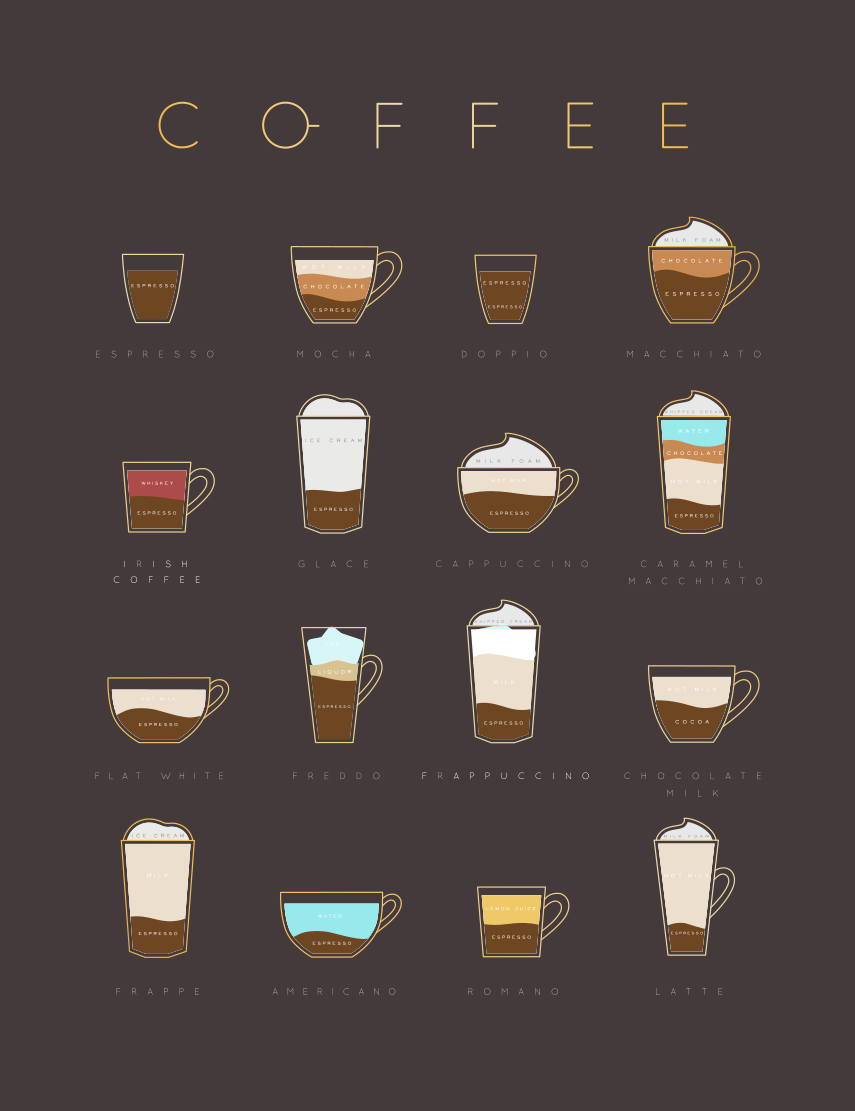
The Difference Between Cappuccino, Latte and Flat White
It’s important for coffee lovers to know the differences between cappuccino, latte, and flat white. These drinks may look similar, but they taste and feel different. Each has its own special mix of espresso, milk, and texture.
Quick Comparison Chart
A quick comparison chart can help visualize the differences between these coffee drinks. Here’s a summary:
| Coffee Drink | Espresso Ratio | Milk Texture | Flavor Profile |
|---|---|---|---|
| Cappuccino | 1/3 Espresso, 1/3 Steamed Milk, 1/3 Foam | Foamy | Balanced Intensity |
| Latte | 1/5 Espresso, 4/5 Steamed Milk | Silky | Creamy Subtlety |
| Flat White | 1/3 Espresso, 2/3 Microfoam | Velvety Microfoam | Rich Smoothness |
Key Distinguishing Factors
The main differences between cappuccino, latte, and flat white are in their espresso-to-milk ratio, milk texture, and taste. Cappuccino has a layered look and a foamy top. Latte is smooth and has a milder taste. Flat White is known for its creamy microfoam and deep flavor.
The Importance of Ratios
The ratio of espresso to milk is key to each drink’s character. A cappuccino has 1/3 espresso, 1/3 milk, and 1/3 foam. A latte has 1/5 espresso and 4/5 milk. A flat white has 1/3 espresso and 2/3 microfoam. Knowing these ratios helps you enjoy each drink’s unique qualities.
The Classic Cappuccino: A Detailed Look
The cappuccino comes from Italy and is loved all over the world. It has a long history and a special mix that makes it stand out.
Origin and History
The cappuccino started in the early 1900s in Italy. It got its name from the Capuchin friars, whose clothes looked like the drink. Even though it has changed, its roots stay the same.
Traditional Composition and Ratio
A traditional cappuccino has espresso, steamed milk, and frothed milk. The right mix is 1/3 of each. This mix is key to making a great cappuccino.
- Espresso: Gives a strong, rich taste.
- Steamed Milk: Makes it creamy.
- Frothed Milk: Adds a smooth top layer.
The Perfect Cappuccino Foam
Making the perfect cappuccino foam takes skill. The froth should be smooth and silky. It’s the barista’s art to create this perfect layer.
The Beloved Latte: Breaking It Down
The latte is a favorite among coffee lovers. It has a rich history and is known for its versatility. It’s one of the best coffee drinks to order, blending rich espresso with steamed milk.
History and Evolution
The latte started in Italy, called “caffè latte,” which means “coffee with milk.” It has grown to include many flavors and designs. Now, it’s a key part of coffee culture around the world.
Standard Composition and Ratio
A traditional latte has 1/3 espresso and 2/3 steamed milk. It also has a thin layer of frothed milk on top. People like it because of its classic ratio of espresso to milk.
The Art of Latte Milk
Making latte milk is an art. Baristas aim for a silky, smooth texture that goes well with espresso. They use special techniques to get the perfect microfoam, making each latte unique.

The Modern Flat White: An In-Depth Analysis
The flat white has become a favorite coffee drink around the world. It’s often talked about by coffee lovers. This drink is more than just a mix of latte and cappuccino.
Origin Story and Controversies
There’s a debate over where the flat white came from. Both Australia and New Zealand say they invented it. But, it’s clear that the flat white is now a key part of coffee culture.
- The flat white is believed to have originated in the 1980s.
- It is characterized by a higher ratio of espresso to milk.
- The drink has gained popularity globally, with various cafes offering their own versions.
Defining Characteristics and Ratio
So, what makes the flat white special? It’s all about its unique features and ratio. A traditional flat white has:
- A double shot of espresso.
- A thin layer of microfoam.
- A ratio of espresso to milk that is higher than a latte.
People often argue about the perfect ratio. But most agree it should be between 1:3 to 1:5 (espresso:milk).
The Microfoam Technique
Making the perfect flat white requires skill. Baristas need to:
- Steam the milk to the right temperature.
- Create a smooth, velvety texture.
- Pour the milk in a way that integrates it with the espresso.
Exploring flat whites shows it’s not just about the ratio. It’s also about the technique and skill. Its rich flavor and smooth texture make it a favorite among coffee lovers.
Milk Matters: How Steaming Techniques Differ
Steaming milk is a key part of making great coffee. It changes the milk’s texture and taste. Knowing the science behind it helps make the perfect espresso drinks.
The Science of Milk Texturing
Milk texturing changes the milk’s structure for the right feel and taste. This change is mainly due to the proteins and fats in milk.
Proteins and Fats at Work
Proteins and fats are key in steaming milk. Proteins make the foam strong, while fats add richness. Knowing how they work is crucial for great milk texture.
Steam Wand Techniques
The steam wand’s technique greatly affects steamed milk quality. It’s important to purge the wand, insert it right, and control steam pressure. Practice makes perfect in steaming.
Temperature Considerations
Temperature is very important when steaming milk. The best temperature is between 140°F and 160°F. Temperature control keeps the milk just right, avoiding too hot or cold.
Different Types of Milk and Their Effects
The type of milk used changes the steaming process and the final drink. Different milks have different proteins and fats, affecting how they steam.
Dairy Options
Dairy milk, like whole, skim, or a mix, offers various options. Whole milk, with more fat, makes a richer, creamier texture.
Plant-Based Alternatives
Plant-based milks, like almond, soy, or oat milk, are popular but harder to steam. They need special techniques because of their unique makeup.
| Type of Milk | Fat Content | Steaming Characteristics |
|---|---|---|
| Whole Milk | High | Rich, creamy texture |
| Skim Milk | Low | Lighter, more prone to over-steaming |
| Almond Milk | Low | Requires adjusted steaming technique |
| Oat Milk | Variable | Can produce a creamy texture with proper technique |

Flavor Profiles: How Each Drink Tastes
To understand the taste of cappuccino, latte, and flat white, we need to look at their ingredients and how they’re made. The taste of each drink comes from the mix of espresso and milk, and the milk’s texture.
Cappuccino’s Balanced Intensity
A traditional cappuccino has a balanced intensity. It combines the strong taste of espresso with the smoothness of milk. The foam on top adds a special touch, making it even better.
Latte’s Creamy Subtlety
Lattes are known for their creamy subtlety. They have more milk than a cappuccino, so they taste milder. This makes lattes a hit with those who like a softer coffee flavor.
Flat White’s Rich Smoothness
The flat white is famous for its rich smoothness. It mixes the strong espresso with the soft microfoam. This creates a smooth and rich taste experience.
| Drink | Espresso to Milk Ratio | Texture | Flavor Profile |
|---|---|---|---|
| Cappuccino | 1:3 to 1:5 | Foamy | Balanced Intensity |
| Latte | 1:5 to 1:7 | Creamy | Creamy Subtlety |
| Flat White | 1:2 to 1:3 | Velvety Microfoam | Rich Smoothness |
Cappuccino vs. Latte: The Detailed Comparison
For coffee lovers, knowing the difference between a cappuccino and a latte is key. Both drinks have similarities but also unique traits that make them different.
Composition Differences
A cappuccino and a latte differ mainly in their makeup. A cappuccino has a 1:1:1 ratio of espresso, steamed milk, and foam. On the other hand, a latte has more milk than espresso, topped with a thin foam layer. This difference greatly impacts their taste and feel.
| Drink | Espresso | Steamed Milk | Foam |
|---|---|---|---|
| Cappuccino | 1 part | 1 part | 1 part |
| Latte | 1 part | 3-5 parts | Thin layer |
Texture and Mouthfeel
The texture and mouthfeel of cappuccinos and lattes are quite different. Cappuccinos have a thick foam layer, making them rich and velvety. Lattes, with more milk, are smoother and creamier, with less foam.
When to Choose Which
Choosing between a cappuccino and a latte depends on what you like. If you want a bold espresso taste and a textured drink, go for a cappuccino. For a milder coffee taste and a smoother drink, a latte is better.
Latte vs. Flat White: Comparison
If you love coffee, knowing the difference between lattes and flat whites is key. Both are favorites, but they have unique qualities. This makes them stand out from each other.
Size and Ratio Differences
Lattes and flat whites differ in size and the espresso to milk ratio. Lattes are bigger, from 8 to 12 ounces, with more milk. Flat whites are smaller, about 5 to 6 ounces, with a balanced ratio. This balance makes flat whites taste stronger and more intense.
Milk Texture Comparison
The milk texture is another big difference. Lattes have frothed milk on top, adding a special touch. Flat whites, however, have microfoam mixed into the drink. This makes flat whites smooth and creamy, loved by many.
Flavor Experience Variations
The taste of lattes and flat whites is quite different. Lattes are milder and more milky. Flat whites, on the other hand, are richer and more intense. Knowing these differences helps you pick the perfect coffee for you.
Cappuccino vs. Flat White: Traditional Meets Modern
Cappuccinos and flat whites are two different coffee styles. Each has its own history and way of making it. Let’s look at what makes them unique.
Cultural Origins Contrast
The cappuccino comes from Italy, a place where coffee is a big part of life. On the other hand, the flat white started in Australia and New Zealand. It shows a newer way of enjoying coffee.

Foam vs. Microfoam
The biggest difference is in the milk texture. Cappuccinos have thick foam on top. Flat whites have microfoam, which is softer and blends better with the coffee.
Strength and Coffee Forward Notes
Flat whites are bold and all about the coffee taste. This is because they have more coffee than milk. Cappuccinos, however, have a mix of espresso, steamed milk, and foam. They appeal to more people because of their balanced taste.
So, whether you like a cappuccino or a flat white depends on your coffee style. It’s about whether you prefer the old-school or the new, and how you like your coffee to feel and taste.
Making These Drinks at Home
To make your favorite coffee drinks at home, you need some basic tools and practice. With the right gear, you can make tasty cappuccinos, lattes, and flat whites just like your favorite coffee shop.
Essential Equipment
First, you need the right coffee equipment. Here’s what you’ll need:
- Coffee Machine: An espresso machine is a must for making these drinks.
- Coffee Grinder: Freshly grinding your coffee beans makes a big difference in taste.
- Milk Frother: For cappuccinos and lattes, a milk frother is necessary to create the perfect foam.
- Coffee Scale: Accurate measurements are key to achieving the right ratios.
| Equipment | Purpose |
|---|---|
| Espresso Machine | Produces the espresso needed for all three drinks |
| Coffee Grinder | Grinds coffee beans to the right consistency |
| Milk Frother | Froths milk to the desired texture |
Step-by-Step Cappuccino Guide
To make a cappuccino, start by brewing a shot of espresso. Then, froth milk to the desired consistency. Combine the espresso and frothed milk in a 1:3 ratio, holding back the foam with a spoon.
Step-by-Step Latte Guide
For a latte, brew a shot of espresso and froth a larger quantity of milk. Pour the frothed milk over the espresso, holding back the foam. Top with a layer of foam.
Step-by-Step Flat White Guide
Making a flat white involves brewing a double shot of espresso and frothing milk to a velvety microfoam. Combine the espresso and microfoam in a 1:3 ratio, ensuring a smooth and integrated texture.
By following these guides and practicing with your coffee equipment, you’ll be able to make professional-quality cappuccinos, lattes, and flat whites at home.
Conclusion
Knowing the difference between cappuccino, latte, and flat white can make your coffee better. Whether you love coffee or are just starting, understanding each drink’s unique qualities is key. It helps you choose the perfect one for you.
Each drink has its own special mix of coffee, milk, and texture. Cappuccinos are balanced, lattes are creamy, and flat whites are smooth. These differences make each drink special in its own way.
By knowing these differences, you can truly appreciate the skill that goes into making each drink. As you try more espresso-based coffees, you’ll feel more confident in your choices. You’ll enjoy your favorite drinks even more.